


Warding Witches makes a useful promise for bullet-hell newcomers: defend yourself without deleting the pattern you are trying to learn. Sonorode’s shooter, published by Headup, launched on Steam on October 19. The October 25 v1.051 announcement makes that idea worth another look: boss practice and a way to resume Story Mode, both with conditions worth reading before buying.
The question is whether the game gives you room to learn while keeping the demands of dodging intact. A defensive ability can change how you survive a mistake; practice access changes how often you can return to the difficult bit. Those are complementary design choices, not proof that the game is easy.
This is reported analysis, not a hands-on review. We checked the current store, developer announcements and one named player’s limited Arcade-mode account on October 25. We have not tested the new tools, controller behavior or co-op.
Defense keeps the pattern relevant
The developer describes different witches with their own defensive workings in place of conventional screen-clearing bombs. The advertised scoring system also connects attacking, defending and evading to improvements in power and survival. That puts defense inside the main loop rather than treating it solely as a button to escape the current screen.
The important bit comes after the immediate danger. Removing a pattern lets you stop solving it. A temporary defensive opening can leave you needing a good position when that protection ends. On that reading, the design asks you to learn how to rejoin the fight, not simply whether to spend an emergency resource.
One player account supports that reading, within clear limits. In an October 19 Steam review, UnbiasedFanboy praises escaping tight spots while still needing to plan a route through the remaining pattern. The account explicitly covers only Arcade-Apprentice; Steam showed 0.9 hours at review time and 1.5 hours total when checked. It is useful testimony about that player’s experience, not an all-mode verdict or a test of today’s patch.
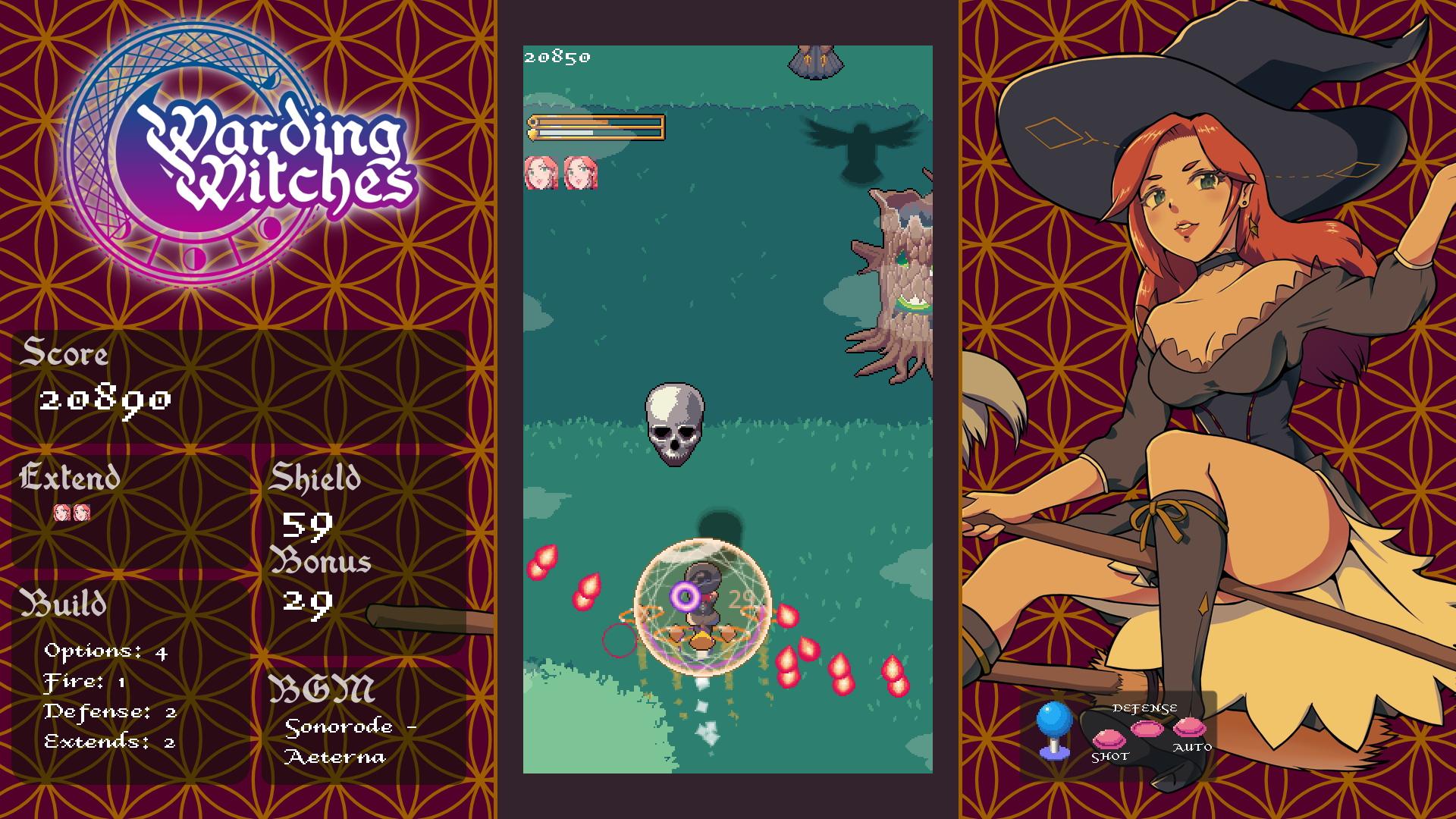
Warding Witches / Sonorode / Headup. Earlier promotional gameplay from the developer press kit; not our capture or evidence of v1.051 behavior.
Boss practice has an encounter requirement
According to Sonorode’s v1.051 notes, the Extras menu now contains practice for stage midbosses and final bosses. You first need to encounter the relevant boss since this patch. Encountering it on a higher difficulty also unlocks practice at lower difficulties.
That is not the same as opening a complete boss-selection menu immediately. Someone returning after playing before the update should pay attention to the since-this-patch requirement rather than assume the old run has unlocked everything.
The value is targeted repetition. If a boss pattern is the obstacle, a practice entry could reduce the need to replay earlier material merely to see it again. It complements the defensive premise: one system changes the decisions inside the encounter, the other changes access to another attempt. Whether the tools actually produce a smoother learning curve still needs play evidence.
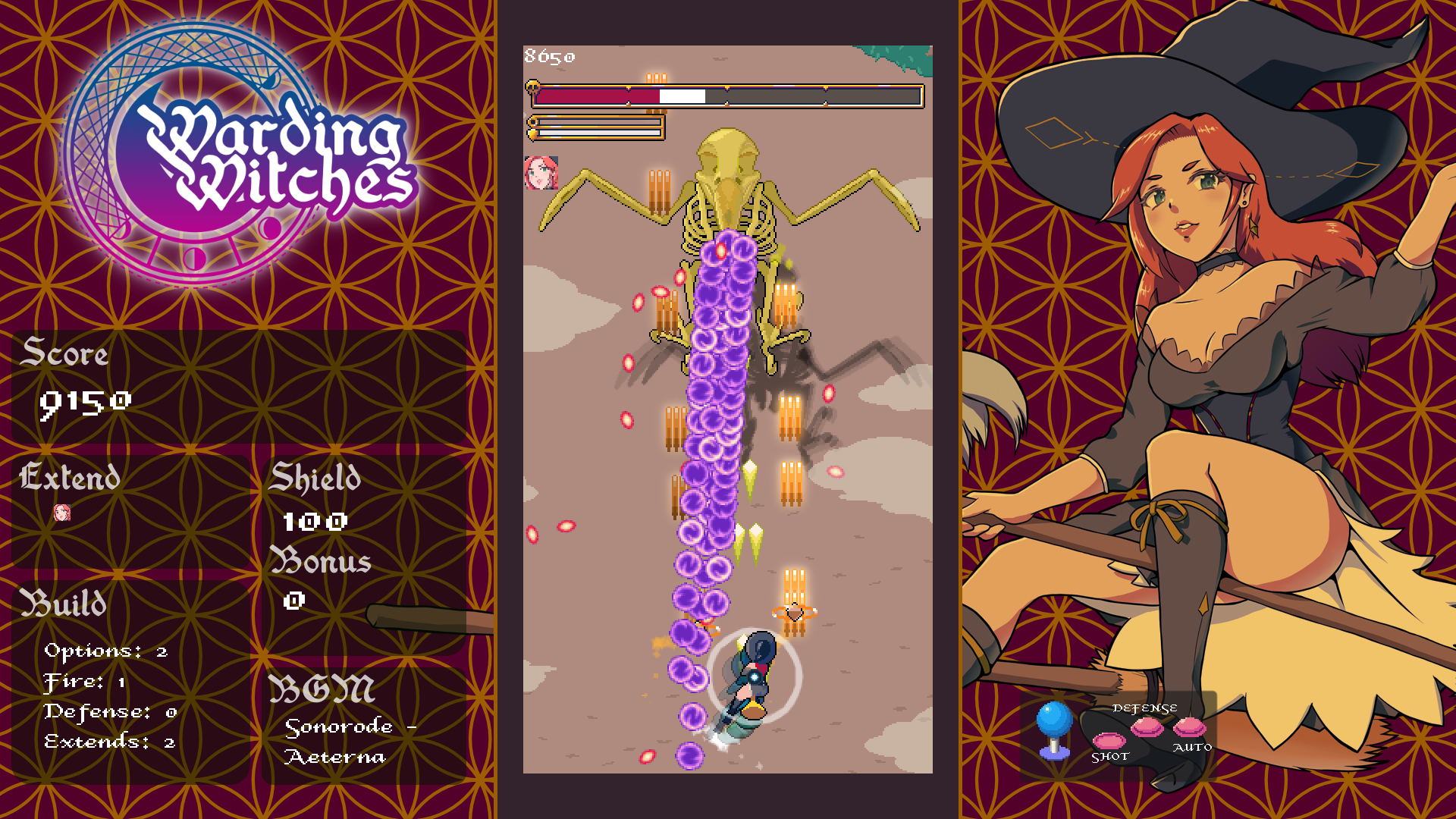
Sonorode / Headup. Earlier promotional boss scene, not the new practice menu or proof of its unlock state.
Story resume is a deliberate exit, not a crash-save promise
The same post says Story Mode can resume after quitting through the Pause Menu. Its instructions are specific: set your upgrades, begin the stage, then quit through Pause. The run can later resume from that stage, even after closing the game.
Do not read that as a promise to recover automatically from a crash or restore any arbitrary moment. The documented route involves a deliberate menu exit after entering the stage. For someone fitting a demanding shooter around short sessions, knowing the exit procedure matters as much as knowing that resume exists.
There is a separate retry caveat in the October 20 v1.04 notes. Story Mode’s Pause → Retry was changed to restart the stage rather than the whole run, but doing so forfeits that stage’s no-miss clear. The developer also warned that Steam Input settings might interact badly with the game. These are developer statements, not fixes or controller configurations we have independently validated.
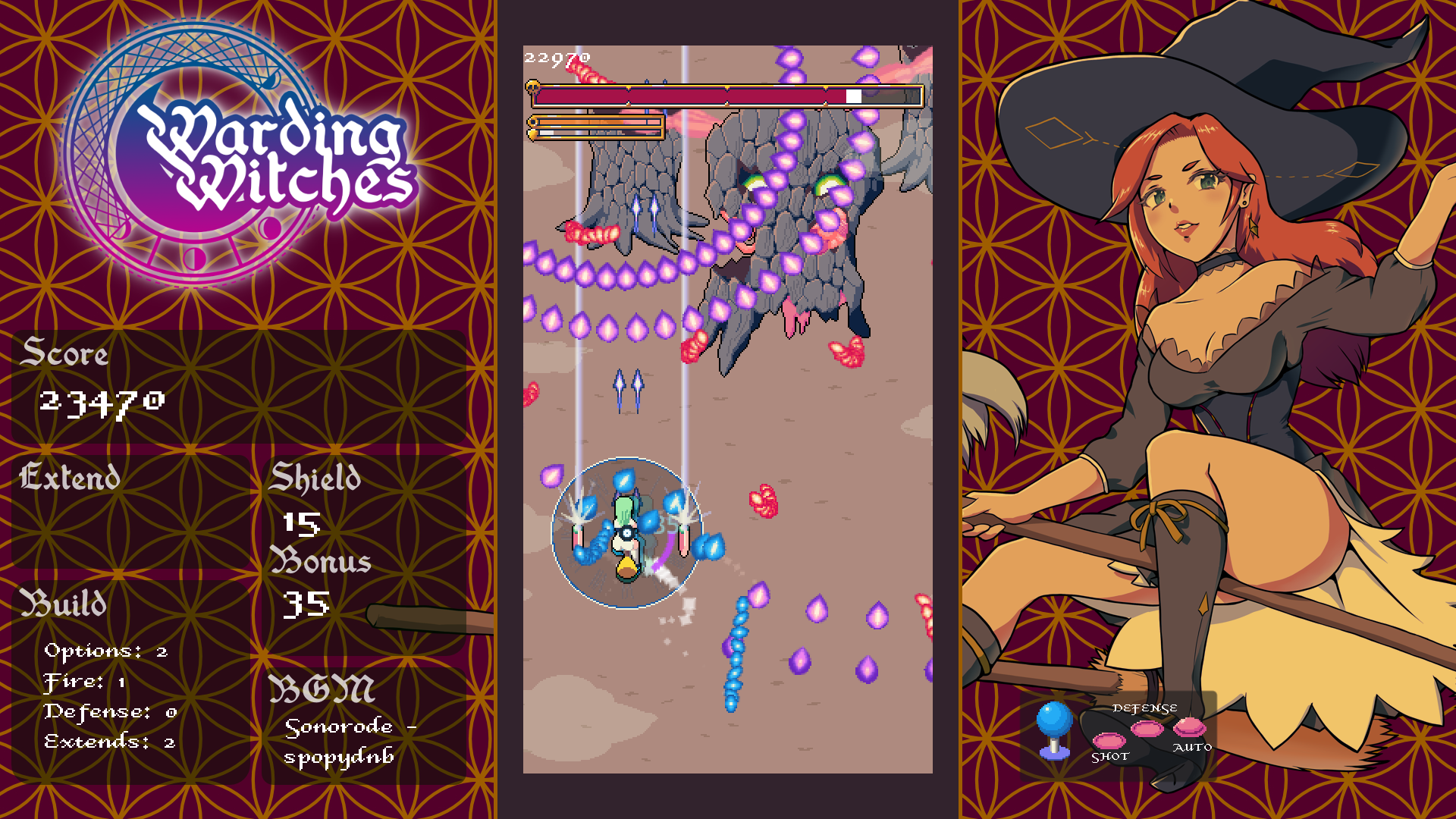
Sonorode / Headup. Earlier press-kit gameplay; its interface does not illustrate the new resume function.
Try the defensive rhythm before buying for the promise
The US store checked October 25 lists a demo and a $9.74 introductory price against $12.99, with the offer displayed through November 2. It lists local shared/split-screen co-op and Remote Play Together. Those labels do not establish native online matchmaking. Steam Deck compatibility remains Unknown; this is not a Deck recommendation.
For a newcomer, the demo is the sensible first check: does surviving with a defensive tool make the patterns feel readable to you? For a returning player, verify the post-patch boss encounter requirement and learn the Story exit procedure before relying on either tool. The case for paying attention is a coherent approach to learning, not a demonstrated beginner-friendly verdict.
For another distinction between available features and practical buying expectations, see our Elsewhere multiplayer analysis. More coverage is in the gaming archive.