


Tom the Postgirl is out, and its buying question is unusually specific: do you want a short, nasty little comedy that rewards snooping and returning to scenes? Oopsie Daisies and ARTE announced the October 29 launch on Steam and Nintendo Switch. The creators estimate a two-to-three-hour adventure. That makes replaying part of the proposition, rather than an excuse to expect a long campaign.
Reliability needs a separate look. One pre-release review reports crashes and lost saves, while still recommending the game. That account deserves attention, but it does not establish a widespread fault in the retail release. This is reported buyer analysis; we have not played Tom the Postgirl or tested its saves.
A delivery round built around bad behavior
The official pitch puts Tom in a village where delivering parcels gives her access to other people’s business. You can peer through windows, open packages and interfere with gardens. The press kit describes hand-drawn scenes and frame-by-frame animation; the supplied images put bright red details against a largely grey world.
The interesting design choice is the connection between an ordinary job and optional misconduct. A delivery route gives you a reason to visit the residents. The temptation is to stop doing the job properly and investigate what they would rather keep private. That is a clearer audience signal than simply calling it a quirky adventure: the appeal depends on enjoying intrusive, destructive humor.
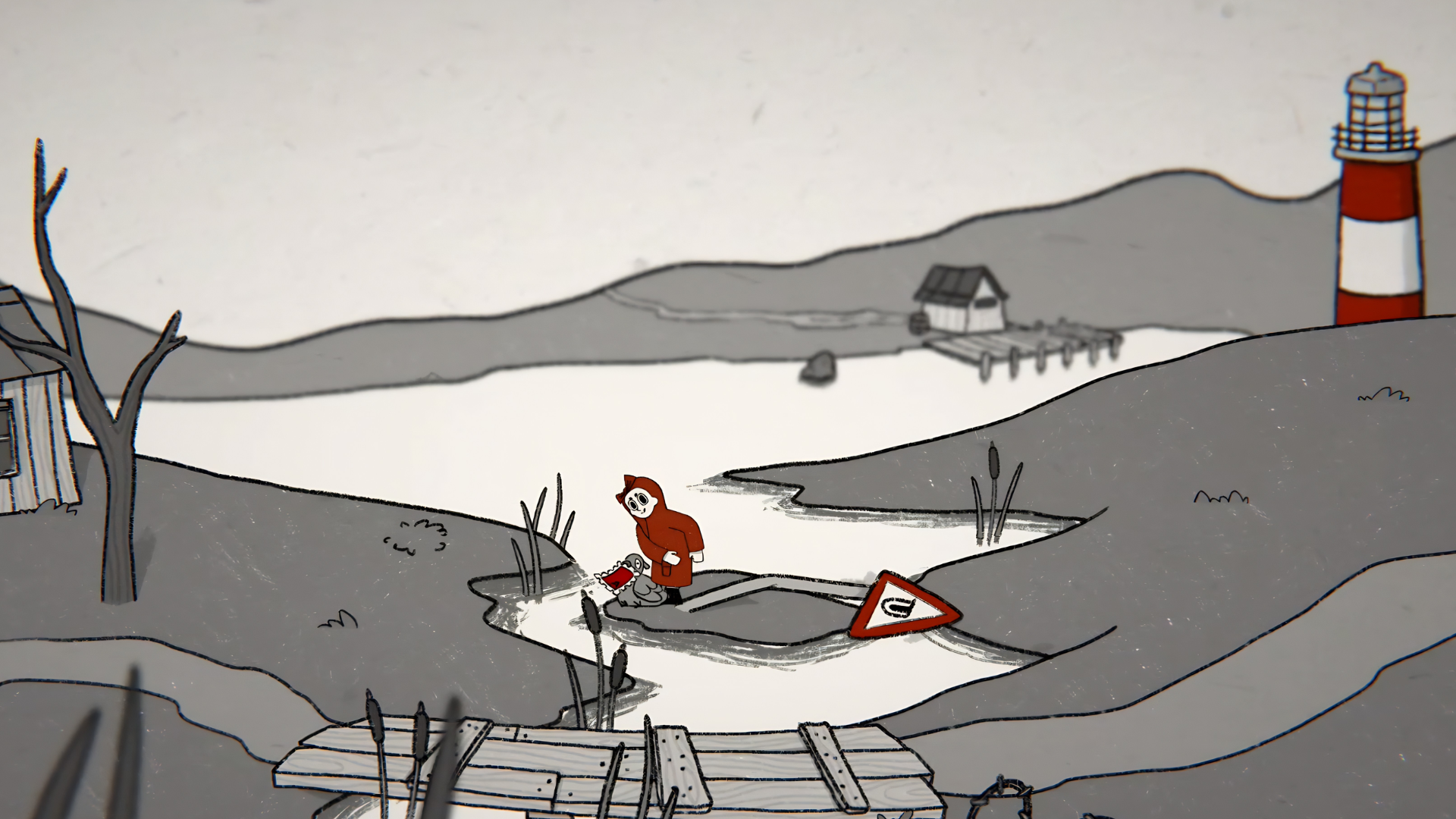
Tom the Postgirl / Oopsie Daisies / ARTE France. Official press-kit image; capture build unspecified.
Do not mistake the picture-book look for a children’s game. Steam’s developer-supplied content description lists cartoon violence and partial nudity. The publisher explicitly compares the tone with adult animation. That contrast is part of the sales pitch, not a promise that every joke will land.
Short length, several reasons to revisit
The launch announcement’s two-to-three-hour estimate comes from the developers, not our stopwatch. The store says repeat playthroughs can expose missed details and let you try more or less cautious approaches. It also lists 50 achievements. Those are reasons to investigate how replay works, not evidence of 50 substantial branches or a particular completion time.
Vulgar Knight’s October 29 review supplies a separate perspective. The critic praises the visual design and dark comedy, and describes achievements that reward opposing behavior, such as damaging flowers or avoiding them. It says those goals cannot all be completed in one playthrough. This supports the idea that returning is intentional; it does not tell us how much genuinely new material every return contains.
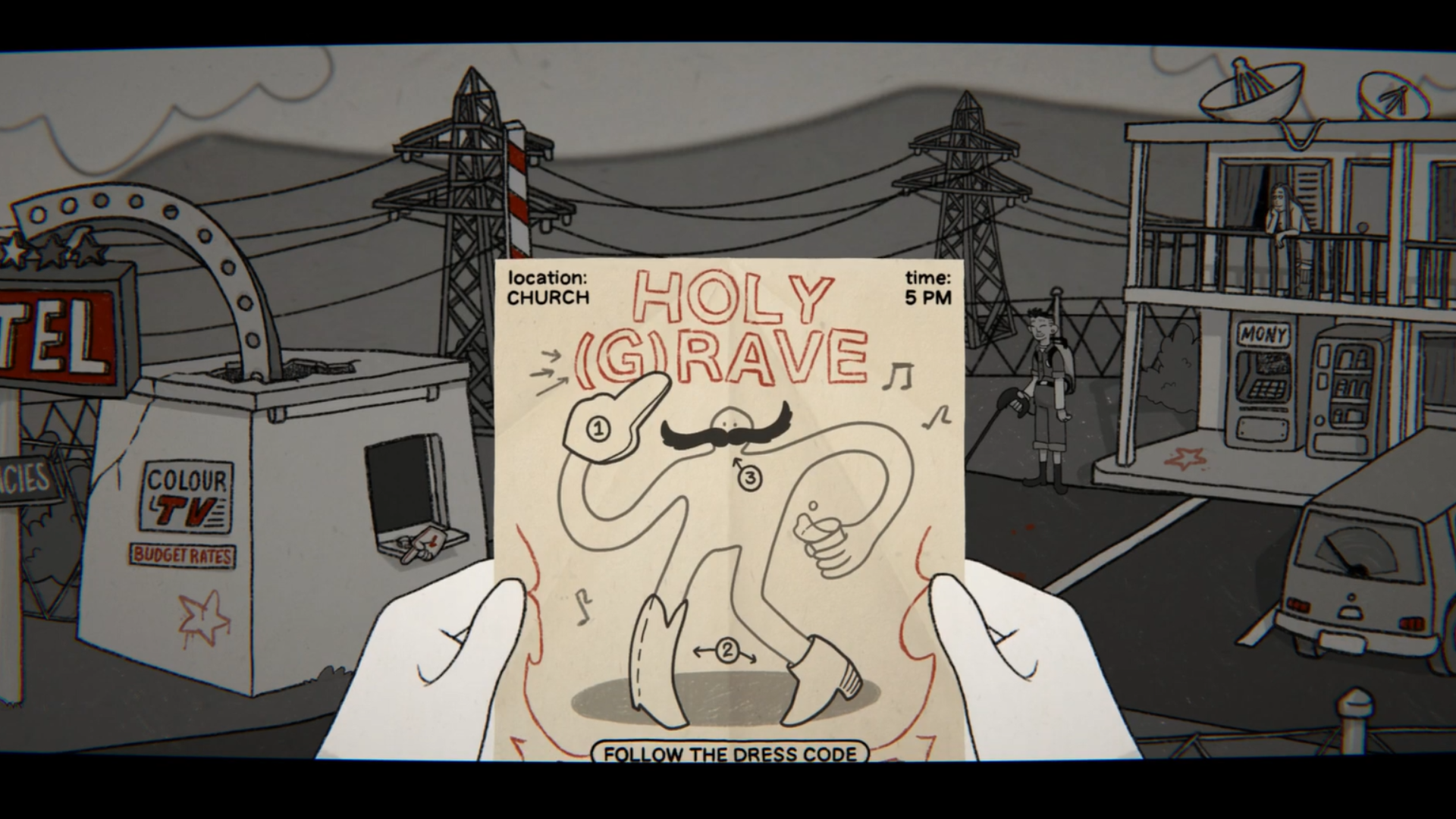
Tom the Postgirl / Oopsie Daisies / ARTE France. Official press-kit image; capture build unspecified.
Choosing to replay a scene and being forced to recover progress are different things. A short game can make deliberate revisiting attractive. Losing progress is a different kind of repetition, especially when the player only has one evening available.
What the save-loss report actually establishes
The same Vulgar Knight review describes several crashes and twice losing saves around Chapter Four. Its writer received the game before release and still recommends it, including after those problems. Both parts matter: omitting the fault would conceal a material concern, while omitting the recommendation would distort the review’s conclusion.
The writer also expects the problems to be fixed by publication. That is an expectation, not an official patch confirmation or a test of today’s build. Our check of the complete 12-post developer announcement feed found the launch post still latest and no post-launch save-fix announcement. Absence of a notice does not prove that no code changed.
We therefore cannot call this a confirmed retail-wide save bug, or say that it has been repaired. Steam Cloud being listed does not resolve either question. Nor can an early supplied-build account establish how the Switch edition behaves. If reliable progress retention is essential to your purchase, a current build-specific developer statement or tested report is the next useful evidence.
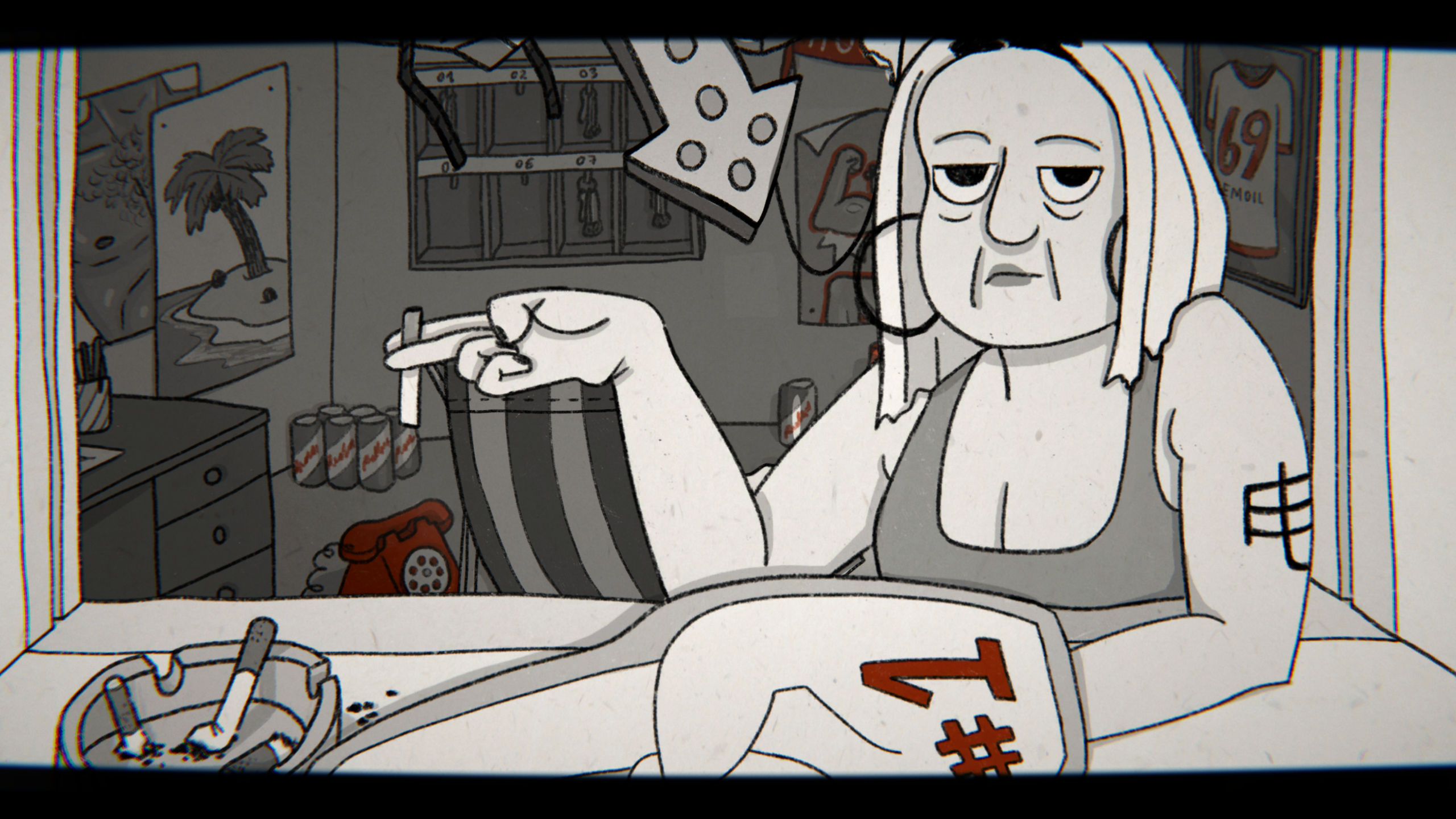
Tom the Postgirl / Oopsie Daisies / ARTE France. Official press-kit image; capture build unspecified.
Price and platform checks before buying
At 01:20 UTC on October 30, the US Steam page advertised $8.99 instead of $9.99, with the introductory offer ending November 5. It displayed 40 reviews, all positive in the summary tooltip. That is a small, changing sample, not proof that every buyer avoided the reported problem. Steam Deck compatibility was marked Unknown, not Verified or Playable.
The official press kit specifies Steam for PC and Mac, and Nintendo Switch in America. We have not checked a worldwide Nintendo rollout, regional checkout prices or technical parity between versions. The US Steam offer should not be read as a Polish price.
Our indie games coverage and ATMOSFAR buyer analysis make the same basic distinction between a game’s proposition and demonstrated reliability. Tom’s proposition is compact, replayable mischief with adult humor. That is a clear proposition to weigh, with the early-build save report kept visible and neither a universal failure nor an unverified fix attached to it.