


Road Rash: 30th Anniversary Edition brings the 1996 PC game back with relicensed music and restored cinematics. The launch also leaves a useful paper trail of what has not been modernized: saving remains manual, multiplayer means legacy LAN, and EA warns that Steam Deck can still crash after a video. Read those details before the nostalgia takes over.
This is reported buyer and preservation analysis, not a hands-on review. We have not played this edition, tested its controls or measured performance. The case for investigating it rests on restored access and documented choices, not a verdict on how well the new build runs.
What EA restored, and what AI does not replace
The November 5 release restores the PC version rather than creating a new sequel or combining every console edition. In his restoration account, EA Partners senior producer Jim Vessella credits technical director Brian Barnes with recovering the PC source code. Vessella describes that recovery happening alongside the digitization of master video material. These are the producer’s production-history claims, not an independent archival audit.
The distinction matters because the video options preserve a choice. EA’s FAQ lists the standard videos shipped in 1996, higher-resolution footage captured from master tapes, and a separate AI-upscaled version of that master-source material. Videos can also be disabled. You do not have to choose AI processing to use the recovered footage. Whether one presentation looks better is a question for actual viewing, not something these descriptions settle.
EA also says the soundtrack was relicensed. Rock music can now play during races and is enabled by default; the FAQ explains how to return to the PC MIDI music. That is a concrete addition to investigate, but licensing music for the game does not give buyers permission to republish it. Streamers should read the separate sound-mix directions, which also affect menu and cinematic audio, rather than assuming the reissue is automatically safe to broadcast unchanged.
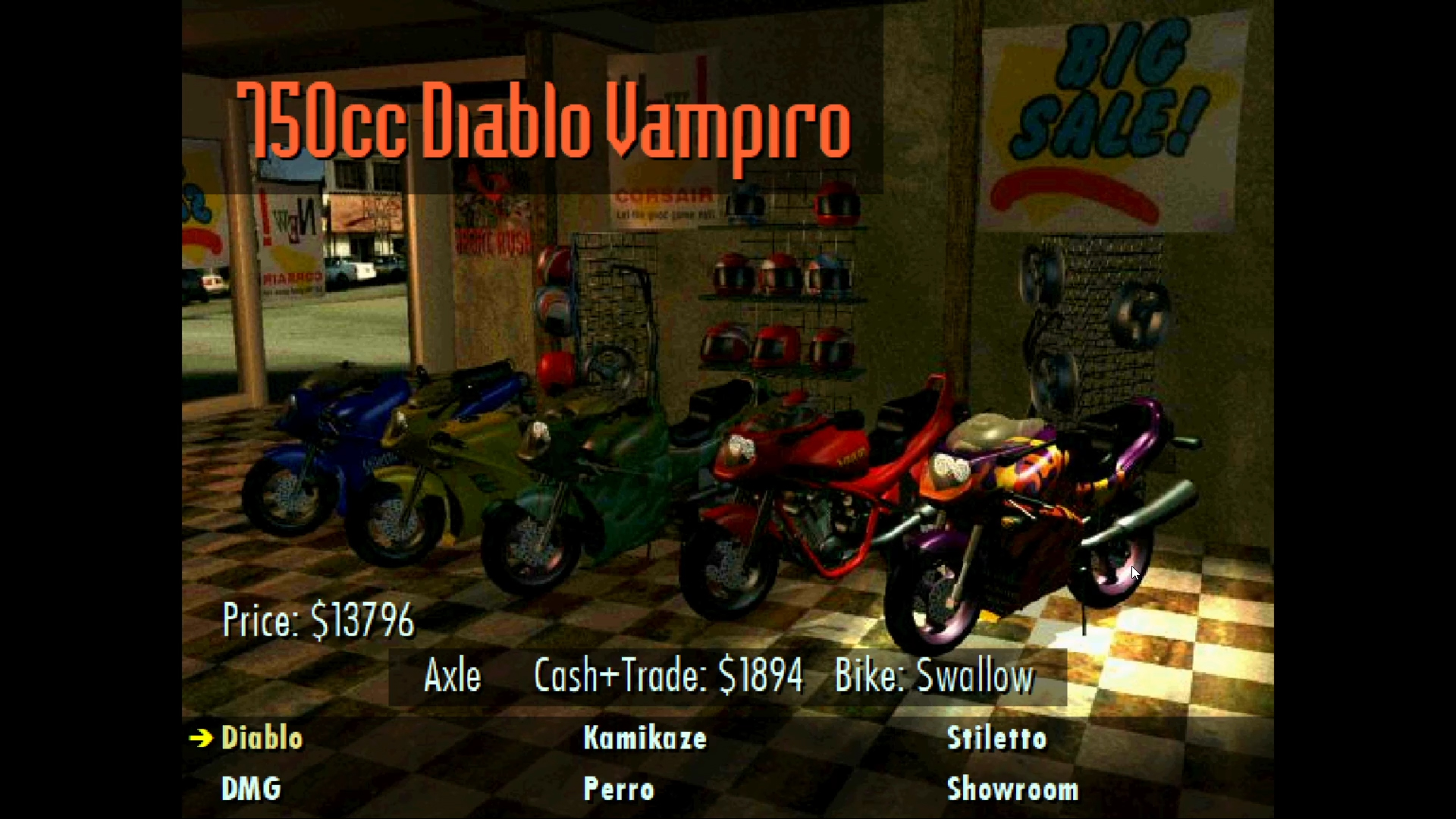
Electronic Arts, official launch press image. The showroom illustrates the legacy shop interface; its dollar amounts are in-game prices, not the retail offer.
Cloud saves will not save the race you forgot to record
The warning is simple: there is no autosave. The team directs players to save manually through the Restroom menu. Steam Cloud synchronizes saved progress between devices; it does not create a checkpoint for you.
That makes the first few minutes of setup part of the buying decision. Learn the save path before committing to a long session. Returning players may recognize the routine, but a store feature badge is an easy way for newcomers to expect a modern safety net that the FAQ explicitly rules out.
Multiplayer needs the same care. The original modem/internet service closed decades ago. EA retained the Mano a Mano LAN feature, while warning that its old technology may be incompatible with some hardware and software. A LAN PvP listing therefore does not promise restored public internet play or effortless connections between friends. Buy it for that use only after investigating your intended setup.
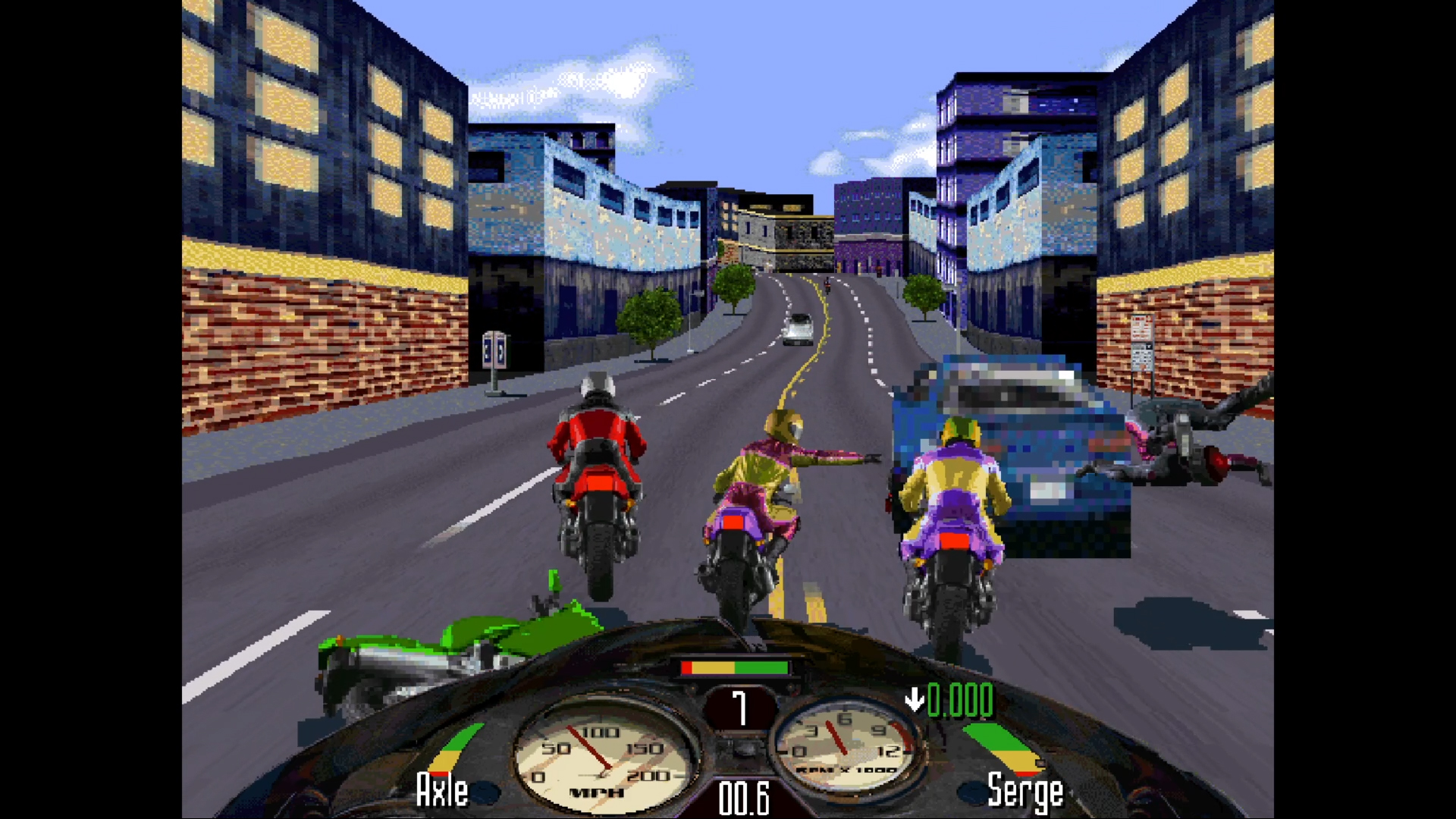
Electronic Arts, supplied through the launch media kit. City racing capture, not our performance test or evidence of a particular video mode.
Deck Playable comes with an explicit exception
At our November 7 check around 00:17 UTC, Steam listed the game as Playable on Deck, with partial controller support and USB-only labels for DualShock and DualSense controllers. EA points to the Controller_Setup_and_Mappings PDF in Extras. On Deck, player-name and save/load menus may require virtual-keyboard input.
More importantly, the same FAQ warns of possible crashes after full-motion videos. The refreshed official feed still contained three launch posts, with no separate newer fix announcement. That does not prove nobody has fixed anything; it means this check found no published resolution that would justify dropping the warning.
Early player accounts illustrate why a badge cannot settle the experience. In the refreshed English recent-review page, Flannel Jammies praised the racing but reported menu-navigation crashes around saving and loading, after 0.4 hours on record. That is one unverified short-session account, not a reproduced defect or a reliability rate. KoolRanch criticized the audio mix, but the official FAQ does document sound-mix options; the complaint cannot establish that those options are absent. Neither example supports a broad player consensus.
The U.S. store price at the same check was $4.99 instead of $9.99, with the promotion ending November 19. Regional pricing can differ. The clearest audience is someone who wants renewed access to this PC edition and accepts old interface habits. Anyone buying primarily for dependable handheld play or easy internet multiplayer should investigate those exact limits first. Our Wing Commander III restoration analysis examines a different set of caveats from the same EA launch; the PC gaming archive has more coverage. Here, preservation gives buyers options. It does not erase the manual-save menu.