


Noble Fates left Early Access on November 12, and returning players have a more immediate job than hunting down the new dragon: check how their kingdom spots trouble. Xobermon’s 1.0.0 notes remove automatic raid detection at both the map edge and the home area. Patrol routes take over that warning role. Previous eating and door permissions also do not migrate, according to the developer.
For an established kingdom, checking the rules comes before touring the new content. A familiar settlement layout is not evidence that its old warning and access arrangements still apply. This analysis draws on the release notes, current store information and explicitly dated Early Access accounts; we have not played or tested the release.
Patrol coverage now needs attention
The complete 1.0 announcement and patch notes describe routes made from designated points. Guards receive a perception-range boost while patrolling, and selecting a patrolling guard displays that range. They use and earn experience in their strongest combat skill.
Those details make patrol placement the practical starting point for a returning ruler. The useful question is where your guards can detect an approach, not simply where you remember getting a warning. With both old automatic detection triggers removed, assuming the settlement boundary itself will announce a raid is exactly the habit to reconsider.
The notes also say a detected raid’s approach path remains visible for five minutes. The trail can help you reassess coverage after detection. It does not guarantee advance warning everywhere. We have not tested sightlines, the effectiveness of a particular route or how much preparation time a guard provides. Treat the perception display as something to inspect in your own kingdom, not as a promise that any loop around the walls is sufficient.
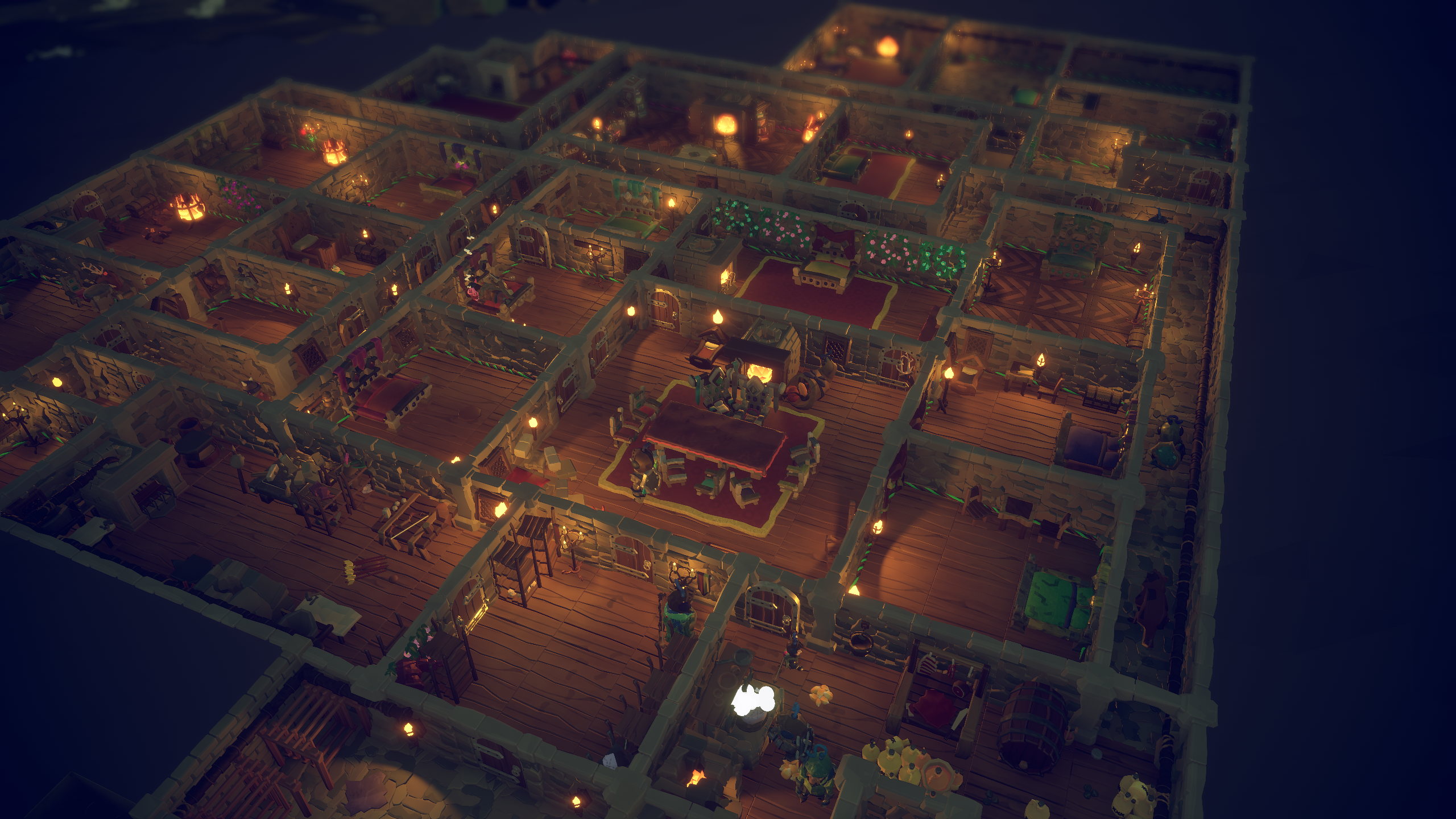
Noble Fates / Xobermon, LLC / Living World, official prelaunch promotional screenshot. Settlement context, not the new patrol interface or our gameplay.
Revisit food and door access separately
There are two permission changes worth keeping distinct. Eating permissions have been reworked, with an explicit warning that prior permissions do not migrate. For doors, the ability to set permissions for individual mortals is removed, and prior permissions likewise do not migrate.
The sensible response is to inspect both sets of rules when returning, rather than assuming an old arrangement survived unchanged. Food and door access are different settings; checking one does not settle the other. The door change also means that rebuilding a previous individual-by-individual setup may not be the available approach.
This is not an announcement of a mandatory save wipe. Nor does it establish that every setting is reset, that old saves are safe in all circumstances or that Workshop mods remain compatible. The source supports a narrow migration warning about these permissions. Broader compatibility assurances would need their own evidence.

Official prelaunch press image, credited to Xobermon, LLC / Living World. It illustrates construction and crops, not permission migration.
Succession and leveling deserve a second look
The new succession system lets players choose their ruler’s heir. The developer says anyone passed over will be unhappy with both the ruler and the new heir. Choosing a successor therefore comes with a stated relationship cost; it is not presented as a consequence-free administrative shortcut. How disruptive that becomes in an established kingdom is something we have not tested.
Leveling is automatic by default, with a setting to disable it. Skill-point randomization is optional. These are useful settings to check before deciding whether the updated progression suits your preferred amount of manual control.
They also limit what older player criticism can tell us. In a November 11 Early Access review, Nobody Important described leveling randomness as a personal reservation. That is historical context, not proof that 1.0 retains the same problem after adding an optional setting. Another Early Access reviewer, Pig Boy, praised the settlement simulation’s approachable fit compared with denser colony games. Neither account is a review of today’s release.
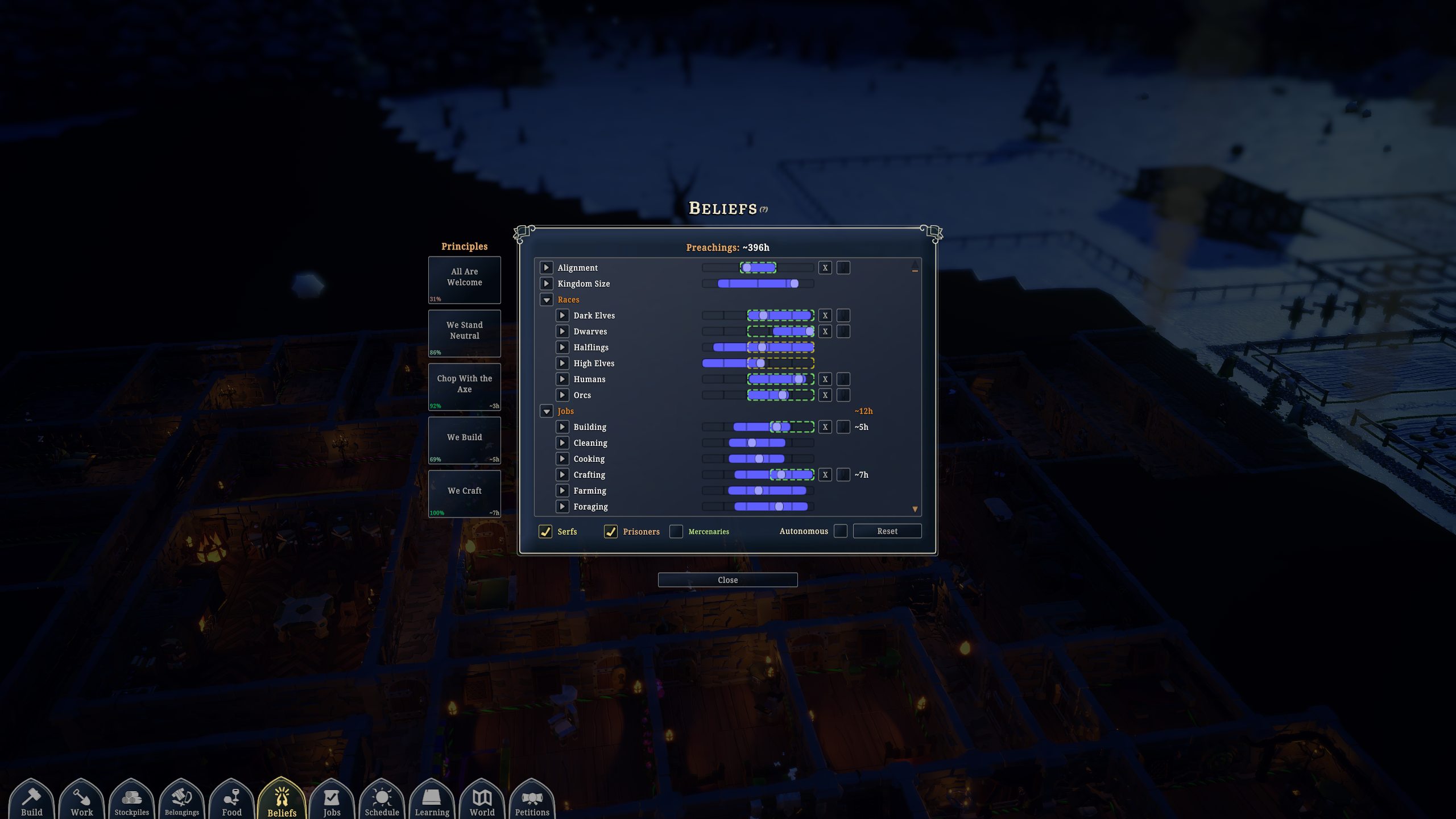
Official prelaunch promotional image: the Beliefs panel. This is not the new succession, leveling or permission screen.
New buyer? Separate the offer from the verdict
The U.S. Steam listing showed $19.99, reduced from $24.99 through November 26, at our November 12 check. A demo was available. Demo progress transfer was not verified, so do not plan a paid campaign around an assumed import.
Valve labels Steam Deck compatibility Playable, not Verified. That is a platform classification, not our test of controls, frame rate or battery life. Likewise, the store’s Very Positive overall label covers the game’s accumulated review history; the ten individual accounts retained in our research packet were all marked Early Access. They cannot establish reception to 1.0.
For readers following our PC gaming coverage, the distinction is similar to our County of Fortune buyer check: the available systems, an older player’s preferences and a tested recommendation are different kinds of evidence.
Returning players have a concrete first session ahead: inspect patrol detection coverage, rebuild food and door permissions as needed, then review heir and leveling choices. New Mages and the Demon Dragon supply the launch spectacle. The less glamorous settings are where the release notes give an existing kingdom the clearest reason to stop and check.