


MycoRelic now lists its full release on Steam for November 11, with a U.S. introductory price of $16.99 against $19.99 through November 24. Sandy Dingo Games’ action-RPG puts a fungus inside a replaceable robot body and lets you explore alone or with friends. Before buying, ask whether its equipment-driven character building appeals to your group, rather than whether a release label guarantees a polished co-op campaign.
This is reported buyer analysis, not a hands-on review. The store has changed its release status. Release-build stability, multiplayer reliability and the fate of older saves are not established by the evidence checked here.
Your body is part of the build
The developer’s description makes the robotic frame more than a character skin. Replacing parts supports different combat styles and elemental effects. Weapons have their own moves and statistics; armor and body choices help define the character instead of asking you to commit to a fixed class.
That is the main reason to look beyond the mushroom-robot novelty. If finding equipment and changing how a character works is your favorite part of an action-RPG, the advertised systems give you something specific to investigate. They do not tell us whether the loot remains interesting across a complete run or whether every build is equally practical.
Elemental interactions also have a cooperative purpose in the creator’s pitch: fire burns obstacles, while water can heal friends and counter flames. The appeal is a party whose choices might work together. We have not tested those combinations, so treat them as the design proposition rather than our endorsement of its execution.
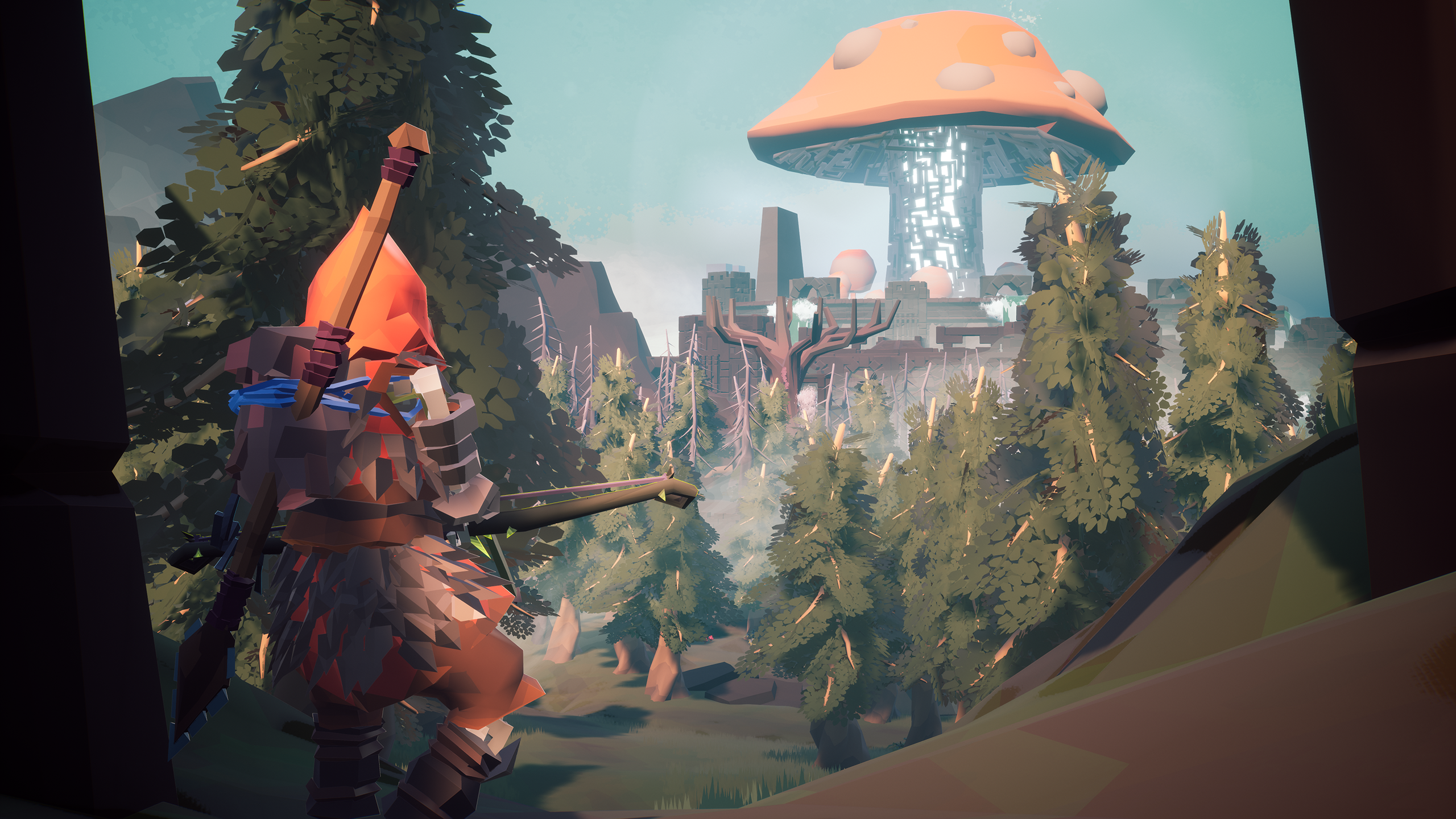
Sandy Dingo Games, developer-distributed press kit. Promotional screenshot; capture date and build unconfirmed, not our gameplay.
Co-op needs a narrower promise
The official site says you can start a character in your own world, host a server, or take that character into a friend’s game. Steam separately lists single-player and online co-op. That supports a concrete reason to consider it for a regular group: the maker describes characters as portable between worlds.
It does not settle how every quest, item or progression flag behaves for guests. Nor does it establish a player cap, cross-platform support or compatibility between demo, Early Access and release saves. None of those promises belongs in a purchase recommendation without better evidence. Returning players should preserve their files and check current developer guidance before assuming a migration will work.
The distinction matters because cooperative RPGs ask for a shared time commitment. An attractive build system is one question; whether friends can keep their progress aligned is another. The available descriptions answer the first more clearly than the second.
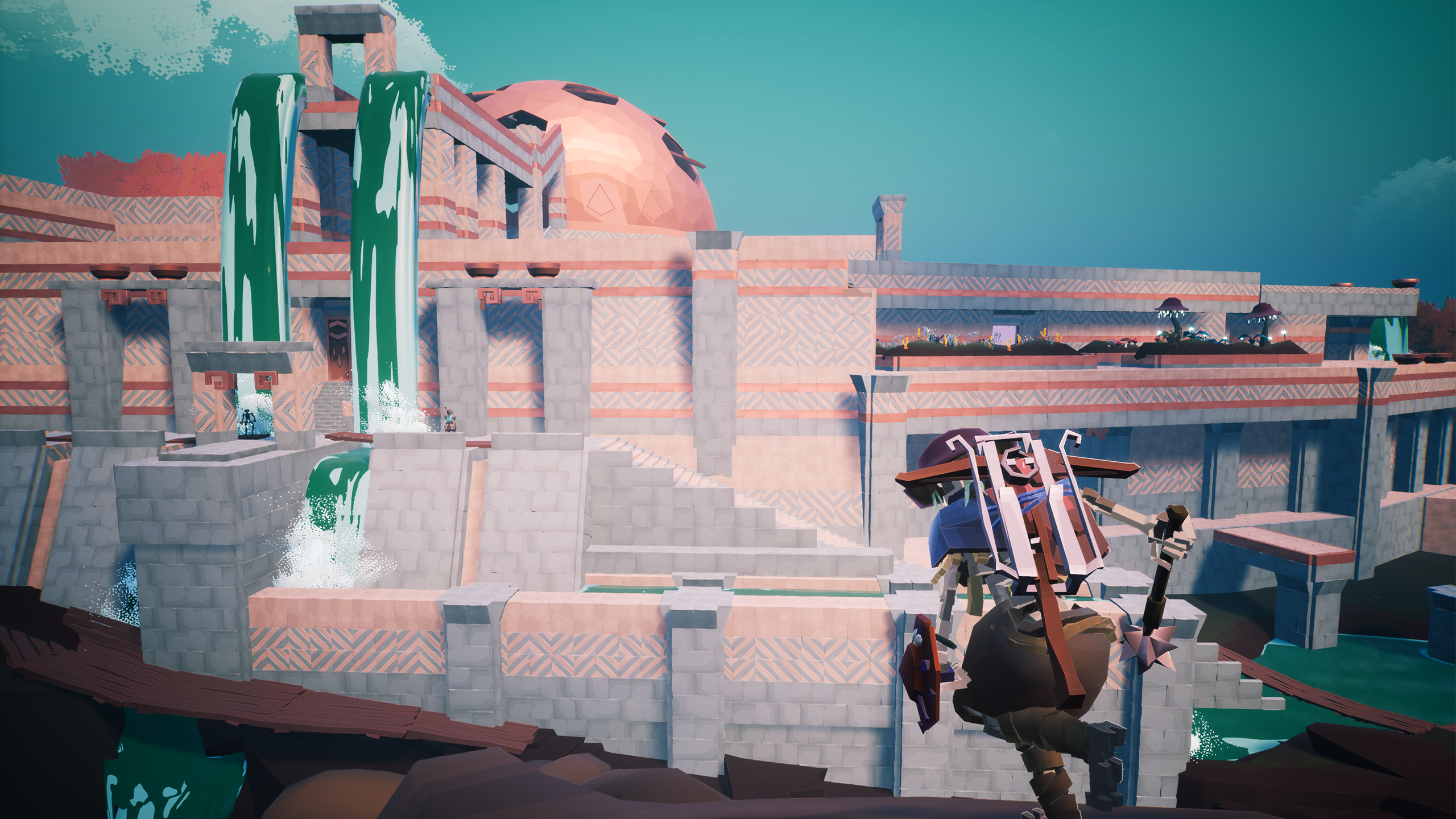
Sandy Dingo Games, official press kit. Supplied temple scene; capture date and build unconfirmed.
The positive history comes from Early Access
At the November 11 check, Steam’s overall review window was Very Positive with 180 reviews. That is a history of the product, not 180 assessments of the full release. The ten community cards examined in the research packet were all marked Early Access and dated before launch; they are a nonrandom sample, not a reception survey.
Two accounts help identify the attraction without deciding the verdict. Airking’s November 2 review praised exploration, co-op and character customization, but considered the then-Early Access content short. That qualification cannot establish the length of 1.0. RustyAspect’s November 7 account highlighted puzzles and hidden areas and said a demo session led to a purchase. It does not prove demo-save transfer.
The latest ten-post developer feed still ended with the November 3 Early Access patch at this check. That post revisited two fixes the previous patch had claimed to deliver. It is a reason to avoid declaring progression problems solved, not evidence that the release has failed. No separate 1.0 changelog appeared in that returned feed.
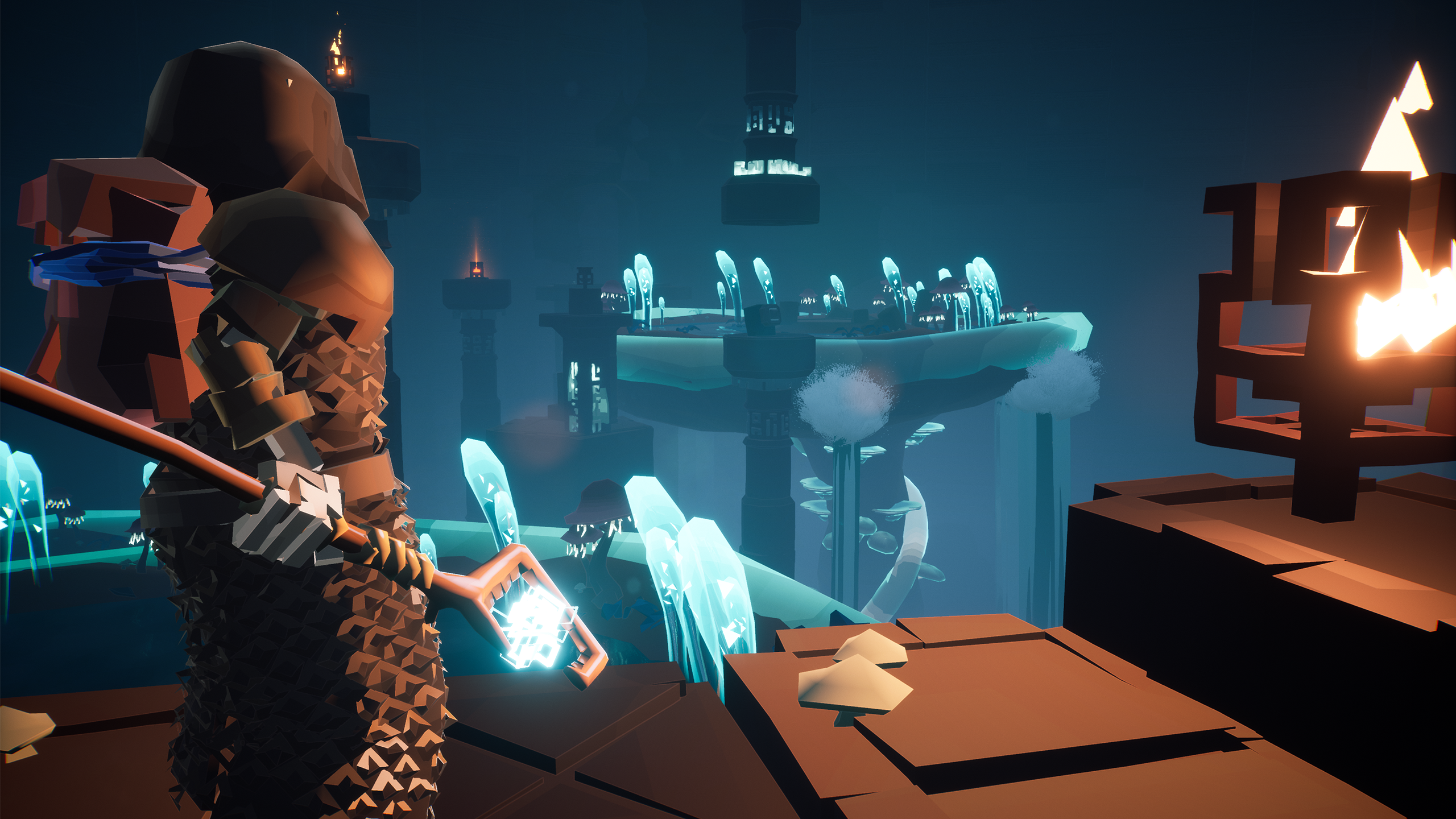
Sandy Dingo Games, official press kit. Promotional dungeon image; not a verified 1.0 capture.
Try the proposition before buying the promise
The current store lists a demo, full controller support and Valve’s Steam Deck Playable classification. Playable is not Verified, and neither label is our frame-rate test. The language table lists English interface, audio and subtitles; Polish is not listed. The U.S. offer is a regional snapshot, not a guarantee of another country’s checkout price.
For readers following our indie coverage, the sensible next step is to use the demo to judge combat and exploration, without assuming its saves carry over. Our TANUKI launch guide shows why transfer promises need their own evidence. MycoRelic has a distinctive character-building pitch and positive older accounts worth reading. A group needing proven release stability or precise shared-progression rules should wait for those answers rather than let the launch discount supply them.