

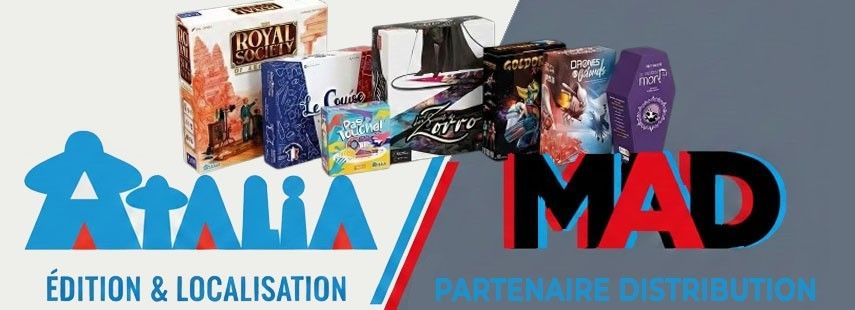
Atalia entering compulsory liquidation is not just sad company news. It is a clean board-game market signal: the retail middle of the hobby keeps getting tighter, and “good curation” is no longer enough protection when release volume, shelf space, marketing spend, and bestseller rights all start moving against a smaller operator.
BoardGameWire reported on July 24 that the French distributor and publisher had entered compulsory liquidation, citing Atalia’s own explanation: a saturated tabletop market, limited retailer capacity, and the loss of distribution rights to recent bestsellers had left the business unable to remain viable. The legal date matters too. The report says Atalia officially entered compulsory liquidation on July 8, 2026, through the Nanterre Commercial Court.
That gives this story more weight than a normal “publisher exits” note. Atalia was founded in 2015, operated mainly in France and Belgium, and later moved into its own publishing and localization work. Its official company page framed the business around a deliberately smaller catalogue: fewer titles, more attention, less risk that a game would vanish inside a huge list of references.
The February pivot now reads differently
The sharp part is that Atalia had already tried to narrow the business. In a February 2026 post, the company said it would put its energy into publishing and localization while leaning on MAD for distribution. Atalia described distribution as operationally demanding work, with logistics, timing, service, and shop support all pulling resources away from editorial focus.
The same post named the visibility problem in plain language. Atalia said the board-game market had never been richer for players, but that the number of releases made visibility harder for professionals. It also said that even a very good game could pass under the radar without enough time and money behind it.
That was supposed to be the fix: fewer titles, clearer marketing, MAD handling the distribution network, Atalia concentrating on localizations, rule quality, author support, and coherent product lines. Atalia even described the practical move as going from 20 to 30 annual new releases toward about ten stronger titles.
Five months later, liquidation makes the same facts feel less like a strategy refresh and more like a failed attempt to outrun the pressure.
This is a retail-pressure story
The lesson is not “small publishers cannot survive.” Plenty do. The lesson is narrower and more useful: distribution businesses live on throughput, margin, trust, and repeatable demand. If shops are already overloaded, if bigger groups can buy more attention, and if a small distributor loses the titles that anchor orders, the rest of the catalogue has to work much harder.
BoardGameWire’s report notes that Atalia blamed a market where shops no longer have the space, time, or cash flow to stock every weekly arrival. It also points to the gravitational pull of larger French board-game distribution groups, including Asmodee and Hachette-connected businesses, around the same retail channel.
That matches the practical buyer-facing signal we keep seeing in tabletop coverage. A campaign can be loud and still struggle later. A retail release can be good and still disappear. A distributor can have taste and still lose if the strongest games move elsewhere.
What to watch next
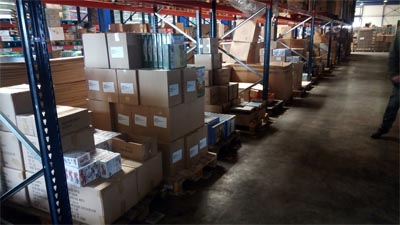
Atalia’s assets, including stock, brand, and customer database, are expected to be offered for sale by the liquidator, according to BoardGameWire. That means the immediate story is not only the shutdown. It is also whether another publisher, distributor, or retail-adjacent buyer picks up useful pieces.
For players, the short-term read is simple: do not assume a localized or smaller-market title will stay easy to find just because it exists on a publisher site today. For publishers, the read is harsher: if the marketing plan depends on a crowded retail shelf doing discovery work for you, the plan may already be broken.
The board-game market can be healthy for players and still punishing for the companies moving boxes through stores. Atalia is today’s clean reminder of that split. More games, more players, and more crowdfunding heat do not automatically create more room in the channel. Sometimes they create the opposite.
For more tabletop coverage, visit our board-games lane, read the Defenders of Hogwarts final-surge check, catch the Rolling Deep & Eureka final-total read, or browse the latest articles.