

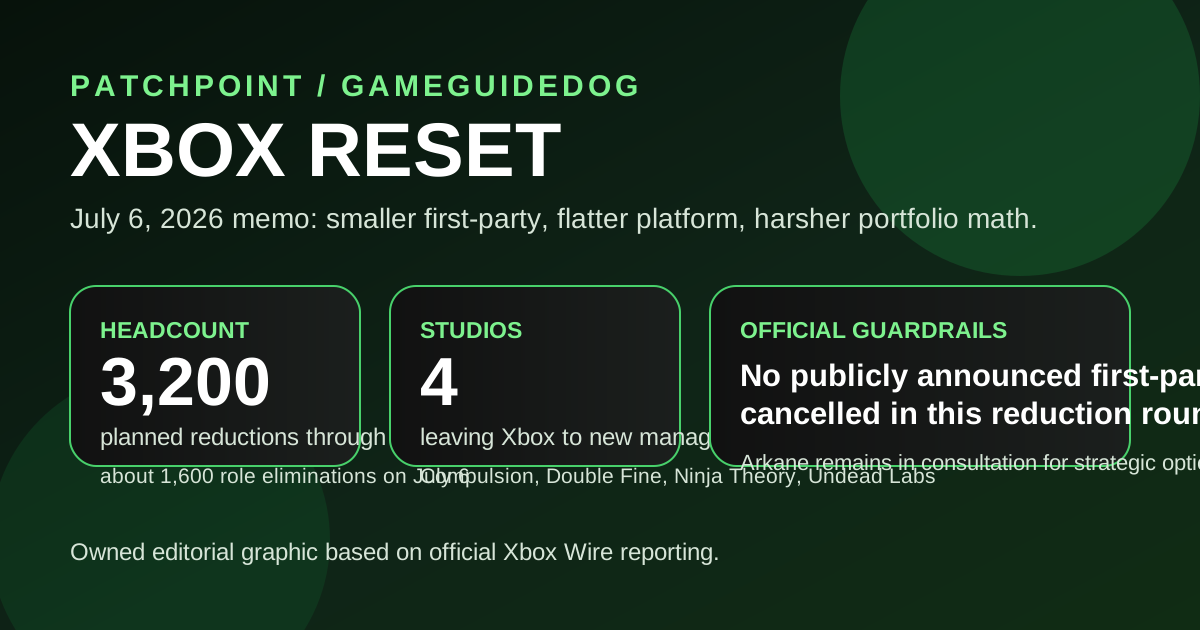
Xbox’s July 6, 2026 reset memo is painful layoff news on its own, but the more useful player read is narrower and harsher. Microsoft is not just cutting about 3,200 roles through FY27, including about 1,600 eliminations on July 6. It is also admitting that the old version of first-party Xbox got too wide, too layered, and too expensive to keep running in the shape players got used to.
That is why this lands better as analysis than as a simple restructuring recap. The big question is not whether the cuts are ugly. They are. The sharper question is what Microsoft is still willing to own directly after saying four studios will leave Xbox and that the company must “reset” both its content portfolio and its platform.
The studio changes are the clearest sign that Xbox wants a narrower first-party identity
The official memo is unusually specific here. Compulsion Games and Double Fine Productions will return to management and become independent again with their IP, catalog, and runway for next games. Ninja Theory and Undead Labs have entered terms to join new ownership, with funding to complete and grow Senua and State of Decay 3. In France, Arkane is not described as sold or closed; its management is beginning the required Works Council consultation to review potential strategic options.
That is already enough to change the shape of the Xbox story. For years, Microsoft’s answer to first-party weakness was simple: buy more studios, widen the catalog, and let Game Pass make the portfolio logic work over time. The July 6 memo is Microsoft saying that plan grew past the point it could support.
The most important line is not the one about pain. It is the one about fit. Xbox says it learned it is “not the best home for every type of studio.” That is corporate language, but the meaning is clear enough. Microsoft no longer wants to pretend every good creative team needs to live inside Xbox to matter to the business.

The memo does not read like Game Pass surrender. It reads like a services-and-franchises filter
It would be easy to overread this into a broad “Game Pass failed” verdict. The official record is more complicated than that.
The July 6 memo says Game Pass, multi-platform publishing, and the wider content bet created meaningful value, but not at the pace Xbox expected. That matters. Microsoft is not calling those businesses useless. It is saying they did not grow fast enough to carry the cost structure built around them.
The earlier June 10, 2026 “Next 100 Days: XBOX Reset” memo makes the point even more awkward in a useful way. In that note, Xbox said Game Pass had started growing again after more than eight months of decline. In other words, the service may still matter a lot, and may even be improving, while the broader studio-and-management shape around it is still being cut hard.
That is a key distinction for players. The official line is not “Game Pass is over.” The official line is closer to this: Xbox still wants Game Pass, multi-platform reach, and giant audience businesses, but it wants fewer middle-scale costs wrapped around them.
You can see that in the reporting structure change too. Mojang and King will report directly to Xbox CEO Asha Sharma because Xbox now frames them as platform-scale businesses with massive monthly active audiences. That does not sound like a company walking away from services. It sounds like a company getting more selective about which parts of the portfolio deserve direct executive oxygen.
The platform reset matters almost as much as the studio reset
The content cuts will get the headlines, but the platform section of the memo may be just as revealing. Xbox says some parts of the business had work moving through as many as 14 management layers, while platform teams were 40% larger than they were at the start of this generation even as player base and playtime declined.
Microsoft’s answer is a flatter model: no more than five layers of management, and where possible three, plus a 50% reduction in vendor spend. That is not just a finance line. It is an admission that Xbox thinks it became too slow and too managerial while the market around it got more crowded and less forgiving.
For players, that does not mean the UI gets better next week or that hardware strategy suddenly becomes coherent overnight. It does mean the company has stopped pretending scale alone was the answer. The reset memo is basically Xbox choosing simplification over sprawl, even if that means making first-party look less impressive on paper.

What is safe and unsafe to conclude on Sunday, July 12, 2026
The safe conclusions are strong enough already:
- Xbox announced the restructure on Sunday, July 6, 2026.
- The memo says about 3,200 roles will be reduced through FY27, including about 1,600 on day one.
- Four studios are leaving Xbox in different ways.
- Xbox says no publicly announced first-party games or projects are being cancelled as part of this reduction round.
- Helen Chiang is becoming COO with end-to-end P&L responsibility across content, hardware, platform, and services.
The unsafe conclusions matter just as much:
- The memo does not say Arkane is closed.
- It does not say Blade is cancelled.
- It does not prove Game Pass is dead.
- It does not tell us that every affected franchise loses support or that every announced project is now in danger.
That line matters because this story is full of temptations. It is easy to turn a brutal reset into instant apocalypse content. The cleaner read is colder and more useful.
The honest read for GameGuideDog
Xbox is not abandoning first-party. It is redefining it downward. Microsoft still wants the franchises, the subscriptions, the multi-platform money, and the giant audience businesses. What it seems less interested in keeping is the larger, messier studio map that was supposed to make that strategy feel unbeatable.
That is why the July 6 memo feels bigger than a normal layoff post. The damage is not only the headcount number. The damage is that Xbox has now said, in public, that owning more studios was not the same thing as building a healthier platform. For players, that changes how future Xbox promises should be read.
The next checkpoint is not social-media despair. It is whether Xbox can prove that a smaller, flatter, more selective first-party plan still produces games and platform improvements at the speed Microsoft keeps promising. Until that happens, the reset is not just a bad week. It is a different theory of what Xbox is.
For more GameGuideDog coverage, browse our gaming section, revisit our earlier Xbox console price hike analysis, compare it with our broader Xbox Games Showcase 2026 post-show analysis, or check the latest English stories.