

The Stone of Madness: Dicefall is back on Gamefound, and the relaunch cleared its funding goal in less than 24 hours. That is a meaningful opening signal, confirmed by The Game Kitchen, the owner of the underlying video-game property. But it is not the most interesting part of this campaign. The useful reason to look again is that Undigital says it stopped, reconsidered, and rebuilt key parts of the first attempt before returning.
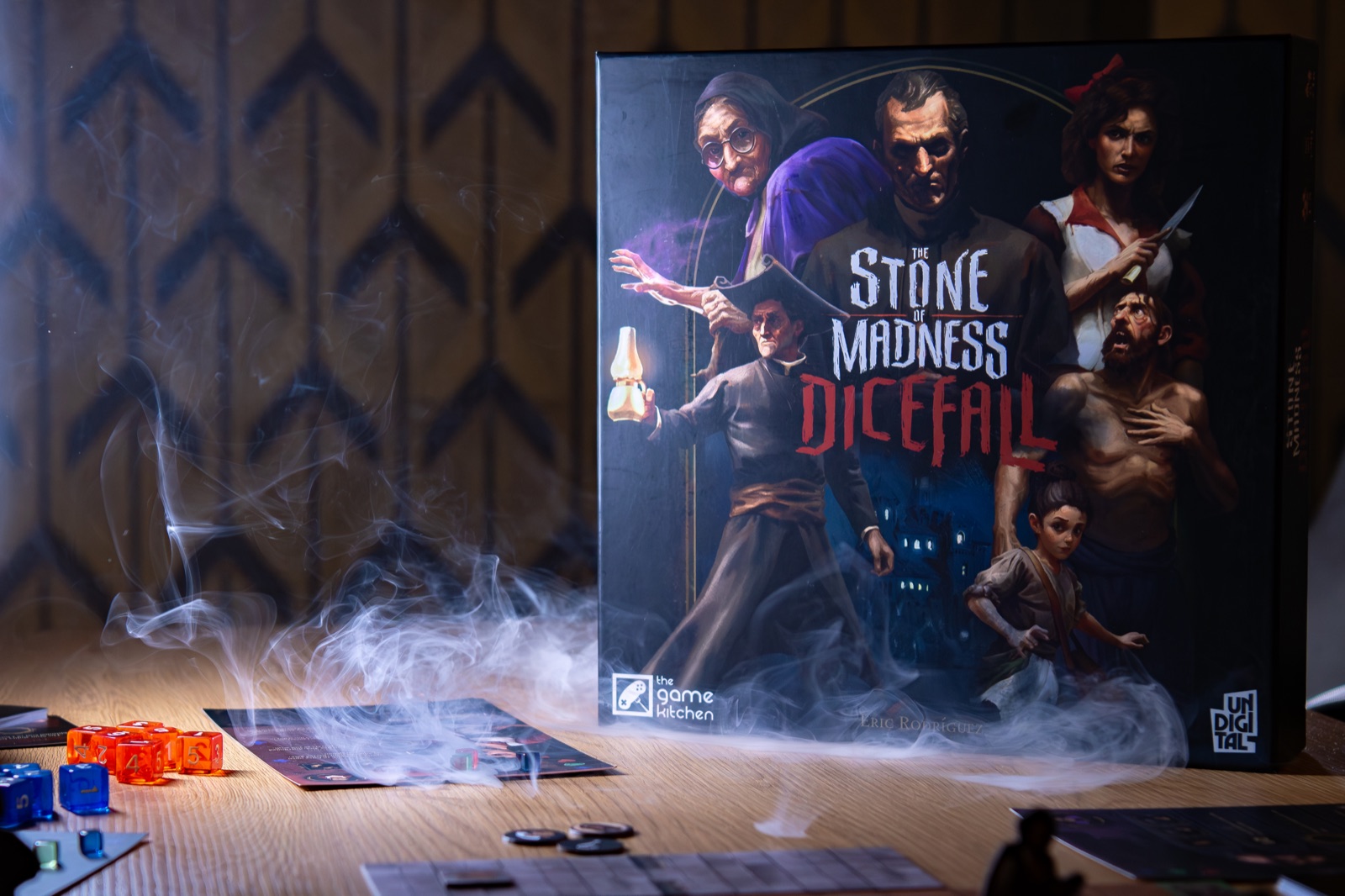
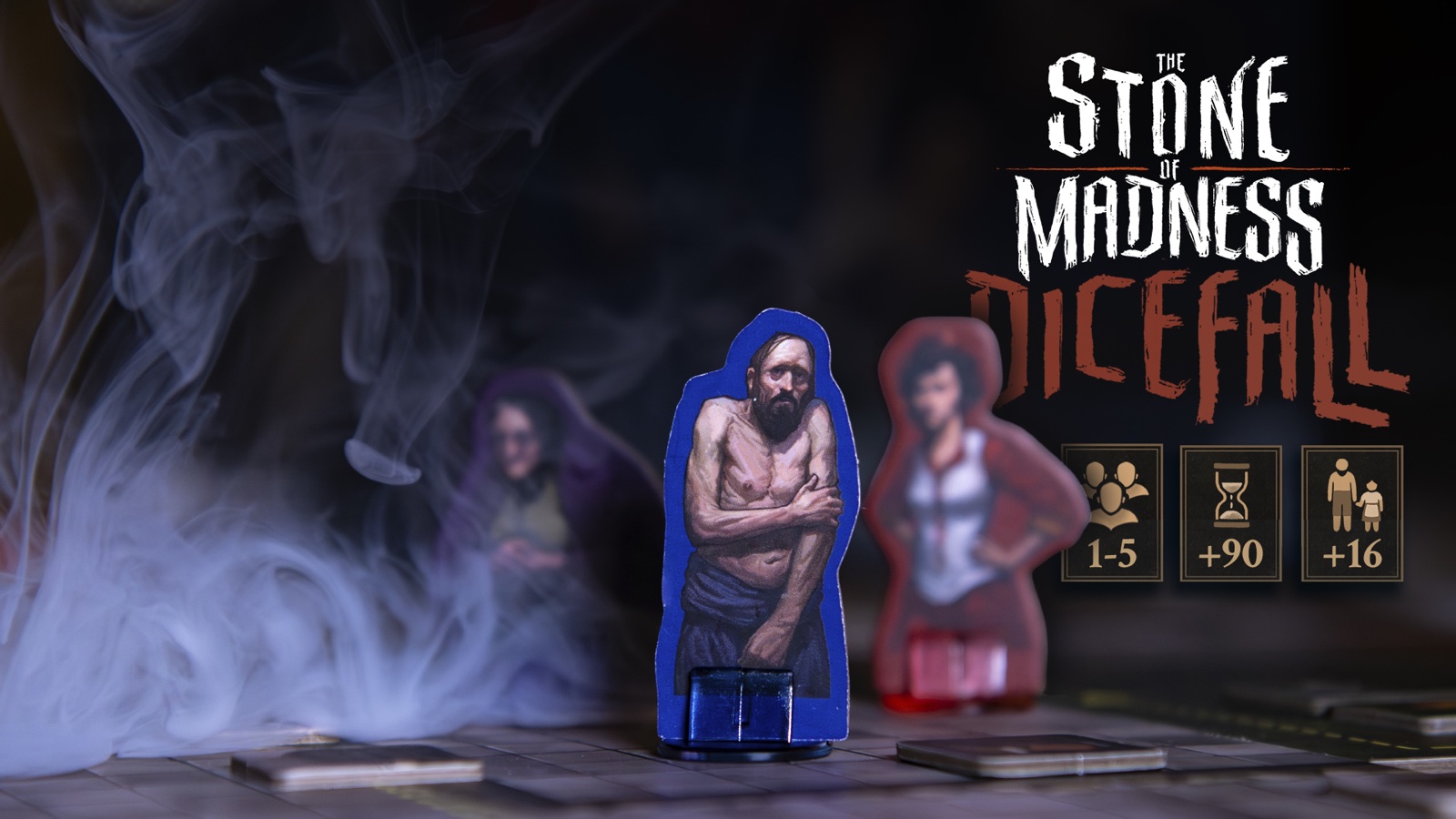
The result is a cooperative tactical-stealth board game for one to five players, listed at 90 minutes and 16+. Players collectively guide five prisoners through an isolated monastery controlled by the Inquisition, trying to manage patrols, noise, sanity, and each character’s phobias. BGG lists dice rolling, grid movement, line of sight, and scenario/campaign play among its mechanisms.
A relaunch shaped by the first campaign’s feedback
Undigital’s September 11 campaign update is unusually direct about the reset. The publisher says it listened to complaints about price and unclear value, then removed miniatures, revisited factory costs, lowered the funding goal, and rebuilt the offering around Core, Deluxe, and Collector options. That is publisher testimony, not an independent quality guarantee — but it is concrete information a prospective backer can use.
The campaign also had a real audience before launch. Undigital reported 2,000 followers on September 2, then announced the September 15 return. That is pre-launch interest rather than a sales result. The subsequent sub-24-hour funding confirmation from The Game Kitchen is the stronger, but still limited, indication that the redesigned pitch found buyers quickly.
The game’s tension is meant to come from pressure, not combat
The official trailer above makes the intended table experience clear: this is not a game about defeating every guard. Actions are dice-driven, patrols react to accumulated alerts, and the characters’ mental conditions restrict or disrupt available choices. The campaign’s design language is about coordinated escape under pressure, rather than a miniature skirmish.
That matters because the production reset also changed the physical proposition. Removing miniatures may make the project more viable for a small publisher, as Undigital says, but it may also change the appeal for collectors who expected a premium display piece. The honest buyer question is therefore not just “did it fund?” It is whether the new component mix, price, and stealth-heavy system suit the group that will actually play it.
Funding is a reason to investigate, not a review score
Fast funding says there was enough confidence to support the new campaign. It does not settle rules clarity, balance, manufacturing quality, shipping costs, or delivery timing. Those are still things to examine on the live page before pledging, alongside the rules material and the trailer.
For now, Dicefall is a worthwhile crowdfunding watch because its creators are not pretending the first version did not happen. They are making the relaunch itself part of the pitch: fewer production-risky pieces, a more accessible entry, and a campaign built around stealth and psychological pressure. Whether that trade-off is right for your shelf is a table-by-table decision.
For more tabletop coverage, visit the board-games lane, compare this relaunch with our Trials of MAYA Gamefound check, read the Steam & Cheese campaign watch, revisit the Food Chain Magnate Special Edition story, or browse the latest articles.