

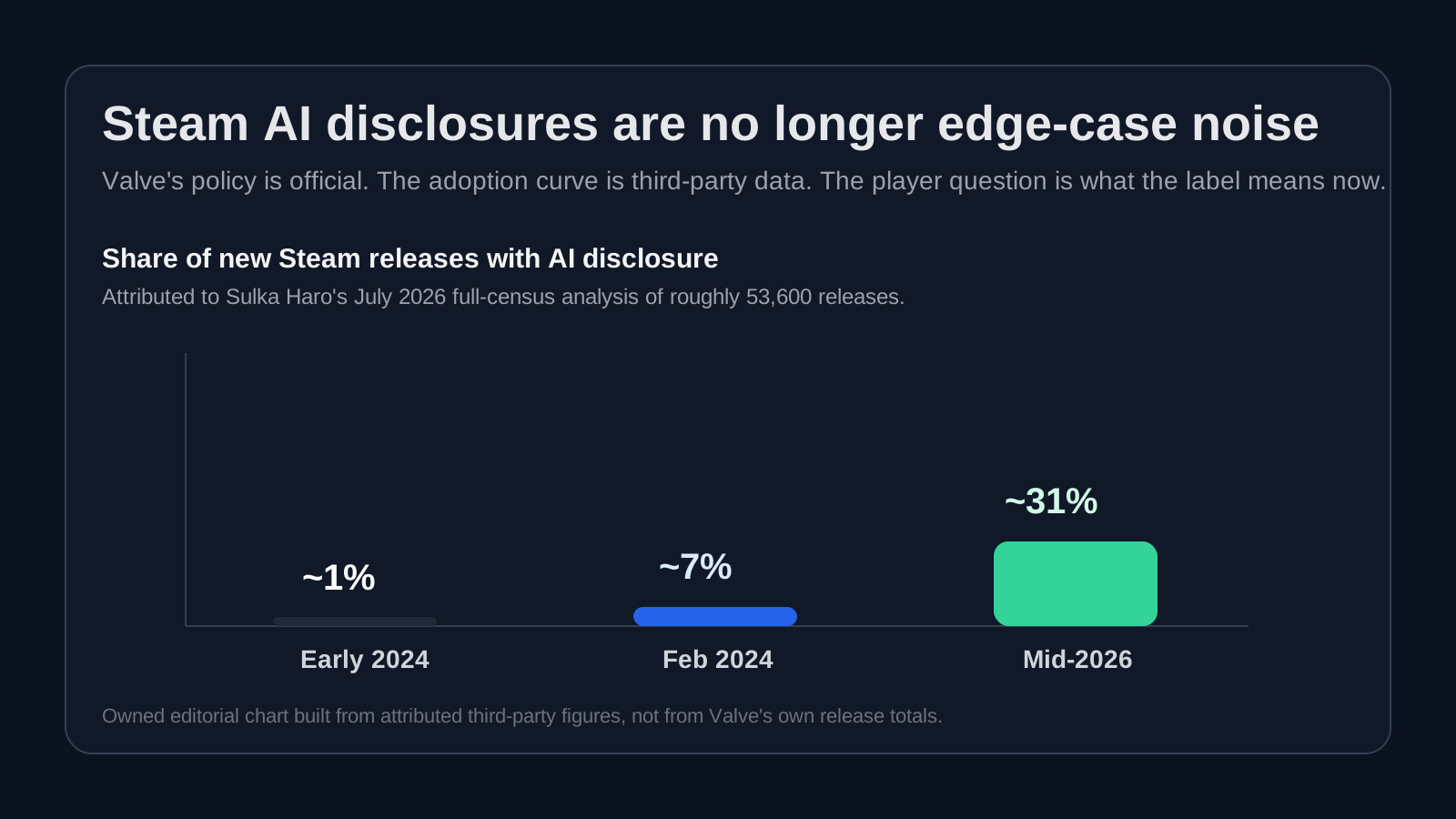
Steam’s AI disclosure has moved past policy-footnote territory. Valve already made the mechanism official back in January 2024. What changed is scale. Sulka Haro’s July 2026 census of 53,597 Steam releases says the share of new games carrying an AI disclosure climbed from about 1% to roughly one in three by mid-2026.
That number is Haro’s, not Valve’s. It still matters because it turns the label into something players are now likely to run into often enough that it changes how they browse the store.
Valve’s part of the story is narrower than the panic version
Steam’s official side is more concrete than a lot of the current yelling around it. The Steamworks Content Survey now includes a Generative Artificial Intelligence Content section. Valve’s documentation says it separates pre-generated AI content from live-generated AI content. Pre-generated covers assets that ship with the game, such as art, sound, narrative, or localization made with AI help during development. Live-generated covers content produced while the game is running.
That second bucket is the real policy hinge. Valve says live-generated AI content needs an extra disclosure describing the guardrails meant to stop illegal output. In the original AI Content on Steam announcement, Valve also said much of that disclosure would appear on store pages so customers can understand how a game uses AI, not just so Steam can review it behind the scenes.
That matters because the label is not a ban marker. It is closer to a transparency marker. Sometimes that will point to low-effort shovelware. Sometimes it will point to a studio disclosing localization or voice workflow. The label does not make those cases identical.

The third-party data is the part that turns this into a buyer story
Haro’s write-up is what pushes the conversation out of policy land and into storefront reality. The post says it is built from a full census of 53,597 releases from July 2023 to July 2026, checking whether each store page carried an AI Generated Content Disclosure section. Haro’s topline claim is that the disclosed share jumped to roughly 31% by mid-2026, after an early-2024 shift tied to Valve’s disclosure system going live.
GameGuideDog has not independently reproduced that census, so the numbers stay attributed. But the shape is strong enough to use carefully because it lines up with Valve’s official timeline and with what current outlet coverage is reacting to.
PC Gamer treats the trend as a discoverability and storefront-quality problem. That framing is useful up to a point. If a disclosure appears on a meaningful chunk of new releases, players need better filters and better habits. What it does not justify is treating every AI-marked game as junk by default.
Developer reaction is less unified than the loudest takes make it seem
The useful tension in the current reaction coverage is not “everyone loves this” or “everyone hates this.” It is that even developers who dislike generative AI often still support disclosure.
In GamesRadar+ reporting published on July 21, 2026, developers including Brian “Burgee” of Erenshor and Brandon Sheffield of Necrosoft argued that players should know how games are made. The same piece also includes concern about stigma, uneven player reaction, and the way AI disclosure can become a lightning rod before players know anything else about the game.
That leaves players with a more practical read than the outrage cycle usually offers. The Steam label is becoming useful precisely because it is incomplete. It tells you AI touched this product somehow. It does not tell you whether that means generated store art, back-end localization assistance, or a live system that matters to play.
What the label should mean to players now
If Haro’s figures are even directionally right, the Steam AI disclosure is now common enough to treat like a real store signal. Not a verdict. A signal.
The smart use is simple:
- check whether the disclosure exists
- read what kind of AI use is being described
- separate shipped assets from live-generated systems
- stay cautious about games hiding behind vague one-line wording
That is the sharper takeaway on Friday, July 24, 2026. Steam’s disclosure is no longer rare enough to ignore, but it is still too blunt to do all your judgment for you. Players do not need panic or blind trust. They need to read the label for what it actually says, then decide whether the game in front of them earned any benefit of the doubt.
For more GameGuideDog coverage, browse our gaming section, revisit Valve’s hardware-side platform cadence in our SteamOS 3.8 preview coverage, compare it with a broader platform-impact piece like our PlayStation disc cutoff analysis, or open the latest English stories.