

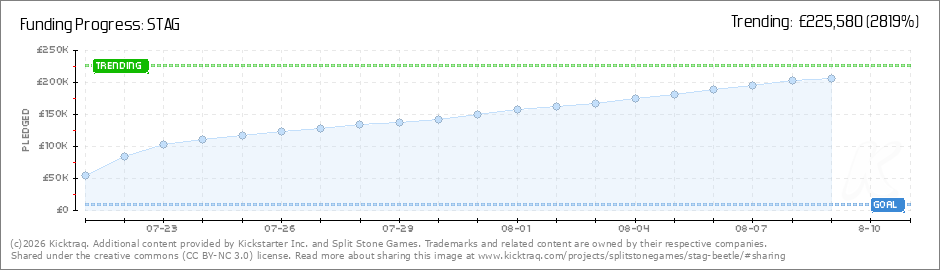
STAG is no longer just a cute beetle game having a nice Kickstarter. It is closing like one of August’s obvious tabletop crowdfunding hits. A live Tabletop Analytics snapshot checked on August 11, 2026 listed Split Stone Games’ campaign at GBP1,979,829 pledged, 10,424 backers, a GBP190 average pledge, and +109 backers on the day.
That number is the story. STAG’s campaign window is listed as July 20 to August 11, which makes this a final-day buyer watch rather than a loose “keep an eye on it” post. The practical question is not whether the campaign found an audience. It did. The question is whether your table wants the kind of tension hiding under the pretty insect art.
Why the surge matters
The official Kickstarter pitch is compact: STAG is a simultaneous strategy game about beetles where smart planning scores points, but greed can punish you. That is a cleaner pitch than most campaigns get in their final hours because it tells buyers where the tension lives.
The tracker signal makes it harder to ignore. More than 10,000 backers is not normal background noise for an indie nature game. The GBP190 average pledge also says a lot of buyers are not just clicking into a cheap curiosity tier. They are buying into the full table object, which raises the stakes for component quality, rulebook clarity, and fulfillment.
This is also where STAG separates itself from the safer nature-game shelf. Tabletopping’s preview frames it as a 1-4 player, 60-120 minute game for ages 12+, designed and illustrated by J.J. Neville. The loop is resource management and simultaneous action programming, with players raising beetles through life stages and making plans before the table reveals what everyone chose.
That sounds calm until the game starts asking players whether to cooperate or take the points.
The hook is not only the beetles
STAG’s visual hook is obvious. The table presence is full of beetle cards, natural textures, circular-board movement, and wooden pieces. That helps explain the campaign’s broad pull, but it is not the whole buyer case.
The real edge is the planning system. Tabletopping describes players placing action tiles on personal mats, choosing rows, and resolving from left to right. Those actions can introduce grubs, develop insects, age them into later forms, draw and tuck cards, collect eggs, trade resources, advance trait tracks, and upgrade action tiles.
That gives the game a useful push-pull. You are not just picking a best action. You are arranging actions while deciding which resources your layout blocks. The perfect sequence can still leave you short on the water, sap, fruit, or eggs needed to execute cleanly.
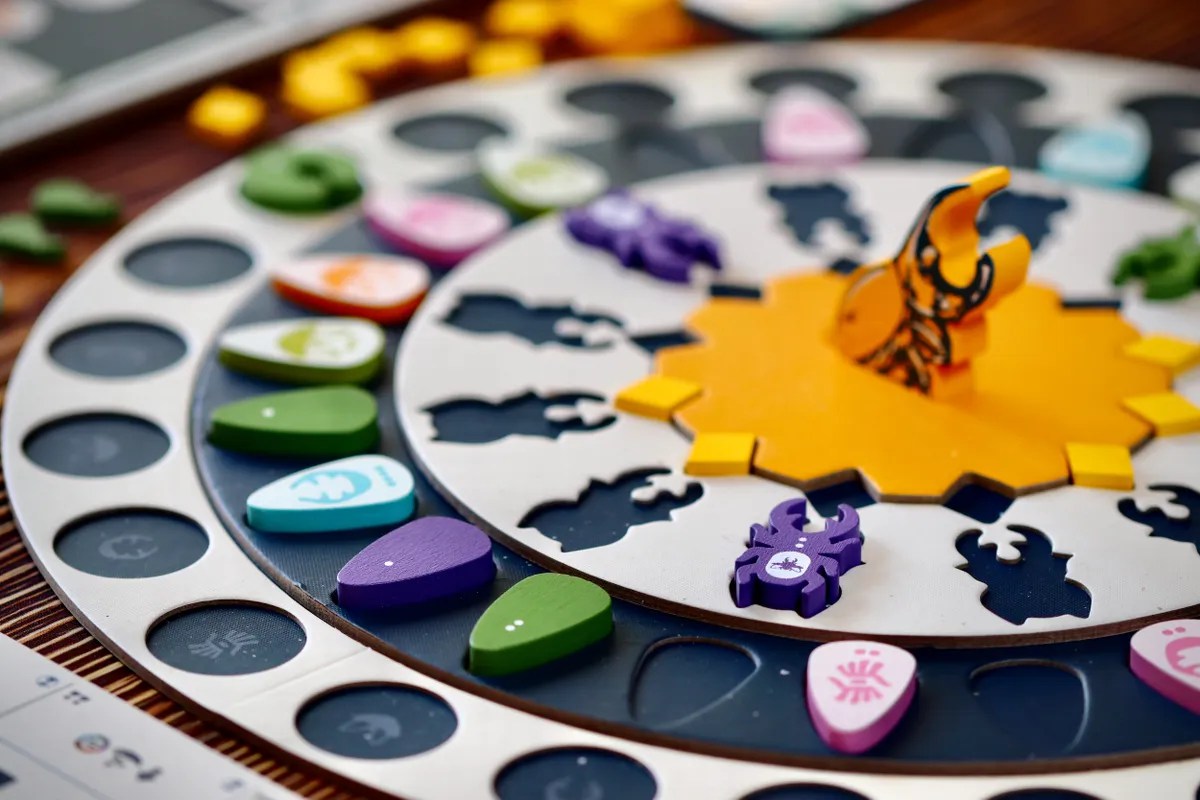
The showdown layer is the sharper part. Once fed adult beetles are ready, players secretly choose whether to forage or fight. If everyone forages, the points get shared. If exactly one player fights, that player takes the prize. If too many players fight, the points can disappear and beetles get punished.
That is not a purely cozy nature puzzle. It is a resource game with a trust problem at the center.
Back or wait?
The case for backing today is simple: STAG has real live heat, a legible rules hook, and enough public preview context to explain why it has broken out. If your group likes simultaneous planning, tactical resource pressure, and a little social reading at the end of a euro-style turn, this campaign is worth a final look before it closes.
The case for waiting is just as practical. This is still a crowdfunding article, not a finished-copy review. A big final-day total does not answer shipping friction, final production quality, insert usability, balance at different player counts, or whether the showdown system feels tense five plays later instead of merely clever once.
The cleanest read is this: STAG has earned the attention. Nearly GBP2 million and more than 10,000 tracked backers turn it from “pretty beetle game” into a major August tabletop campaign. Buyers still need to decide whether they want the bite that comes with those wings.
For more tabletop coverage, visit the board-games lane, read our earlier STAG final-48-hours buyer watch, check the Final Fantasy board-game Gen Con watch, or revisit Cult of the Lamb’s Kickstarter heat.