
Orbitals makes the most sense for two people who want a compact, cheerful co-op adventure and already know when they will play it. The retro-anime presentation has strong support from named critics, but simpler teamwork and a short campaign put limits on the recommendation. A solo buyer should stop here: Nintendo explicitly says there is no single-player mode.
GameGuideDog has not played Orbitals. This reported review snapshot combines official information checked November 2 with two independent September accounts of playing the Switch 2 game. It is a new assessment of player fit, not a launch-day report, current-build test or original scored review. Those older play accounts cannot certify October’s fixes.
Start with your partner, not the screenshots
Nintendo’s current U.S. listing puts the standard game at $39.99. It identifies Shapefarm as developer and Kepler Interactive as publisher, with two players on one system or online. Its description lists local split-screen, GameShare and the Orbitals Global Friend’s Pass. Check the conditions for your chosen arrangement before buying; an advertised sharing route is not a promise that every setup needs no additional hardware, account or service.
The important purchase question comes before price: is the other person actually interested? Two-player design can make cooperation essential rather than optional. It also means an unfinished evening depends on someone else’s calendar. Buyers looking for a game to dip into alone between sessions should not interpret the friendly art as evidence of a fallback solo campaign.
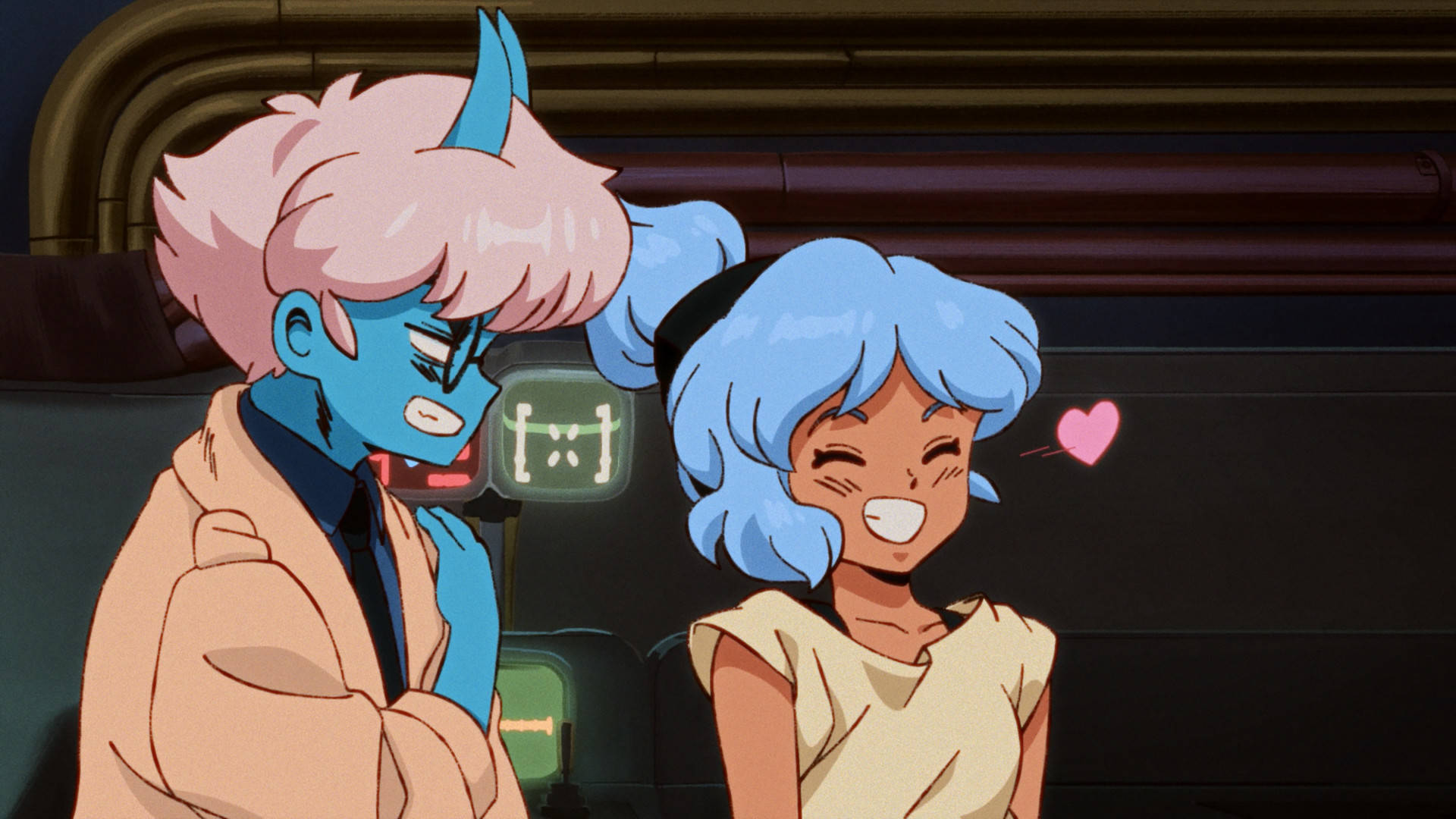
Shapefarm / Kepler Interactive / Nintendo. Official promotional image; not a GameGuideDog capture.
The visual identity has a stronger case than the story
Alan Wen’s Creative Bloq review, published September 3, praises the consistency of the retro-anime presentation and its cheerful leads. He is less persuaded by the story outside the cinematics. His experience also exposes a practical tension: online conversation competed with following dialogue and subtitles.
That distinction is useful for choosing a partner. Someone who wants to talk through puzzles may value the shared activity more than every story beat. Someone hoping to absorb a narrative quietly has a reason to hesitate. The game’s appearance can be an attraction without making its storytelling the main reason to pay.
The supplied images show the contrast clearly: expressive character close-ups alongside split-screen machinery puzzles. They demonstrate the promotional visual style, not how readable a moving scene feels on your own display. The official Nintendo trailer above is a better first look at the presentation than a generic comparison to an anime series.
Expect approachable cooperation, not proof of endless invention
Nintendo describes asymmetric tools and communication-led puzzles. That suggests a game where the two participants contribute differently, rather than merely sharing the same corridor. The appeal is coordination: deciding what your partner needs and making your own action useful to them.
Wen finds inventive asymmetric play but considers it simpler than Hazelight’s co-op games. He reports a smooth online session in his own setup; we are not turning that into a universal network or performance verdict. A pair with different experience levels may welcome a less demanding premise, while two puzzle veterans may want more complexity. Those are different buying priorities, not opposing camps of players.
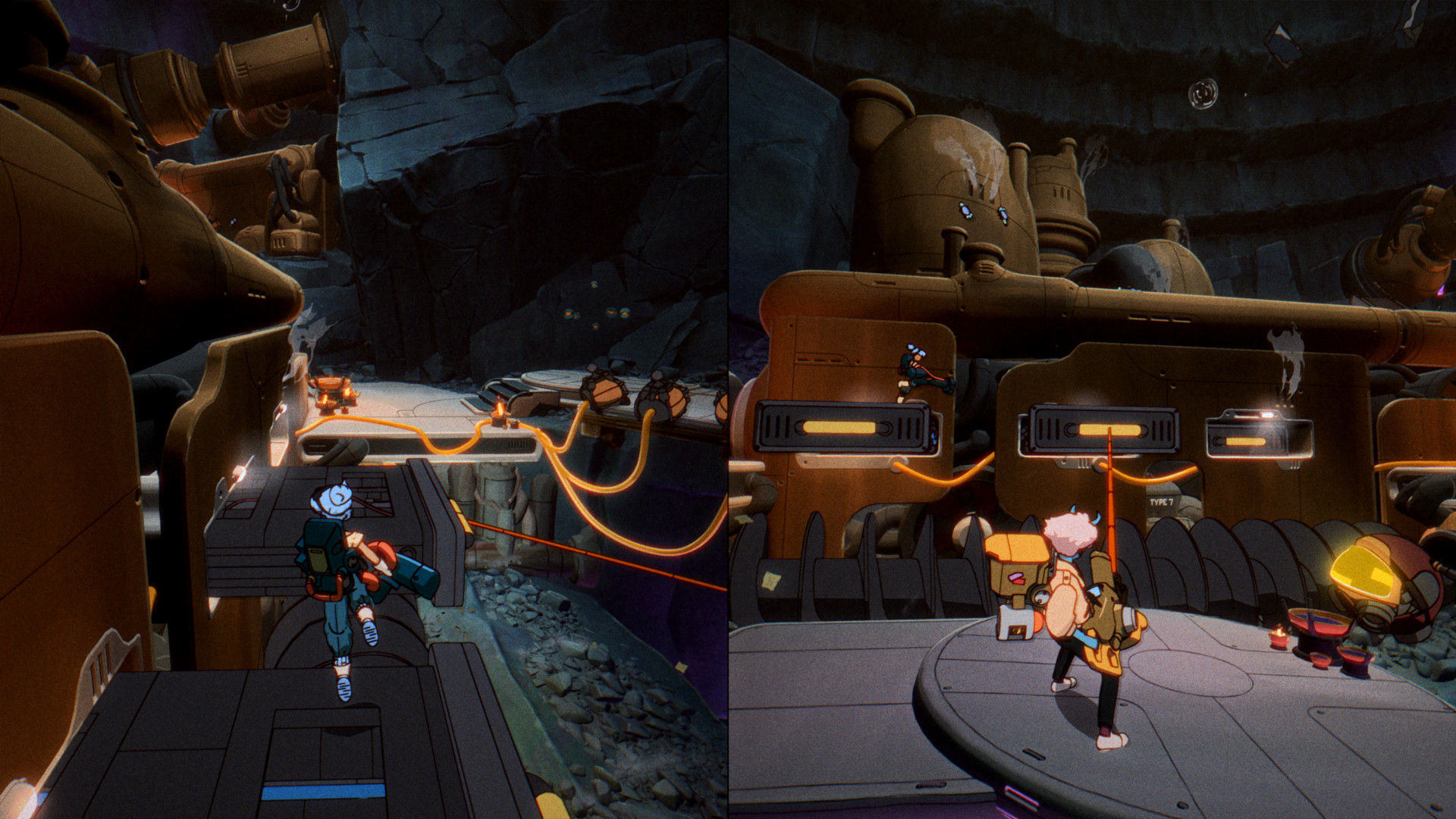
Shapefarm / Kepler Interactive / Nintendo. Official promotional image; not a GameGuideDog capture.
A short campaign can suit the plan and still weaken the value
Hayes Madsen and George Yang’s September 1 Space feature is explicitly co-authored because the game requires two players. Their account likes its lightness and puzzle-led cooperation, but puts their adventure at roughly five hours and finds the rush into the finale less satisfying than the earlier rhythm. That is their play duration, not a guaranteed completion time.
Our buying interpretation is narrower than either automatic praise or an hours-per-dollar calculation. A short game can be easier for two busy people to finish together. It can also disappoint a pair expecting a long shared project. Agree on that expectation before spending: a manageable commitment and an abrupt ending can both be true.
Neither of these two accounts establishes broad present-day player consensus. We are not using an old aggregate score, sales estimate or eShop ranking to inflate the recommendation.
October’s update is context, not our technical all-clear
The official October 5 version 1.0.5 notes announce collision and camera fixes, repairs for long loading in named areas, and several progression and presentation problems. We have not installed the patch or measured its effect. The publisher’s list shows what it says it addressed; it cannot prove that every reported problem is gone.
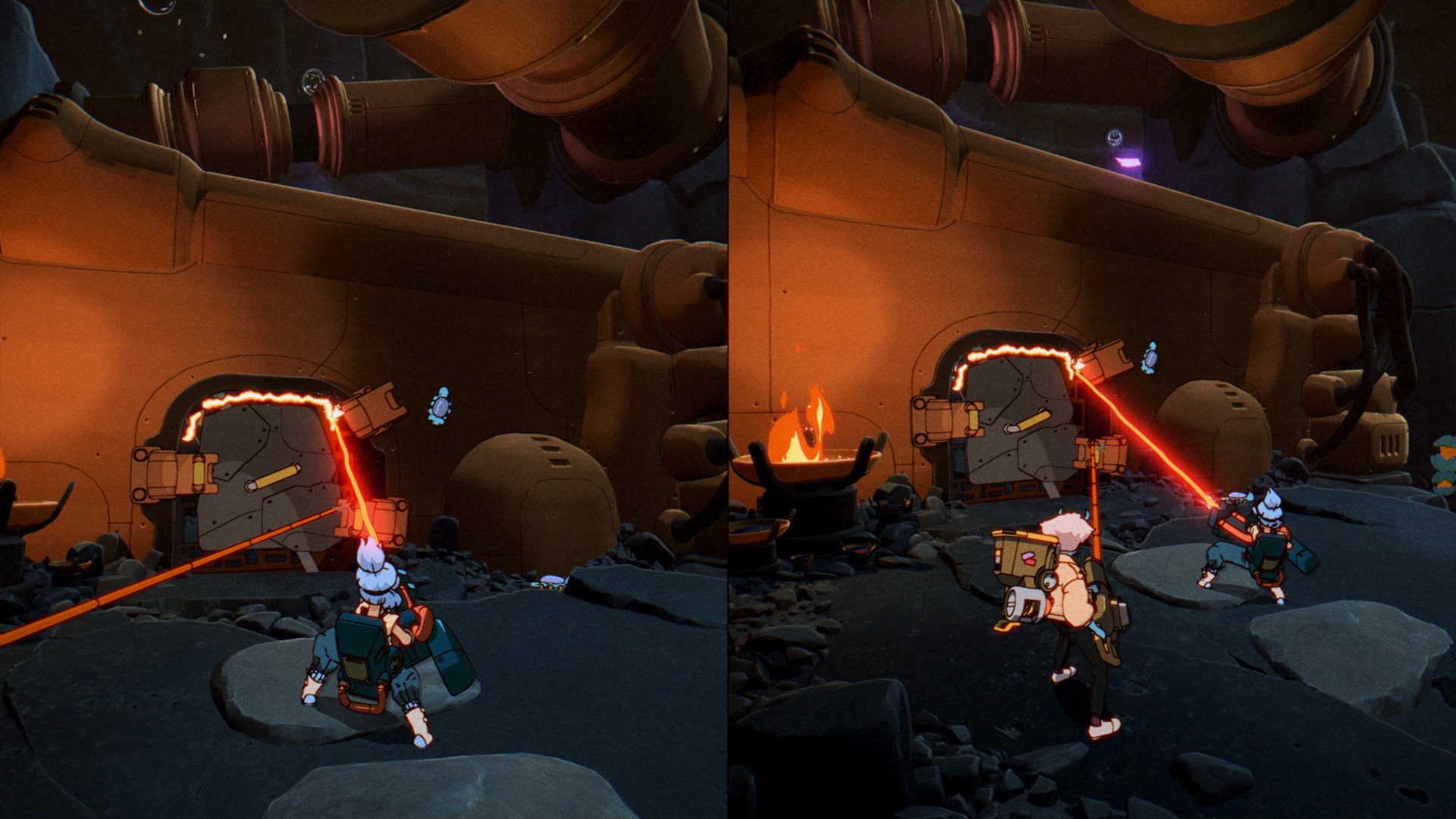
Shapefarm / Kepler Interactive / Nintendo. Official promotional image; not a GameGuideDog capture.
The practical recommendation remains conditional. Consider Orbitals if you have a willing partner, enjoy the supplied visual style and want an approachable, finite adventure. Wait or choose something else if you need solo play, expect a lengthy campaign or mainly want demanding puzzle escalation. Before paying, confirm your local price and the exact co-op setup you plan to use. That resolves more than another score would.
For other attributed assessments, browse Reviews. Our Trails in the Sky 2nd Chapter snapshot examines a different kind of commitment: patience with a long-running RPG rather than scheduling a partner.