

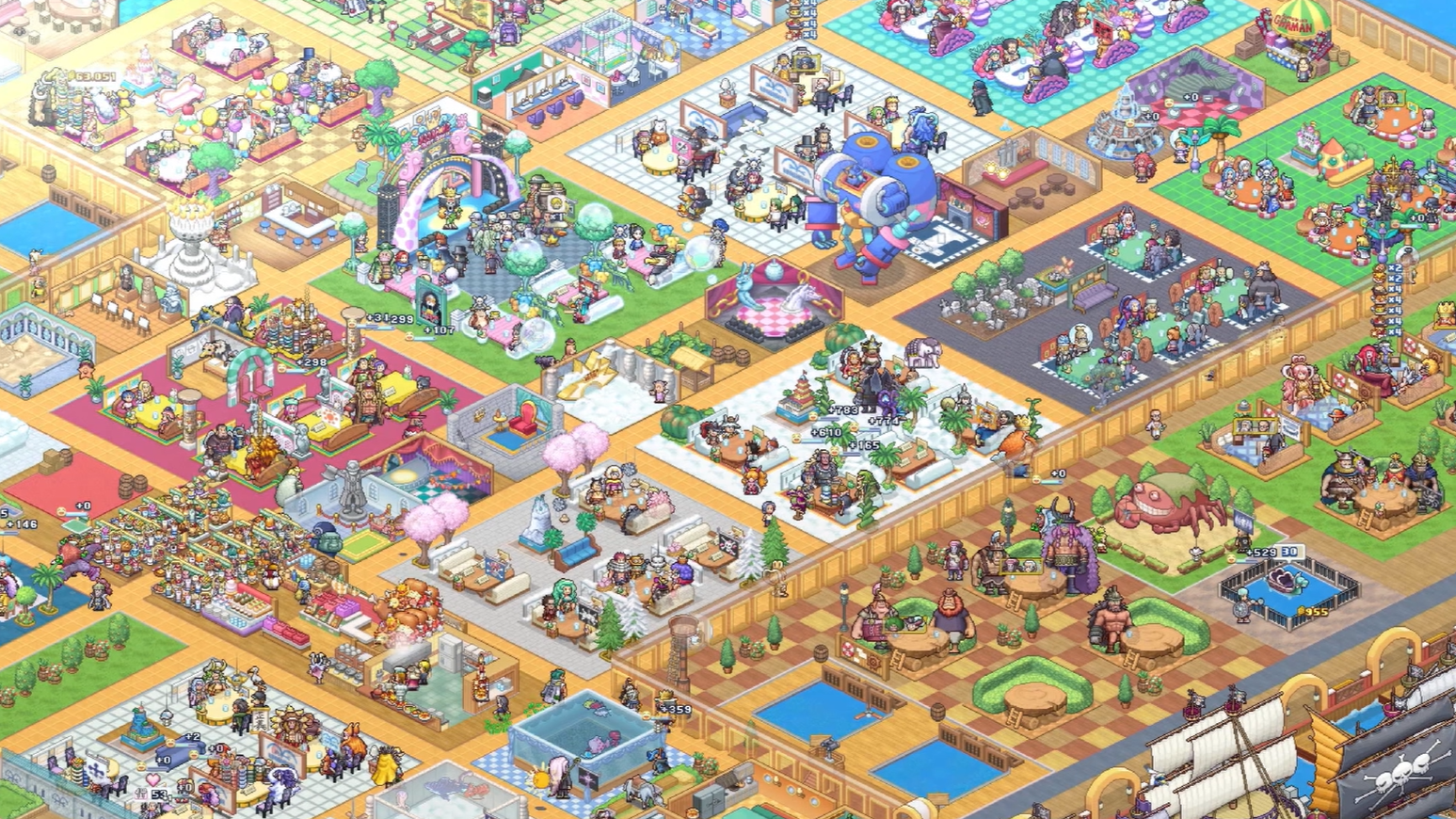
ONE PIECE: Grand Gourmet asks you to run a restaurant with the Straw Hat Crew. Start the buying decision with its menus and decorating. Kairosoft’s management sim has a specific attraction: turning familiar characters into customers and giving their visits a place in a restaurant you build. Whether that sounds satisfying depends on how much you enjoy the work between those visits.
Our October 23 check of the US Steam listing found a $19.99 price. Steam displays October 22 as its release date; Bandai Namco’s October 23 launch announcement says the game is now available. Those are separate dated listings, not evidence of a delay or a synchronized worldwide unlock. This is reported buyer analysis. We have not played it or tested its performance.
Decide whether you want to run this restaurant
The official description puts ingredient gathering, recipe development and decorating at the centre of Baratie Number Two. Characters can become regulars if they like your design. The publisher advertises more than 400 characters and more than 200 furniture, building and decoration items; those are supplied counts, not our inventory.
That makes genre fit more useful than franchise loyalty as a first filter. Collecting characters can supply a reason to keep arranging a restaurant, but it cannot tell you whether you will enjoy arranging it. If your ideal ONE PIECE game is built around action, this premise asks for a different appetite. If you like management decisions with a recognizable cast, there is a concrete idea to inspect.
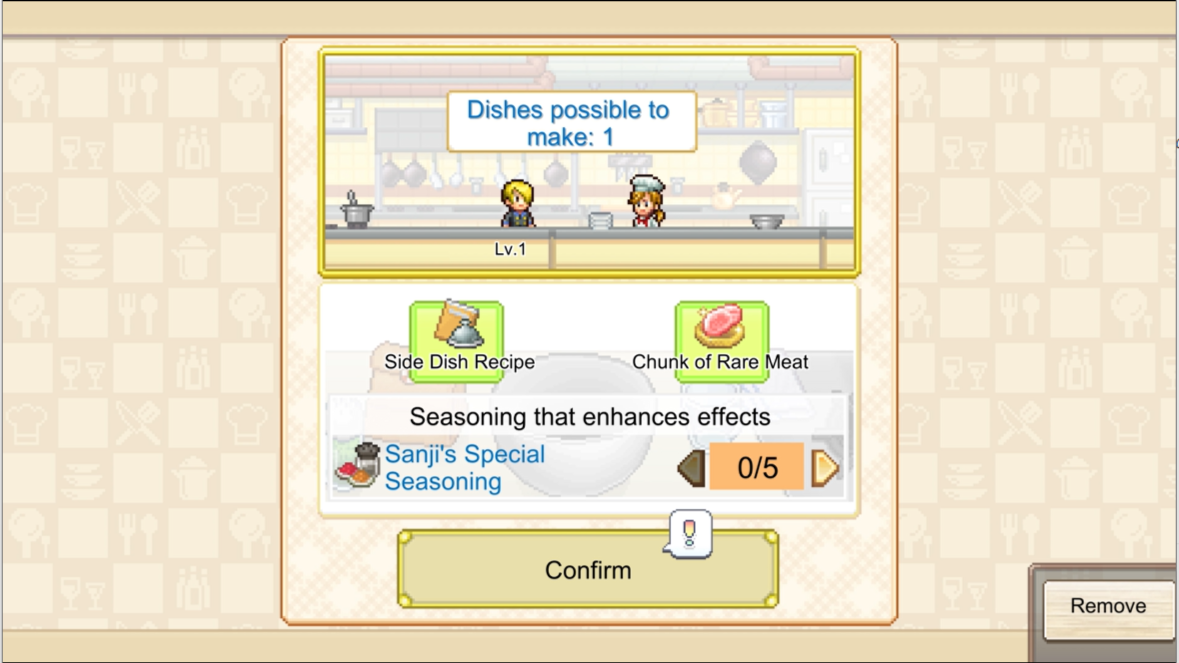
Bandai Namco Entertainment Europe / official promotional screenshot. ©Eiichiro Oda/Shueisha, Toei Animation; ©Bandai Namco Entertainment Inc. Supplied image, not our gameplay capture.
The interface is part of the purchase
Three named Steam accounts show why a pleasant premise is not a complete recommendation. MossWoods likes the food, decorating possibilities and characters, but reports friction with placement controls, storage and menu organization. That matters because decorating is central to the advertised appeal. A complaint about the act of placing furniture is not peripheral to a game selling restaurant customization.
Rorro, a self-described longtime Kairosoft and ONE PIECE fan, recommends it and finds the interface familiar. Rorro also reports no difficulty keeping up with the text. That account suggests familiarity can matter; it does not establish that another player’s difficulty is trivial.
SoleSurvivor likes the restaurant premise and pixel characters but criticizes fonts and text pacing. An appended update acknowledges the new text toggle and expresses hope for improvement. These are individual launch experiences selected from helpfulness-ranked reviews, not a representative survey. Their installed builds are unknown, and we have not reproduced their complaints. They identify things to look at closely rather than settle the game’s quality.
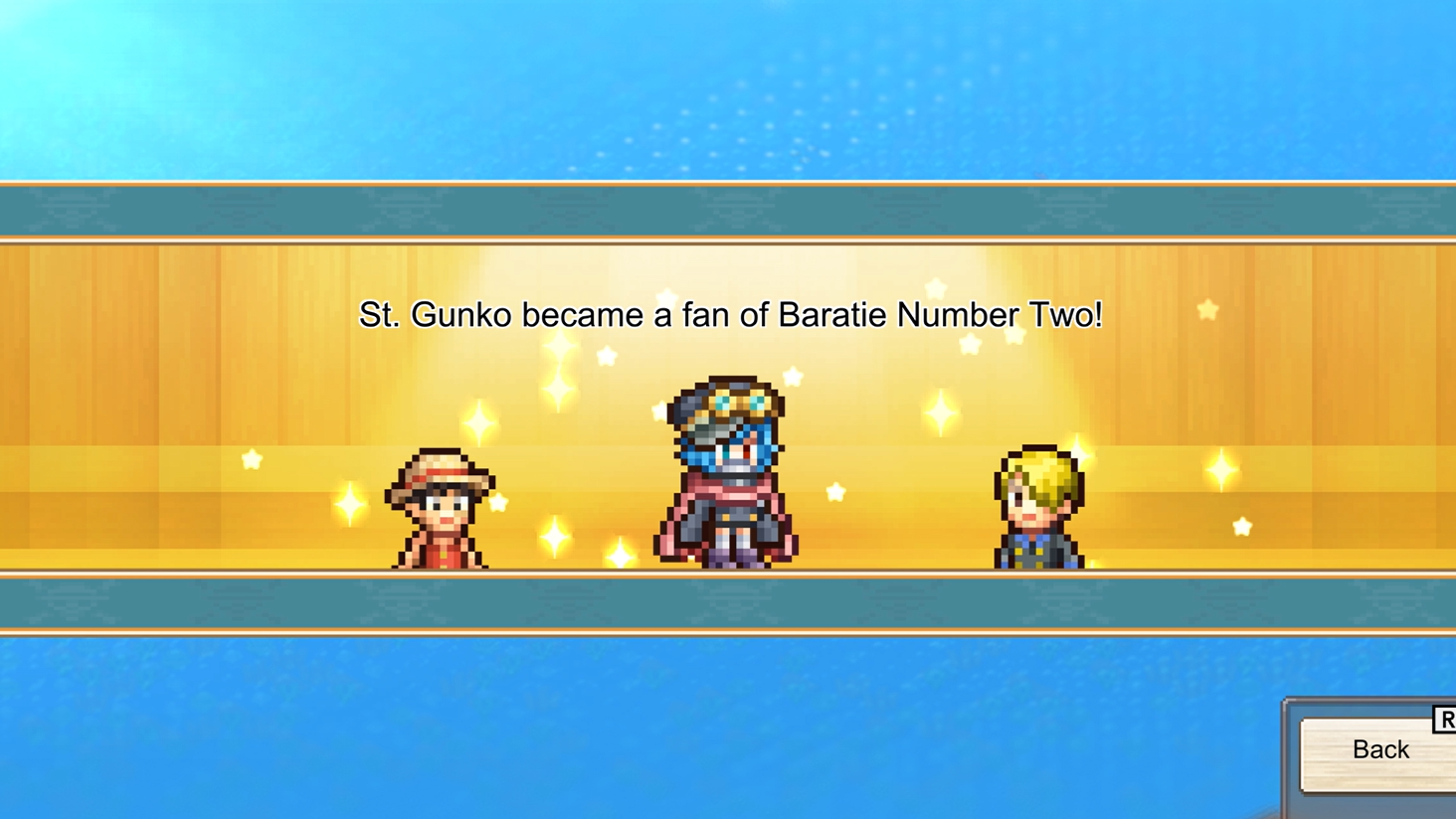
Official promotional screenshot supplied by Bandai Namco Entertainment Europe. ©Eiichiro Oda/Shueisha, Toei Animation; ©Bandai Namco Entertainment Inc. The English text is preserved from the supplied image.
What 1.0.7 actually promises
The publisher’s October 23 update notice identifies the Steam version as 1.0.7. It adds an automatic-text-progression toggle for certain text and adjusts the display order of certain graphical elements. Read that scope literally: it does not promise control over every text sequence, a general interface overhaul or a measured framerate improvement.
Reading an older pacing complaint without that update would miss relevant information. Treating the update as proof that every complaint is fixed would make the opposite mistake. The next useful evidence is an account that explicitly checks the changed behaviour on the updated build.
Deck buyers should read the detail
Steam lists full controller support and Cloud. Valve rates the game Playable, not Verified: its assessment says default controls reach all functionality and interface text is legible, but warns about non-Deck button icons and potentially needing to switch an external controller manually. These are Valve’s findings, not our handheld test. The language list has 12 entries and does not include Polish.
For a PC buyer, the practical check is whether these menus, placement controls and text options suit the way you intend to play. Our Hungry Horrors buying analysis makes a similar distinction between a food-themed pitch and the decisions underneath it. In this case, the restaurant loop deserves attention, while the first patch deserves a narrow reading. Follow our PC gaming coverage for further checks; buy Grand Gourmet for the management work you want, not for an assumed action game or an untested fix.