


Nomad Drive is a $14.99 Early Access road trip with a separate demo, a developer-reported repair update and a three-stage roadmap. Those facts describe three different things. Mixing them together would make the game look more complete, or more thoroughly fixed, than the evidence supports.
This is a reported buyer analysis, not a hands-on review. We have not tested co-op, moved a demo save into the paid game or checked a long drive for stutters. The useful question is simpler: does the game available now interest you without counting future systems as delivered?
Update 1.0.1 is a list of claims to test
Indie Devil’s Update 1.0.1 notes focus heavily on multiplayer. The developer says vehicle paint, rust and dirt data now download at a pace a connection can handle instead of arriving together. The update also adds a vehicle-appearance loading indicator, changes reconnection behavior and addresses items loading behind their saved position when a save was made during a drive.
The same notes are open about unfinished work. A proper fix for camera stutter or freezing with some high-polling-rate mice is still in development. The developer supplies a workaround, but that is not the same as closing the issue.
These are specific repair claims, not our measurements. They are more useful than a vague promise of better performance because players can check the affected behavior. They still do not prove that every connection problem, save-position bug or hitch is gone.
The roadmap is not the current inventory
The separate Road Ahead post divides future work into three updates. The first lists new RVs, towing, sleeping, points of interest and furniture. Later stages list character customization, lake and seaside biomes, fishing, recipes, a journal and additional motorcycles.
No dates are attached to those stages. The official feed checked on November 26 still puts the roadmap behind Update 1.0.1, the developer’s 100,000-player announcement and a November 24 Steam Awards request. It does not show a newer post saying that a roadmap phase has shipped.
Store marketing also mentions fishing while the roadmap places fishing in Update 2. That mismatch is another reason not to build a precise current-content checklist from promotional copy alone. If one planned system determines the purchase, verify it in the live build first.
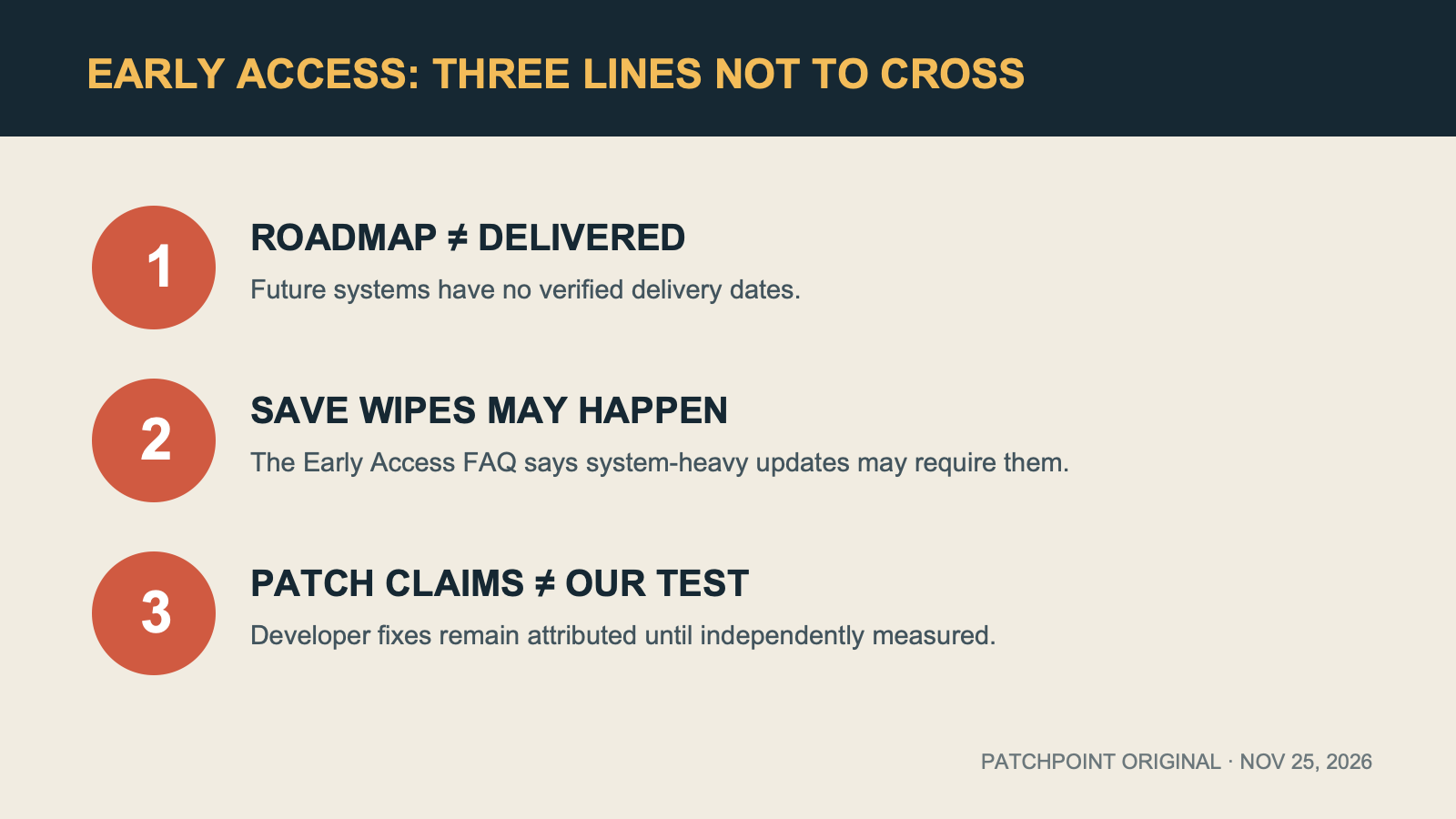
PatchPoint original. The graphic separates source claims; it does not depict gameplay.
Demo and save warnings need separate labels
The current U.S. Steam metadata, checked immediately before publication, lists Windows, solo and online co-op, a separate demo and a $14.99 price. A demo entry confirms availability, not save transfer or performance.
Two older warnings describe different risks. A replacement-demo notice said saves from the earlier demo were incompatible with its replacement. The Early Access FAQ separately warns that system-heavy future updates may require wipes. Neither statement means the current paid build routinely deletes everyone’s progress.
The developer also reported reaching 100,000 players one week after launch. That is an attributed milestone, not audited sales, concurrent users or retention. It does not turn a developer update into an independent quality verdict.
Our Blacksmith Master 1.0 analysis shows why save compatibility and changed progression should be judged separately. Car Park Capital presents a similar choice between current content and roadmap promises; more coverage sits in the indie games archive.
Nomad Drive’s current offer is a $14.99 Early Access game with a demo and an active developer feed. Buy it for the road trip it can provide now. Treat its fixes as things to verify and its roadmap as a plan, because that is what the available evidence establishes.