
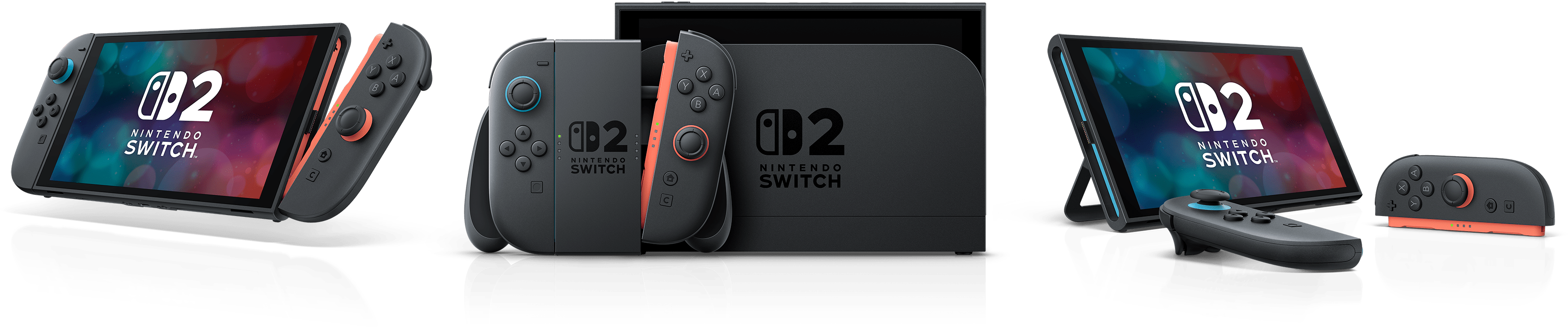
Nintendo Switch 2 is finally live on Nintendo’s own site, which means this has stopped being a rumor story and turned into a plain buying decision. The good news is that Nintendo’s pitch is at least concrete. The system gets a 7.9-inch 1080p LCD, 256 GB of internal storage, HDR10, VRR up to 120 Hz, two USB-C ports, and docked output that can reach 4K at 60 fps. The more important news is the fine print around those headline features.
This is where the launch read gets more useful than the marketing shorthand. Nintendo is not promising universal 4K or universal 120 fps, and it is also not promising that every old Switch game will work perfectly. If you are weighing a day-one jump, the practical questions are compatibility, storage, battery expectations, and whether the early software lineup is enough for your habits.
The screen and storage jump are real, and they are probably the easiest win to understand
The cleanest hardware upgrade is the one you will notice first. Nintendo says Switch 2 uses a 7.9-inch 1920x1080 LCD with HDR10 support and variable refresh rate up to 120 Hz. That does not automatically make every game look transformative, but it does move the handheld baseline forward in a way the original Switch increasingly could not.
Storage matters almost as much. Nintendo lists 256 GB of UFS internal storage, which is a far more practical starting point than the original machine’s cramped baseline. But there is a catch attached to the expansion story: Switch 2 only supports microSD Express cards for expandable storage. Older microSD cards from your existing Switch can still help with copied screenshots and video, but Nintendo says they are not the answer for running Switch 2 software.
That one detail is likely to land harder with real buyers than a lot of trailer language. A bigger screen and faster storage are easy wins. The need for newer storage media is the kind of upgrade tax people feel immediately.
The 4K and 120 fps talk is real, but it comes with enough conditions to matter
Nintendo’s feature page makes the sales pitch sound simple: connect Switch 2 to a TV and play in up to 4K resolution, with frame rates up to 120 fps in compatible games. The specs page is where that promise becomes more honest.
Docked output can reach 3840x2160 at 60 fps. Nintendo also says 120 fps support applies when 1080p or 1440p resolutions are selected, and even then it depends on compatible games and displays. Handheld and tabletop play top out at the system screen’s 1920x1080 resolution. That is still a meaningful bump from the original Switch era, but it is not a blanket performance claim.
This is the part buyers should keep straight. If you read the headline version only, Switch 2 sounds like a machine that simply does everything at once: 4K, 120 fps, smoother everything. Nintendo’s own wording is narrower than that, and the narrower version is the one worth publishing.
The social and controller changes are bigger than they sound on paper
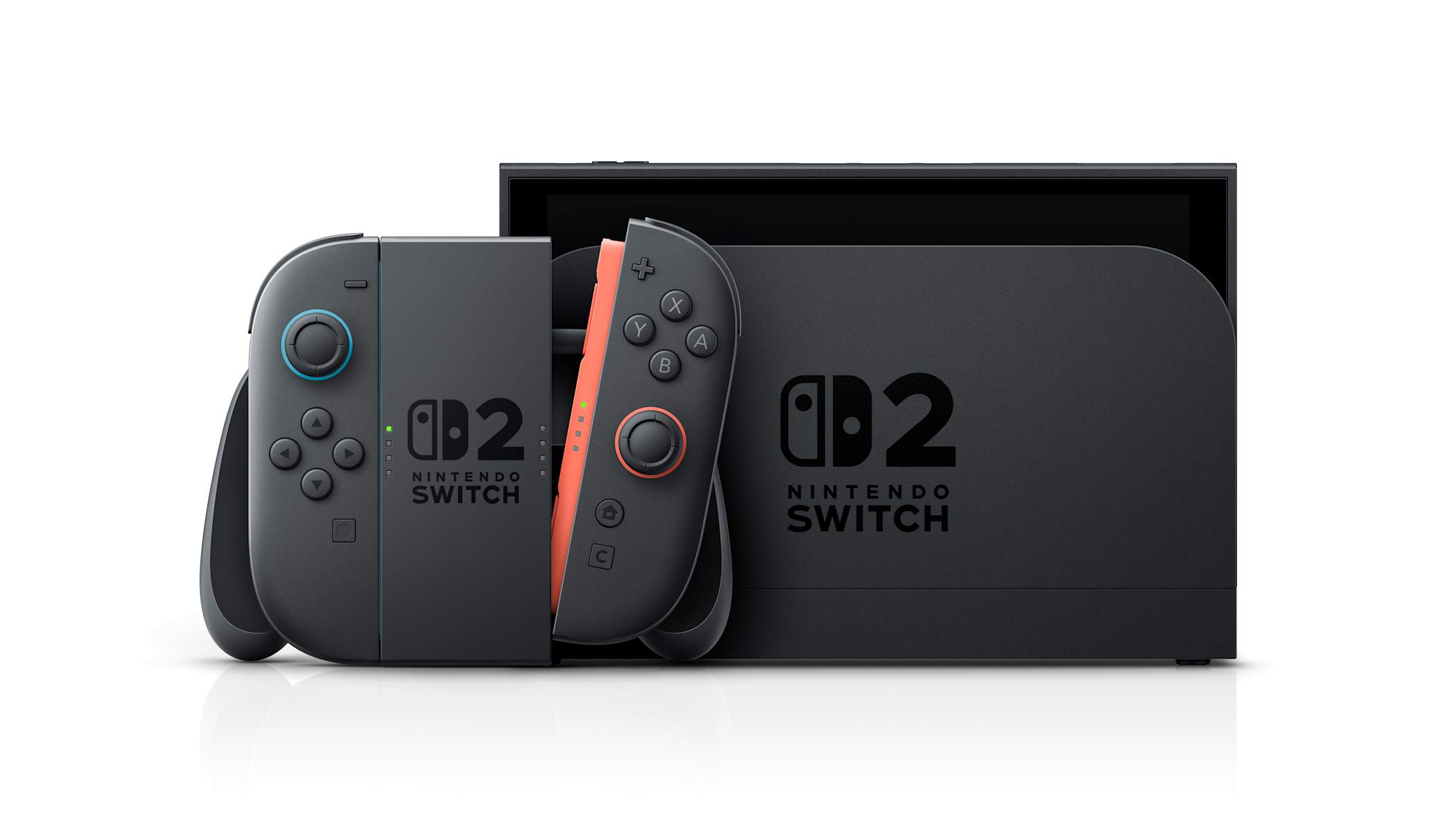
The new Joy-Con 2 controllers attach magnetically, and Nintendo says each one can work like a mouse in compatible games. That alone gives Switch 2 a more obviously different input identity than a routine screen-and-spec refresh would. Whether developers use it well is still an open question, but at least it is a concrete one.
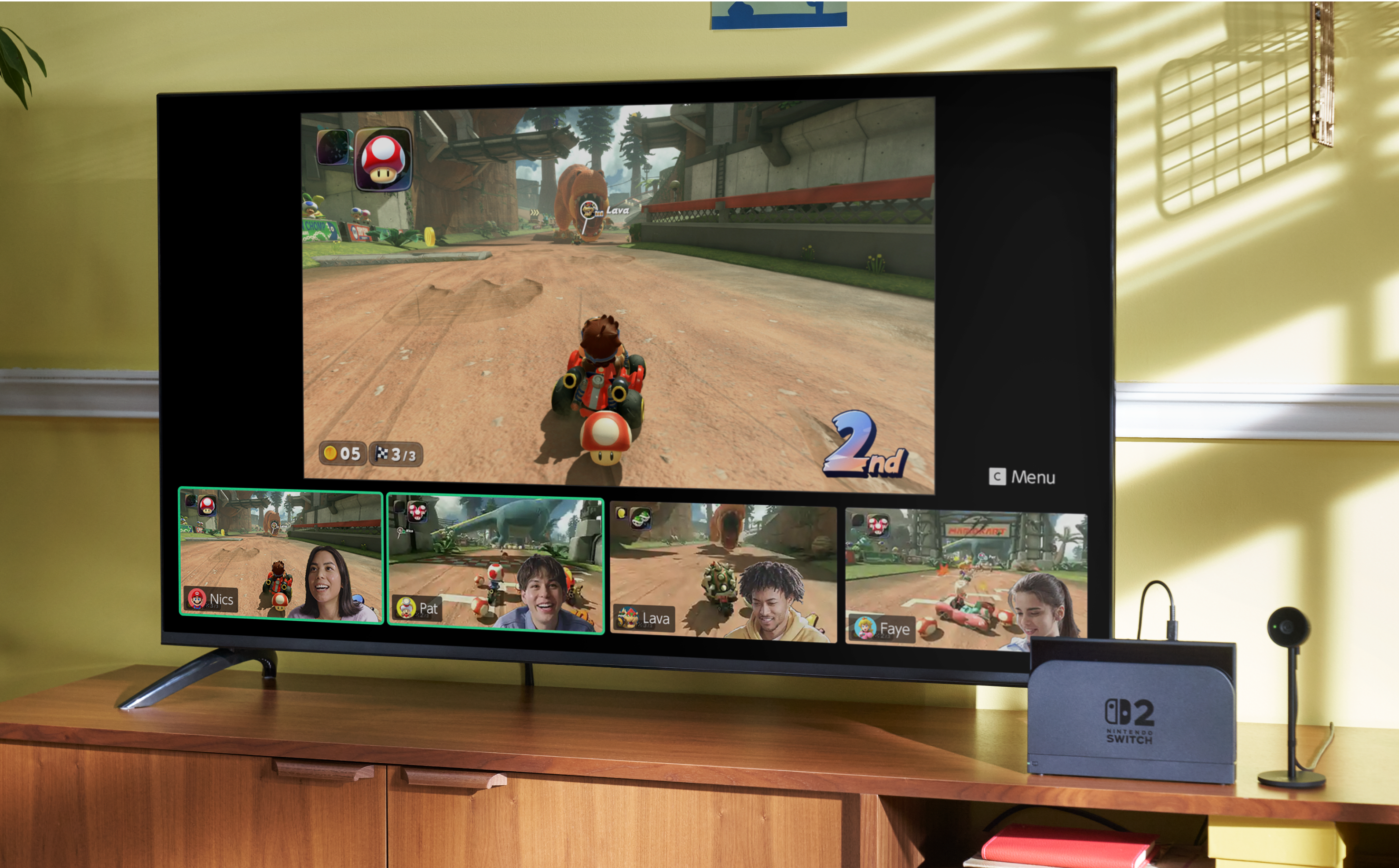
Then there is GameChat, which Nintendo is pushing hard as a built-in social feature. The company says you can voice chat, share your screen, and connect a compatible USB-C camera for video chat. That sounds much more current than Nintendo’s old online reputation, but the footnotes matter again: online features require internet, a Nintendo Account, and Nintendo Switch Online membership, while video chat needs a separate camera accessory and is not available in all countries.
So yes, Switch 2 looks more socially modern than the first Switch. It also still looks like a Nintendo platform where the best reading lives in the requirement list, not just the hero copy.
Backward compatibility is useful, but Nintendo is already telling you not to flatten it
Nintendo’s broad message is friendly: Switch 2 can play compatible Nintendo Switch games, in both physical and digital form. That is a strong selling point. It is also not the same thing as full, no-asterisk backward compatibility.
Nintendo says outright that some Nintendo Switch games may not be supported or fully compatible with Switch 2. That is not a minor wording issue. It is a real buying consideration for anyone whose launch instinct is, “Fine, I’ll upgrade now and keep my whole old library intact.” The library value may still be there, but the safe wording is compatible games, not everything.
The software pitch is broad enough to sell the platform, but not every buyer needs to move today
Nintendo’s main hub currently highlights Pokémon Pokopia as available now and features games such as Mario Kart World, Donkey Kong Bananza, Fortnite, Resident Evil Requiem, and EA Sports FC 26. The wider games page also points to titles including Metroid Prime 4: Beyond Switch 2 Edition, Hades II Switch 2 Edition, The Duskbloods, and multiple major third-party versions.
That is enough to make the platform feel alive at launch. It is not automatically enough to make it urgent for every current Switch owner. The strongest honest case for buying now is not “Nintendo solved every old complaint overnight.” It is that the hardware baseline is finally more modern, the software board looks credible, and the social/input ideas are more ambitious than a normal mid-cycle refresh.
The weaker case is just as clear. If your current Switch still covers your habits, if your backlog is mostly older games, or if you do not want to buy into microSD Express and other launch-adjacent extras yet, Nintendo’s own pages do not force the upgrade argument.
That leaves the clean takeaway pretty simple: Switch 2 looks like a meaningful platform step, but the day-one value depends less on the words “available now” and more on whether you care about the display jump, the storage change, the compatibility caveats, and this first software wave. That is a real launch story. It is just not the same thing as a universal buy recommendation.
For more GameGuideDog coverage, browse our hardware section, check the latest English stories, revisit our earlier SteamOS 3.8.1 Preview report, or read our Steam Deck beta client update coverage.