


Melvor Idle 2: A RuneScape Adventure launched into Steam Early Access on November 17. For someone who played the demo, the useful question is whether to continue now. For someone waiting to play on a phone, today’s release does not answer the same need: Android and iOS remain planned for 2027.
The launch guide, full patch notes and current store listing point to different choices for those two players. Demo players have developer guidance for carrying progress forward and a defined next chunk of content. Mobile-first players still have a platform announcement to wait for. Neither group should treat the store’s complete feature description as a checklist of everything available at launch.
Before moving your demo save
The developer says demo progress carries into the paid Early Access release automatically through Melvor Cloud. Offline saves also carry over automatically, but the guide attaches an important condition: you must be using the same device. An offline save on one machine is not a promise that another machine will find it.
The guide also describes a local backup option: use Copy save string in the save menu and keep the result on your computer. Keep that backup separate from assumptions about which transfer scenarios are covered. We have not installed the release or tested save migration; these are the studio’s instructions, not a guarantee from our own testing.
For a demo player, this makes the purchase a continuation decision rather than an assumed fresh start. Check which save route you used before changing devices. The cloud and offline instructions are different, even though both appear under the same promise of carrying progress over.
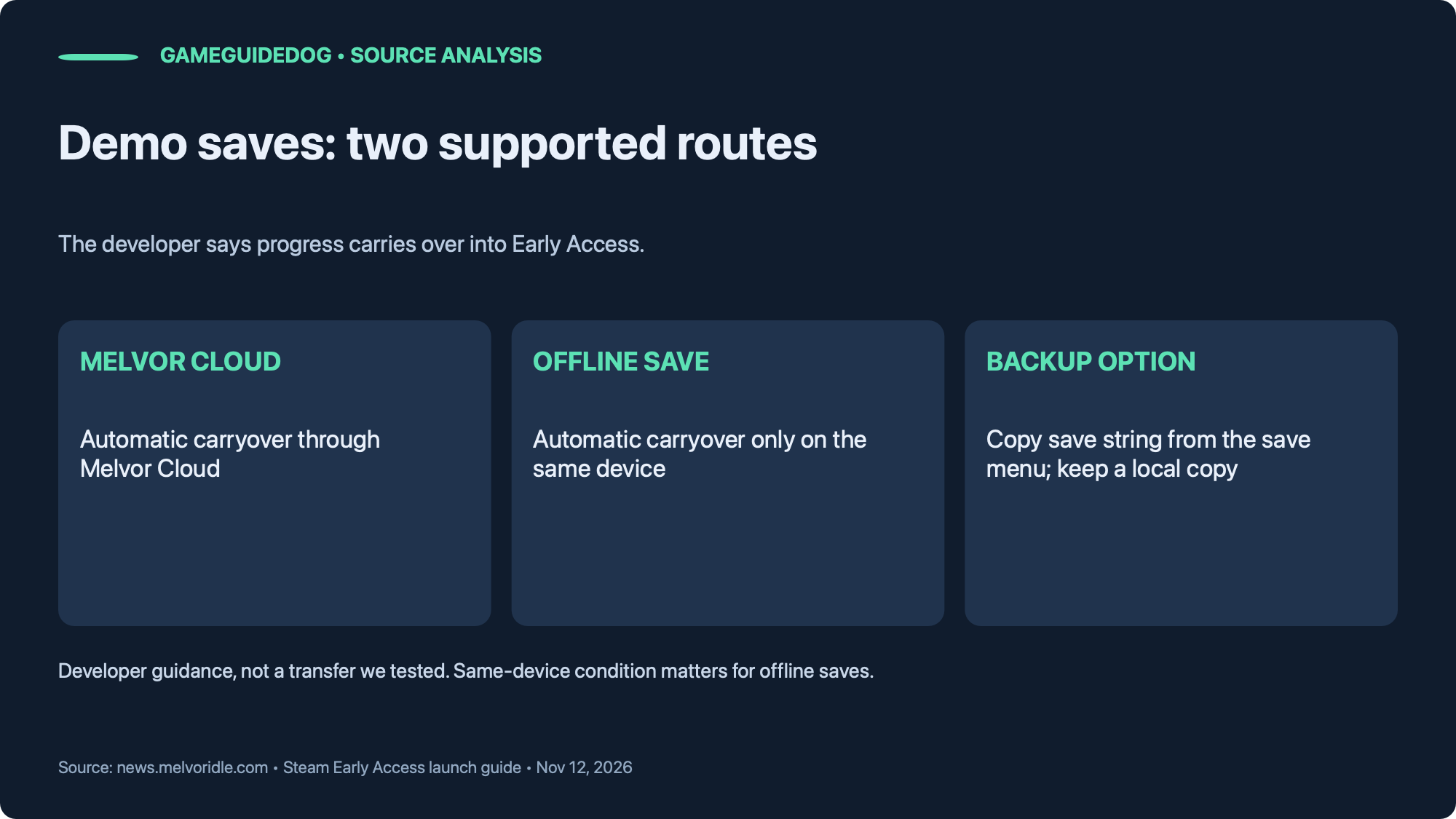
Original GameGuideDog diagram based on the launch guide. Not game imagery or a transfer test.
What the paid launch adds, and what the store does not settle
The November 12 launch guide specifies a level cap of 99 with content up to that level. The November 17 patch names Astrology, Herblore and Agility as new skills, along with Act 2 quests, four new Mastery Guild ranks, 1,138 new items and 121 new enemies. Those are additions listed against the demo, not independently counted totals for the whole game.
That is a more useful launch boundary than the store’s broad description, which advertises level 120 and 29 skills. Its Early Access answers also acknowledge missing skills, combat content and quality-of-life features. The sources therefore should not be collapsed into a claim that all 29 skills, level-120 content or every advertised system are live today.
The practical distinction is between paying for the current continuation and paying in anticipation of the final design. The named launch additions establish what the studio says it shipped. They do not establish pacing, balance or how satisfying the longer progression feels. A content count cannot answer those questions.
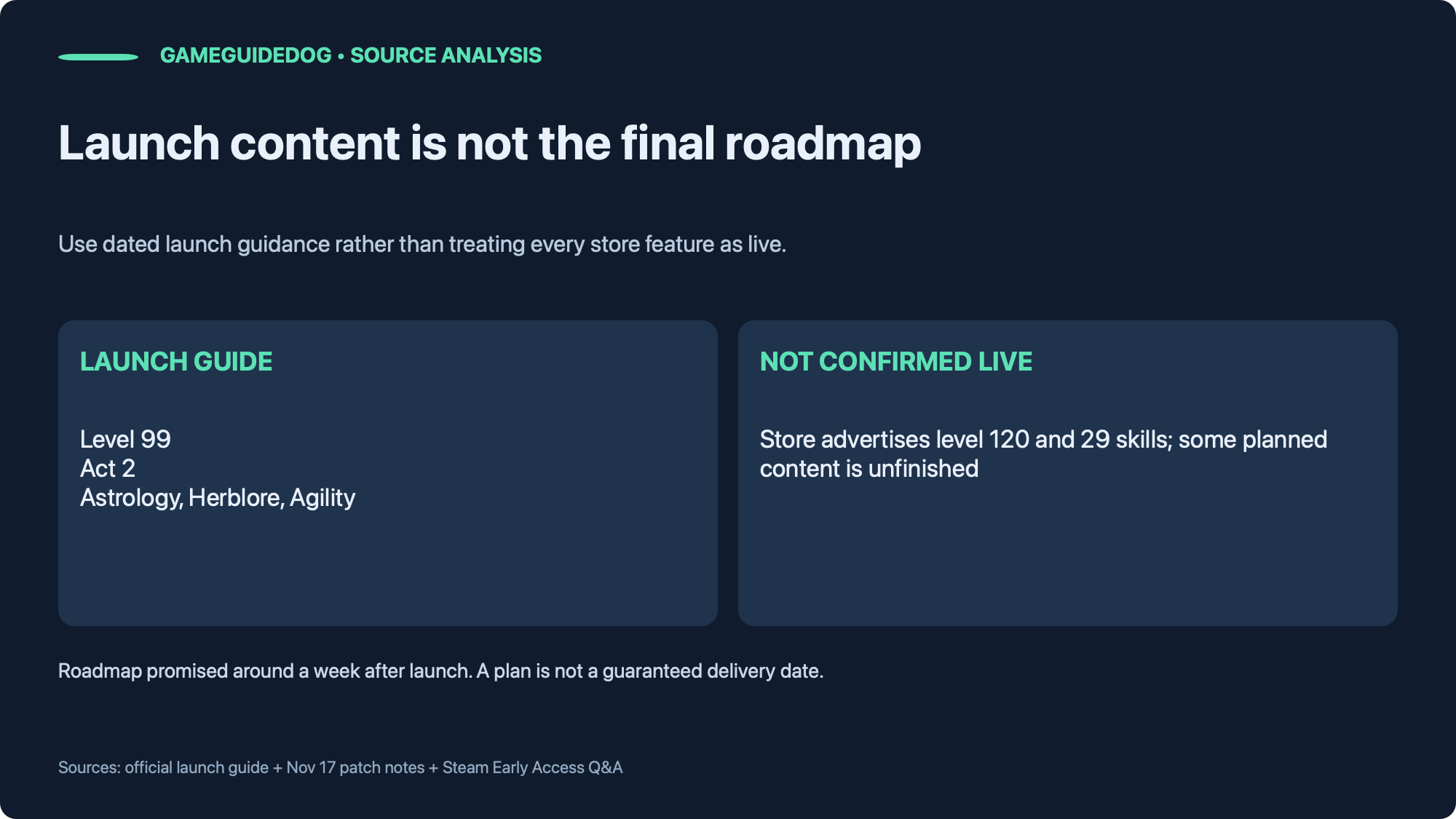
GameGuideDog source comparison. Launch notes and future scope are kept separate; this is not a gameplay assessment.
Price, handheld access and the wait for mobile
At our November 17 US Steam check, the purchase panel showed $13.49, reduced from $14.99, with an introductory offer ending November 24. The announcement’s $14.99 is the list price, not the discounted amount shown in that regional purchase panel. This is not a Polish price or a universal checkout total.
Steam labels the game Playable on Steam Deck, not Verified. That label is not our performance test and does not make the Steam release an Android or iOS launch. Buying now for a handheld PC and waiting for a native phone version remain separate choices.
The developer estimates 12–18 months in Early Access and promises a roadmap around a week after launch. Both are plans. The 2027 mobile window has no exact date in the launch guide, and the store’s future cross-platform saving description does not establish mobile purchase terms or a working phone build today.
Who has enough information to decide now?
If the demo already convinced you and you want the announced next stage on Steam, the save instructions and launch-content list give you a concrete basis for considering the purchase. If phone access or the finished skill roster is essential, the missing information is directly relevant to your decision. Waiting is reasonable without inventing a verdict on the game’s quality.
This is the same distinction between current access and future promises that matters in our Spirit Crossing buyer analysis. For more launch coverage, see indie games. Melvor’s next useful checkpoint is the promised roadmap, followed by actual mobile details, not a recommendation inferred from launch-day enthusiasm.