

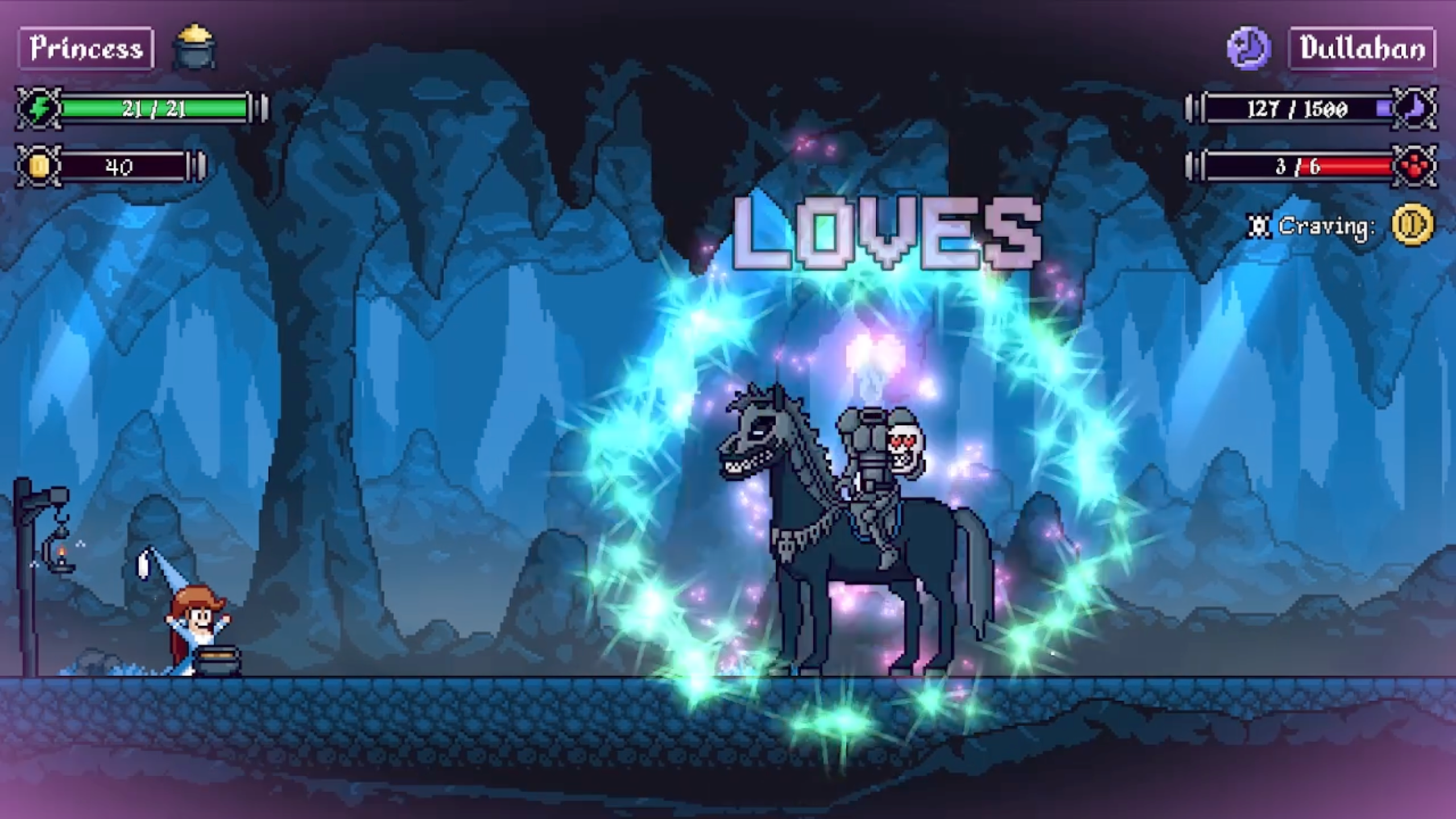
Hungry Horrors turns a monster encounter into a menu problem: feed the creature what it wants before it eats the princess. Cards as meals give this deckbuilder an immediate identity. The buying question is whether reading appetites and building flavour chains sounds rewarding to you, rather than merely amusing in a screenshot.
Clumsy Bear Studio’s game left Early Access on October 13. Our October 22 US Steam check found a $14.99 standalone price with no discount, plus a free demo. The advertised October 19 sale has ended. This is reported buyer analysis, not a review: we have not played the game, tested its saves or verified performance.
The meal is the combo
The current store description describes five flavours, monster preferences and dishes whose flavours can change through seasoning. Cookware changes encounter rules, while ingredients let you prepare new dishes. Feeding replaces attacking, but the design still asks you to read an opponent and assemble a useful sequence of cards.
That distinction gives the food theme some weight. A dish is not simply a damage number with a funny name if its usefulness depends on what the next creature wants. The developer’s description makes card choice and serving order the interesting decisions. We cannot judge the balance from the pitch. We can identify the appeal: a deckbuilder built around accommodating a monster’s tastes rather than ignoring its personality until its health reaches zero.
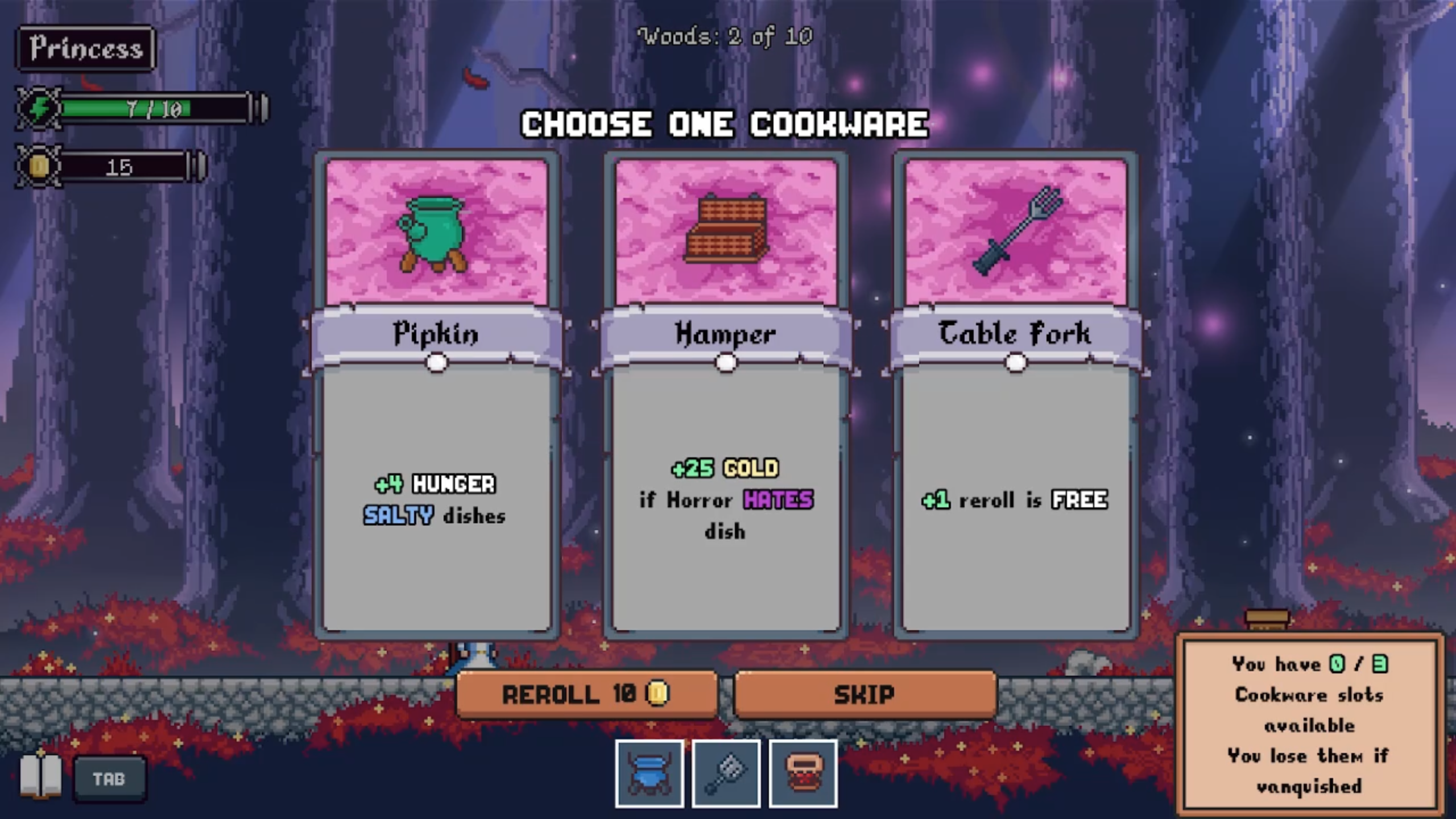
Clumsy Bear Studio / official promotional image from its press kit. Historical UI and values, not our capture or verified current-build balance.
Choose the kind of run, not just the difficulty
In its October 12 announcement, the studio describes Campaign as the story option and Banquet as a shorter, harder roguelike. It lists eight biomes, 34 Horrors, 62 dishes and 13 legendary characters for 1.0. Those are the developer’s content counts, not an inventory from our playthrough.
The store describes persistent campaign progression, with unlocked recipes, abilities and seasonings carrying between runs. It also uses Vanilla, Spicy and modifier labels. Those descriptions should not be compressed into a definitive chart mapping every launch mode to every current setting. For a buyer, the useful distinction is broader: do you want a longer story with persistent unlocks, or does the advertised shorter, harder format sound more appealing?
Pixel art and cooking do not prove this is an easy game. A monster still wants to eat you. The culinary premise changes the puzzle; it does not, by itself, establish how forgiving the puzzle is.
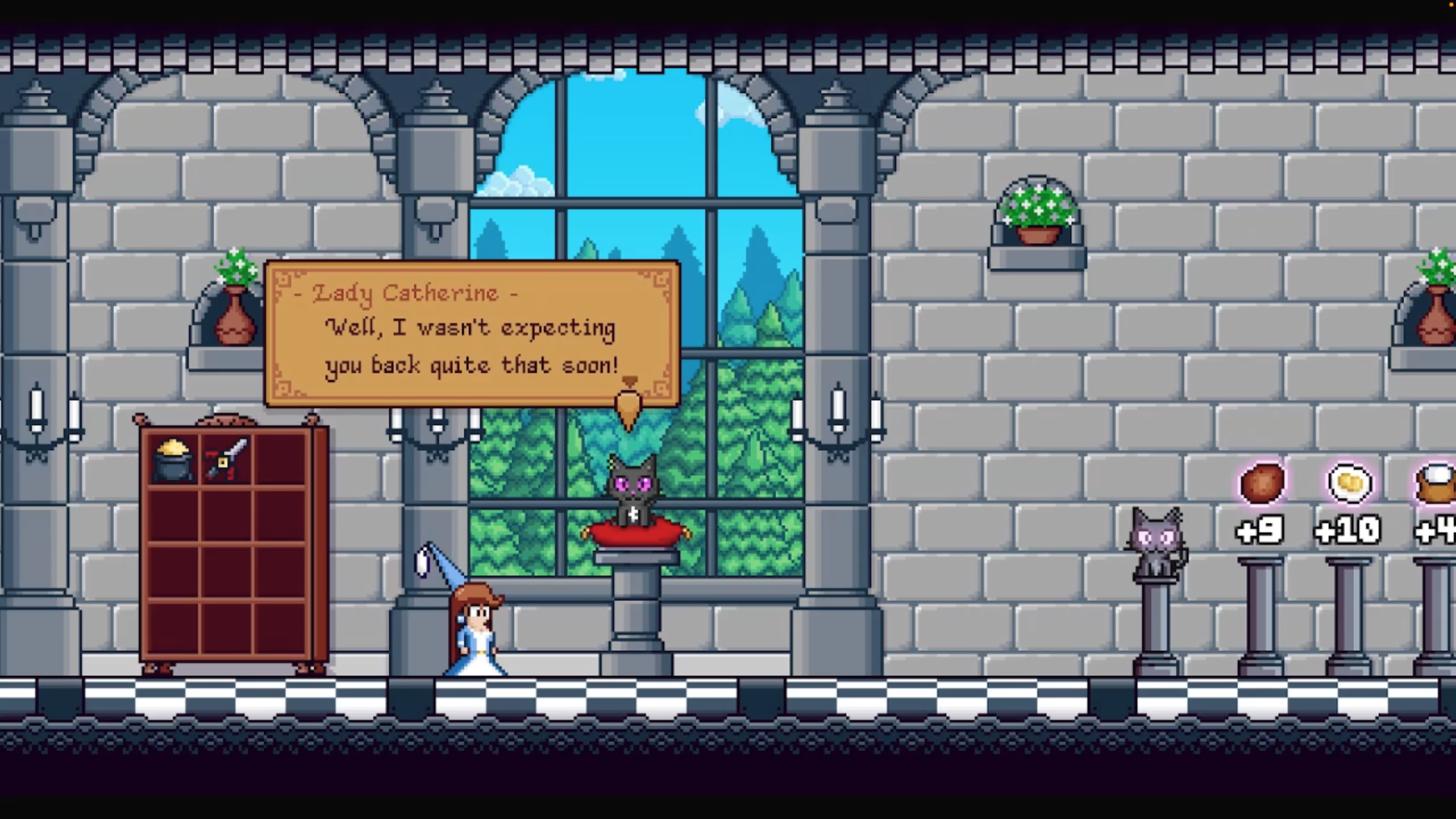
Clumsy Bear Studio / official historical promotional image. Dialogue and presentation illustrated here are not a verified capture of version 1.0.2.
Two purchasers explain the appeal, within limits
King Vasuki’s October 17 Steam recommendation praises the presentation, mythical-creature lore and systems they found deep but understandable. That is useful testimony for someone curious about deckbuilding but unconvinced by another conventional combat game.
Madness Has Brought You Here’s October 15 account emphasizes humour, animations and the satisfaction of assembling combos while avoiding foods a creature hates. It supports the idea that the theme and card decisions can reinforce each other, rather than being separate attractions.
These are two purchaser experiences, not a community verdict. Both recommendations predate the October 21 patch, and their exact installed builds are unknown. Their enthusiasm cannot establish the latest version’s reliability or tell us whether the whole campaign maintains the same pace. Use them to decide what to inspect, not as a substitute for your own fit check.
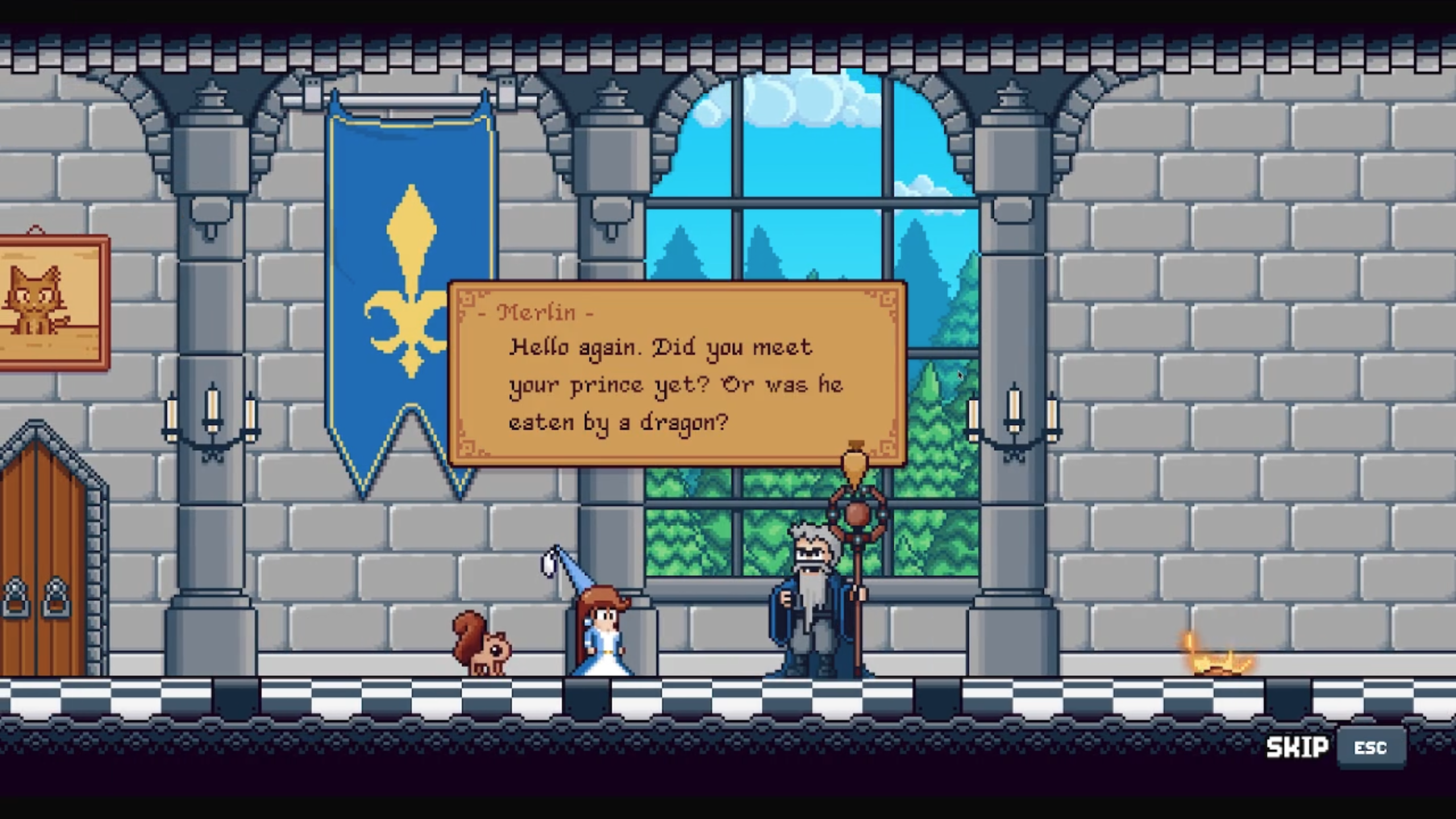
Clumsy Bear Studio / official promotional image supplied to press. Historical artwork, not our gameplay capture or proof of current-build content.
A save fix is not a recovered save
The October 21 patch 1.0.2 notes say entering the Hall of Vanquish from the menu no longer incorrectly changes Horror tastes, a problem that broke some save files. The statement describes stopping that action from causing damage. It does not demonstrate that an already damaged save is repaired. Returning players should not read a prevention claim as a recovery guarantee.
The notes also claim controller and stamina fixes. Steam lists Windows, macOS and Linux, full controller support and the demo; these are listings and developer claims, not our hardware tests. As with our Moadra demo buying analysis, the practical next step is to try the available sample on your intended device. For more PC gaming coverage, the same distinction applies: an appealing design, dated testimony and a patch promise answer different questions. Hungry Horrors has a specific enough design to merit that trial. Buy for the food-combo puzzle you actually enjoy, not an expired sale or an untested save guarantee.