

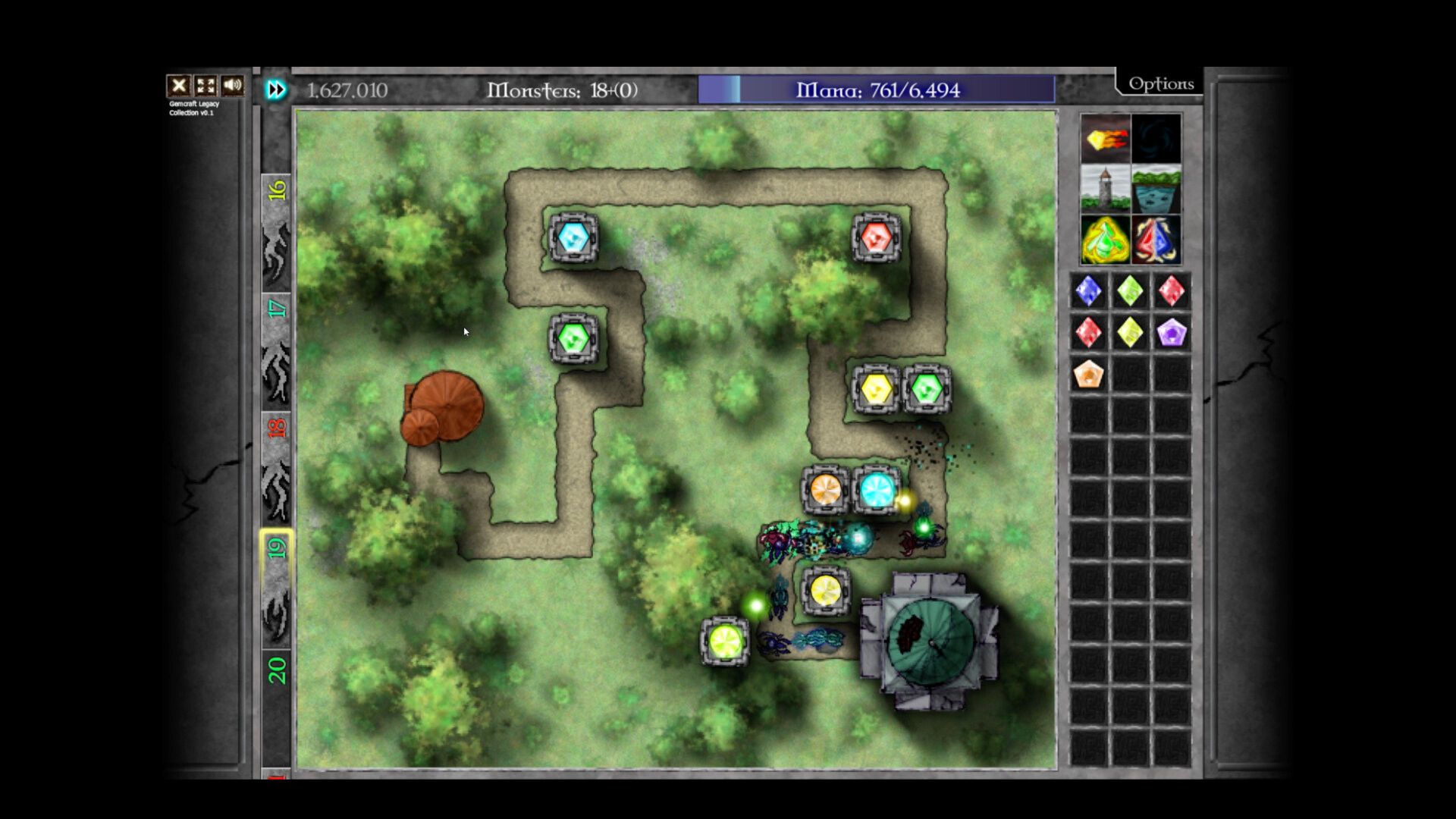
GemCraft Legacy Collection asks $9.99 for a more convenient way back to three Flash-era tower-defense games. It does not promise to make them new games. The October 21 Steam release brings together The Forgotten, Chapter Zero and Labyrinth, with advertised handling improvements and previously gated extras included.
That distinction is the useful buying question. If you want the original gem-combining systems with fewer interruptions, the changes target that problem. If you want a visual remake, the store explicitly rules one out. This is reported launch analysis: we have not played the collection, benchmarked its late game or tested its controls.
What the price actually buys
The October 22 UTC US store check lists the standalone collection at $9.99, without a discount. Steam also lists a separate demo. This is a dated regional price, not a worldwide offer. The collection covers those three original games; it should not be mistaken for a bundle of every later GemCraft release.
The advertised loop is still about forging and combining gems, placing them in towers and traps, managing mana and deciding when to call more waves. The seller says content formerly paid or exclusive to Armor Games is unlocked in this package. We have not audited every historical premium item, so that remains an attributed inclusion claim rather than our completeness guarantee.
Convenience is the argument for paying again. Integrated extras and a single Steam package can matter to a returning player even when the underlying maps and art remain familiar. But that value depends on wanting these particular games back. Nostalgia alone does not tell a newcomer whether their pacing or progression will appeal.
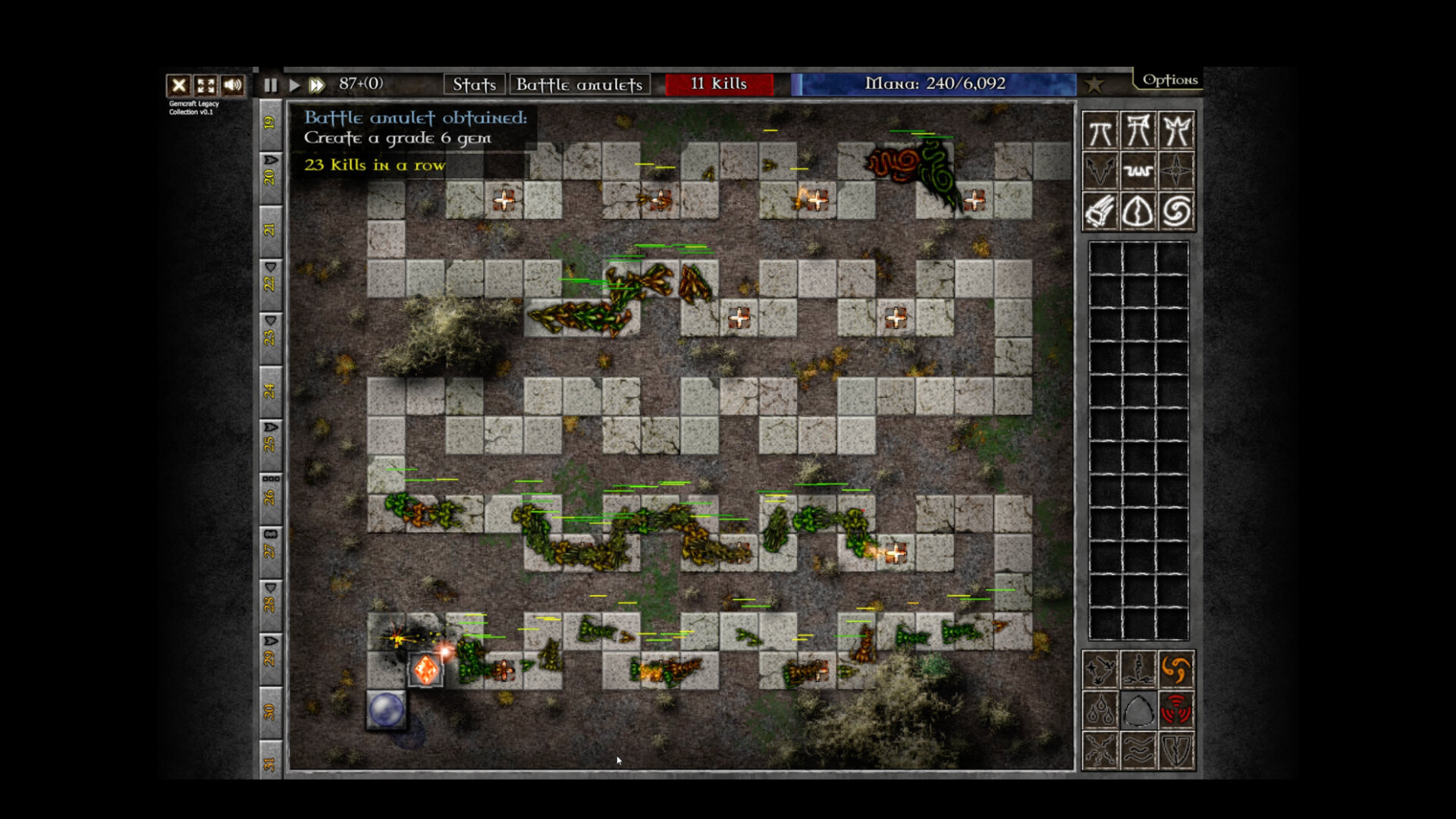
Official press image: Game in a Bottle / Armor Games Studios. The amulet notification illustrates the supplied interface, not our test of Steam achievement unlocks.
The useful changes are small, repeated actions
The developer’s September improvement list describes a speed slider reaching 9x, separate playback controls and more actions available while paused. It also lists quicker gem combining, shortcuts for sending waves and refunds for individual skill points. The launch announcement repeats the speed, hotkey, performance and amulet-achievement pitch.
These are sensible targets for a collection built around repeated waves and incremental upgrades. Removing a few clicks from an action you perform constantly can matter more than polishing a menu you rarely open. That is our reading of the design priorities, not a claim that every shortcut works flawlessly in the shipping build.
The October 14 team interview reinforces that rationale. Producer Tasselfoot identifies late-game slowdown as a priority; the porting discussion describes work on rendering and the old code. Those are internal accounts of the project, not independent performance results. An optimization list cannot substitute for testing a crowded endurance run.
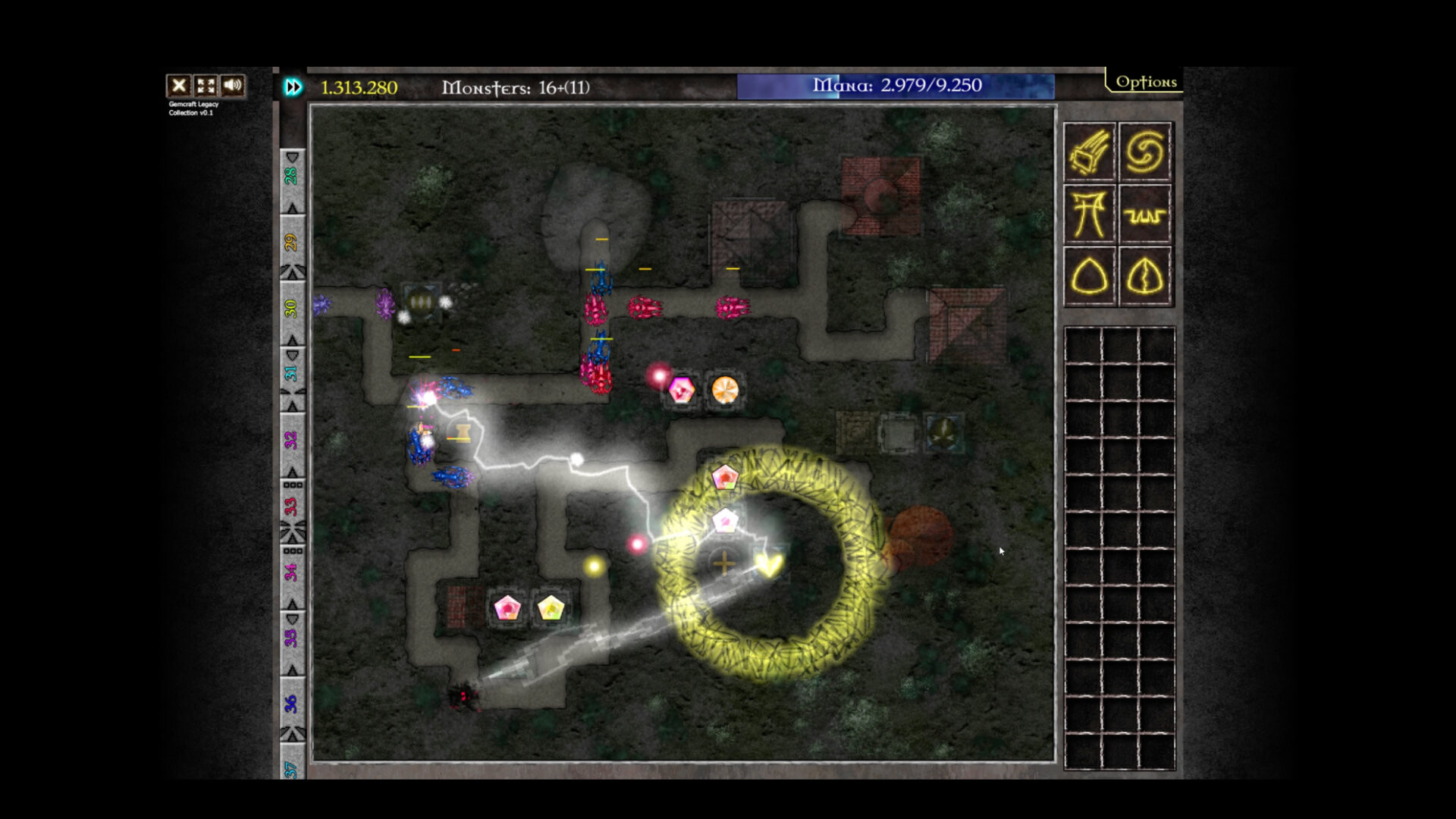
Game in a Bottle / Armor Games Studios promotional screenshot. A busy scene is not a benchmark.
Early reactions show the expectation gap
In a launch-day Steam recommendation, Wasted_46 praised Labyrinth and the quality-of-life additions after 30 minutes recorded at review time. Noizemare (Ger), writing a negative account after 20 minutes, saw too little visual change to justify the return. The developer replied by framing the release around preservation and handling improvements.
Neither short account settles the collection’s long-term value. Together they expose the expectation gap: preserving familiar games can satisfy someone who wants precisely that, while disappointing someone looking for a substantial transformation. The store’s explicit not-a-remake description belongs near the top of any buying decision, not buried beneath the improvement list.
We have deliberately avoided turning launch-day positivity into a recommendation or a claim about the whole audience. We also cannot answer old-save migration, current Mac-client compatibility, Steam Deck usability or control customization from these accounts. If one of those determines your purchase, seek evidence for that exact requirement rather than assuming a modern storefront resolves it.
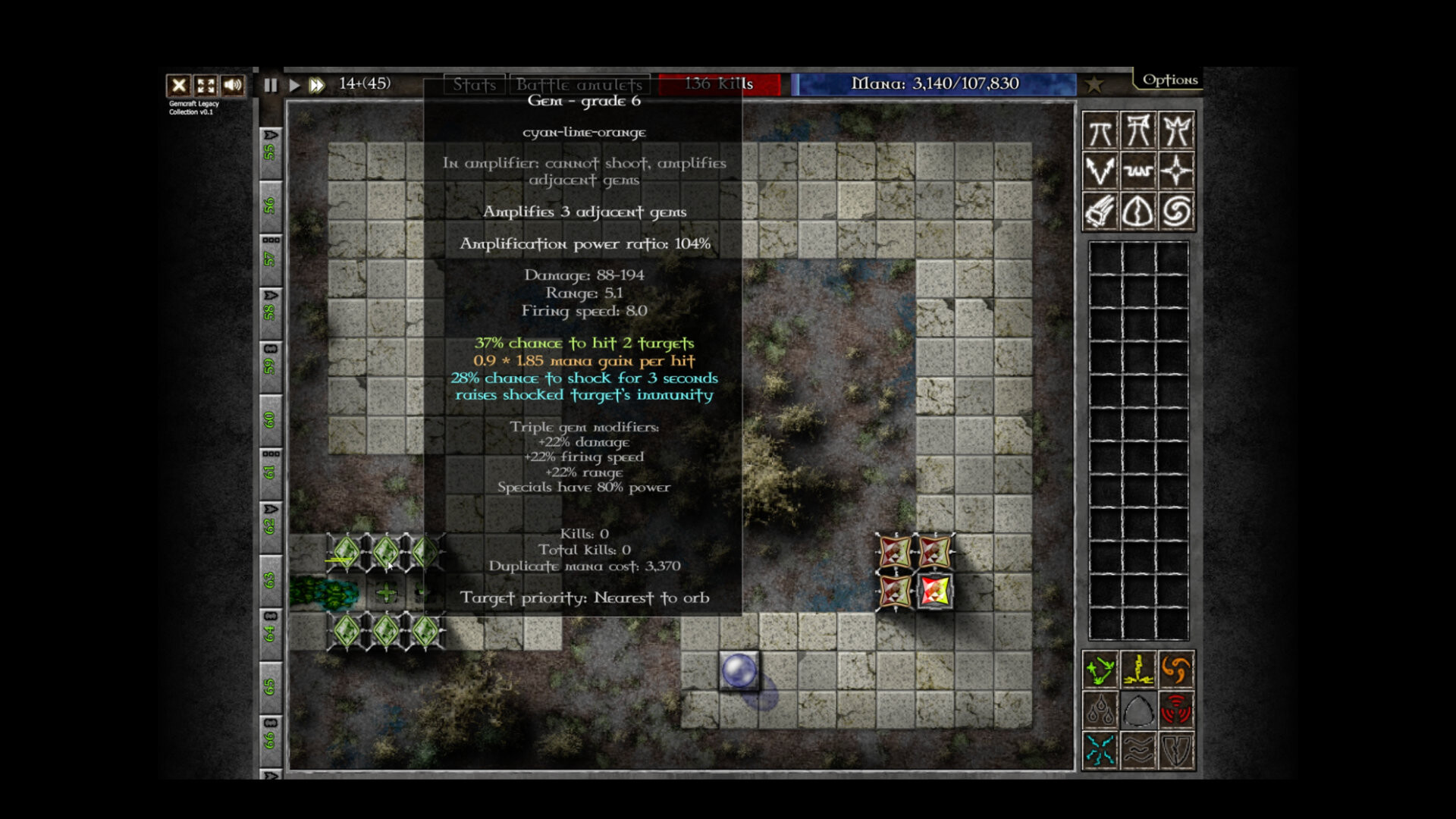
Official press material, Game in a Bottle / Armor Games Studios. The supplied tooltip shows the collection’s information-heavy presentation.
Buy the return, not an imagined remake
The strongest case for investigating Legacy Collection is specific: you want these three games, integrated extras and the advertised reduction in repetitive handling. Its limits are equally specific: familiar presentation and untested technical questions should not disappear behind a list of improvements.
For more reported coverage of smaller releases, browse Indie Games. Our Beyond These Stars launch analysis makes the same distinction between a developer’s fix and a tested outcome. Here, the separate demo is the practical starting point for checking whether the preserved experience is the one you actually wanted back.