

Fruit Island is not the loudest board-game campaign on Kickstarter, and that may be the point. The useful signal here is cleaner: Reiner Knizia, a family-weight rules pitch, public preview coverage, and enough campaign attention to treat it as more than another cute small-box listing.
Analog Game Studios is running the campaign for the first North American edition of the game, with Kickstarter copy built around one repeated decision: do you bank what you have, or risk one more tree? That is a good Knizia sentence because it tells you the game before you know the component list.
The launch signal was real, too. Analog’s launch announcement said Kickstarter marked Fruit Island as a Projects We Love campaign and that the game hit No. 1 on Kicktraq’s Hot List during the early campaign window. Those are launch-week indicators, not a final review, but they explain why this one has stayed worth watching into July.
Why this clears the board-games bar today
The core pitch is easy to understand without flattening the game. Fruit Island is a 2-to-4-player design for ages 6 and up, with a roughly 15-to-20-minute play time depending on source. Players move around an island collecting fruit, then decide whether to keep pushing or get back to a trading post and secure what they have.
That would be thin if the only tension were “collect points.” The important wrinkle is the gorilla. Preview coverage from Gaming With Sidekicks describes the gorilla moving around the island and forcing caught players to lose unbanked fruit. That turns the game into a timing problem: fruit on the board is tempting, but fruit in front of you is not actually safe until you bank it.

BoardGameGeek’s public page frames the design around timing, risk assessment, and tactical positioning, which lines up with the preview read. This is not a heavy strategy release pretending to be a family game. It looks more like the kind of light Knizia design where the rules vanish quickly and the pressure comes from one sharp repeated choice.
The Knizia factor matters, but it is not enough by itself
Reiner Knizia’s name will always pull attention in tabletop circles. That can be useful, but it can also make coverage lazy. The better reason to watch Fruit Island is that the designer credit matches the product shape.
The campaign is not selling a giant narrative box or a lifestyle pledge. It is selling a short, accessible push-your-luck game where the risk is visible, the turn decision is legible, and the family table can understand why a greedy move went wrong. For a Knizia family design, that is exactly the kind of shape you want.
Gaming With Sidekicks also called out the no-reading accessibility and the way the game can introduce collection and push-your-luck ideas to younger players. That is the part that makes this more interesting than “famous designer has another campaign.” If it works, the audience is broader than hobby collectors chasing a name.
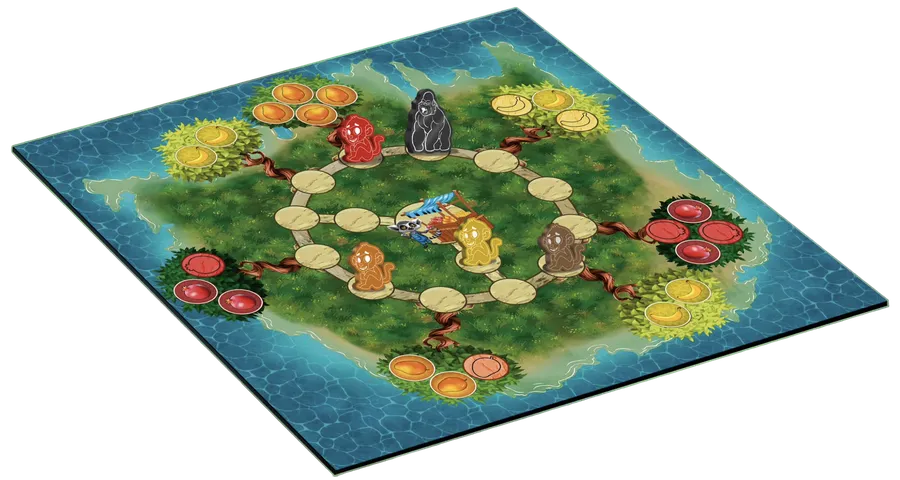
The caution is equally straightforward. This is still a crowdfunding campaign, not a retail review with the finished mass-production copy in hand. The safest read is not “automatic back.” It is that Fruit Island has enough public signal, enough preview texture, and a clean enough rules hook to deserve attention before the campaign window closes.
The Meeple Hound read
The reason to put Fruit Island on the board-games lane today is not raw spectacle. It is a good campaign profile: recognizable designer, active Kickstarter presence, early platform/tracker heat, BoardGameGeek visibility, and a rules pitch that can be explained in one useful sentence.
If your table wants a deep strategy night, this is probably not the target. If you want a quick family game with real push-your-luck pressure, or you track Knizia designs that have a chance to hit beyond the collector shelf, Fruit Island is one to watch.
For more tabletop coverage, visit the board-games lane, read the recent Kemet: The Gates of Thonis Gamefound heat check, revisit the Dragon Ball Z board-game Kickstarter signal, or check the latest Altera final-weekend Gamefound read.