


Playground wants Fable players to spend time dating villagers, working as a blacksmith and exploring Albion without feeling that every detour abandons an urgent rescue. In the November 13 Official Xbox Podcast, Playground Games’ Ralph Fulton explains how the story is intended to make that possible: give the early adventure serious stakes without making it a race against time, then raise the urgency later.
That distinction matters for a game whose social systems are part of the pitch. Optional activities can be mechanically available while the story makes taking part feel absurd. Fulton is describing an attempt to avoid that clash. He is not demonstrating that the finished game has solved it.
Stakes without a constant deadline
In the official interview transcript, Fulton says the first half is meant to give players room to explore the world, settlements and social systems. The situation is serious, but the narrative is designed to allow those detours.
He places stronger save-the-world urgency much later, around what the team calls Acts 5 and 6. Those are approximate story markers in a developer explanation. They do not establish campaign length, six equally sized acts or a technical guarantee that every quest is free of timers and failure conditions.
For players, the useful distinction is between being allowed to leave the main quest and being given a convincing reason to do so. The interview addresses the second problem. Whether the game’s writing sustains that permission needs evidence from the finished adventure.
The earlier Gamescom combat explanation focused on fighting systems. This interview adds a different question: when does the story give those systems and social activities room to breathe? The August Xbox report already listed the February release and Premium advance access, so neither date is a new announcement here.
One character build is not a progression rule
The podcast accompanies the Deepwood gameplay released for Xbox’s anniversary. Fulton says the captured character invested heavily in a couple of spells, including a fully upgraded Dash. He describes mobility, crowd control and power as different ways of handling encounters with several enemies.
That is an explanation of a selected build, not proof that every player reaches the same upgrades at the same point. Nor does it tell us how those options feel to use. This account draws on the transcript; it does not claim an independent visual or performance assessment of the video.
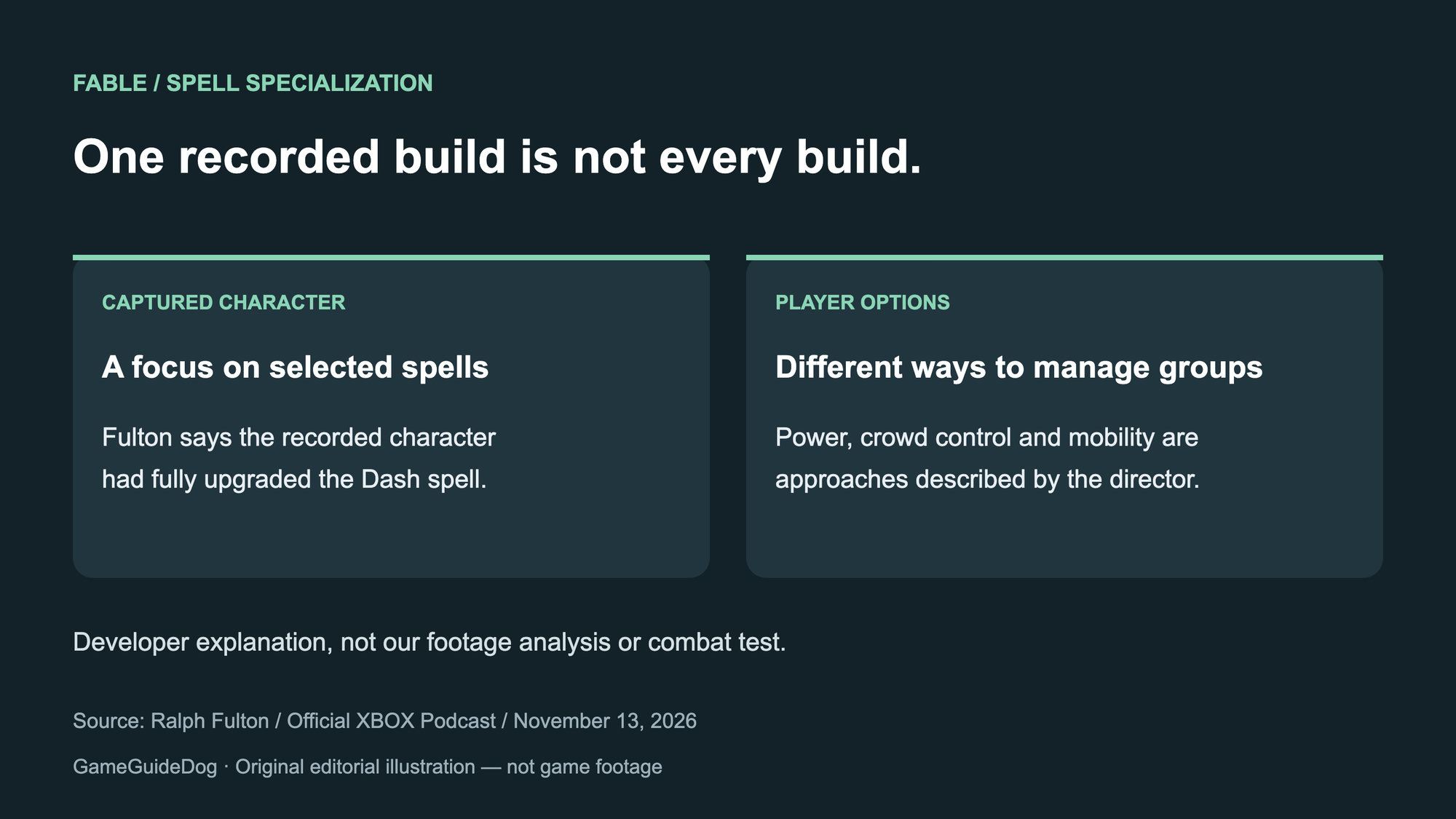
GameGuideDog original editorial illustration. The selected build is a developer explanation, not our combat test.
What remains a promise
The US Steam listing checked on November 14 around 18:25 UTC still lists February 23, 2027 for release. Standard is $69.99, while Premium is $99.99 with advance access listed from February 18. Those are dated US listing details, not a new release-date announcement or a checkout test.
Steam has no user reviews. The listing does not supply a player verdict, and this report is not a hands-on review.
Fulton’s pacing explanation is useful because it addresses a specific tension in Fable’s promise: a social life needs narrative breathing room. For now, it is the developer’s plan. The meaningful test is whether the game can make those diversions feel like part of being its hero, rather than time stolen from its story.
More in our gaming coverage.