
Eslabong has enough first-night Steam proof to stop treating it like a curiosity. At our Tuesday, August 25, 2026 refresh around 2026-08-25 03:17 UTC, Steam’s official endpoints showed 53 English reviews, 77 reviews overall, and 494 live players, while the store still listed the game at $12.74 during its launch discount.
That is a real opening signal for a niche arena-club management game. It is not proof that Eslabong has already broken out of its lane.
The useful read is narrower than that. This looks like an Early Access launch with enough public traction to matter, enough systems depth to catch the right audience quickly, and enough early balance and tactics complaints that the caution line still belongs near the top.
The Steam signal is strong enough because the niche is showing up on purpose
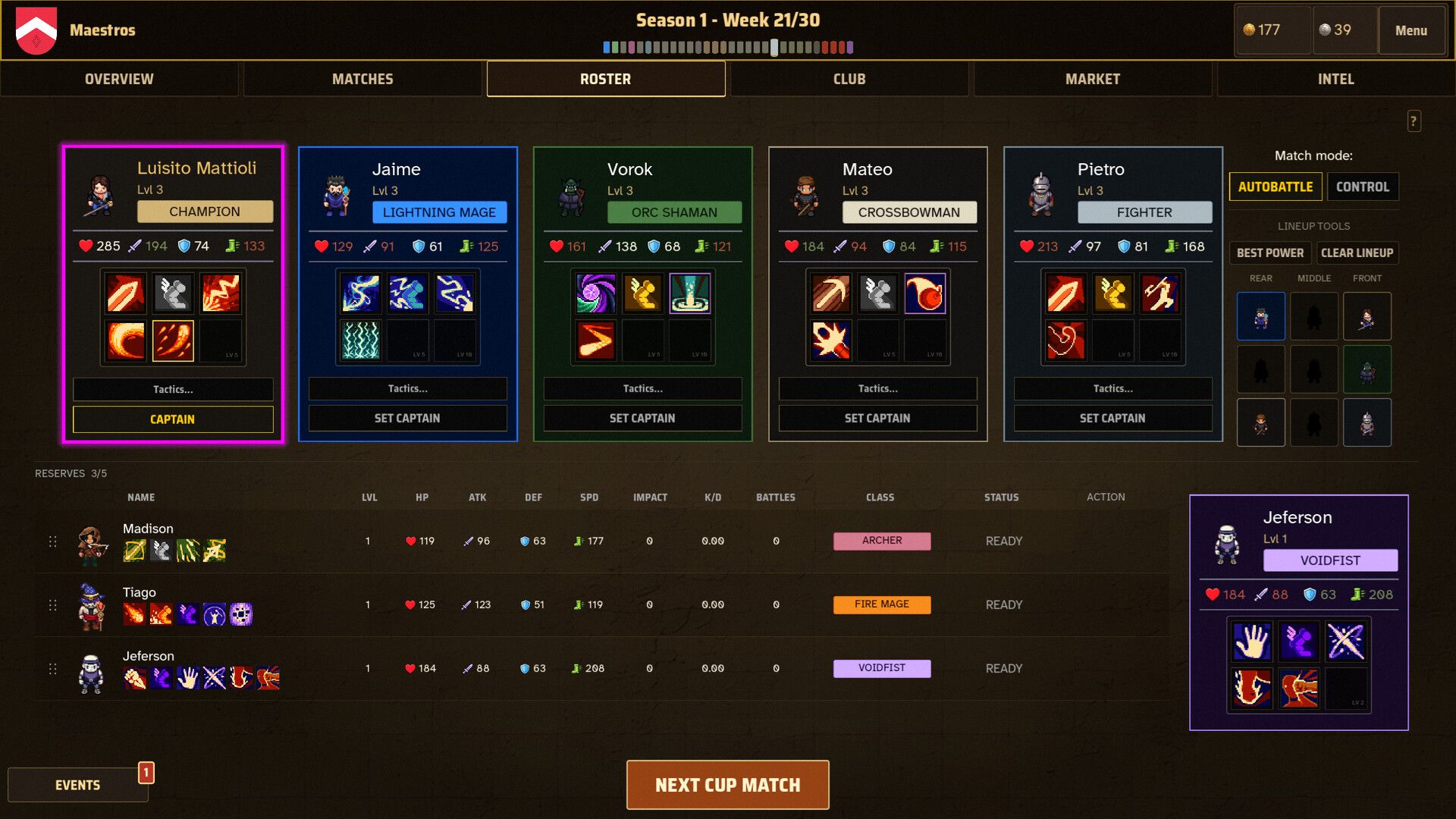
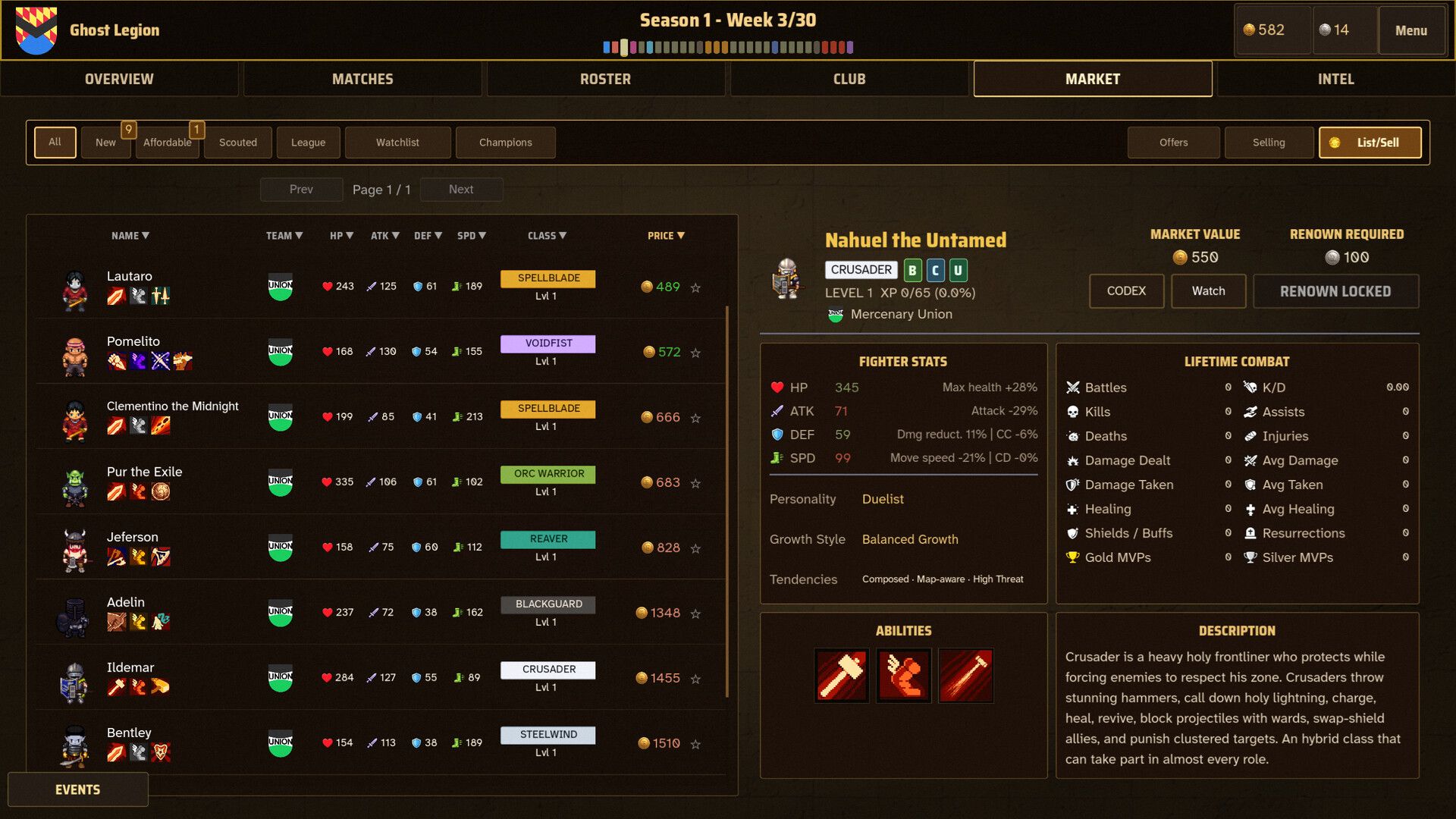
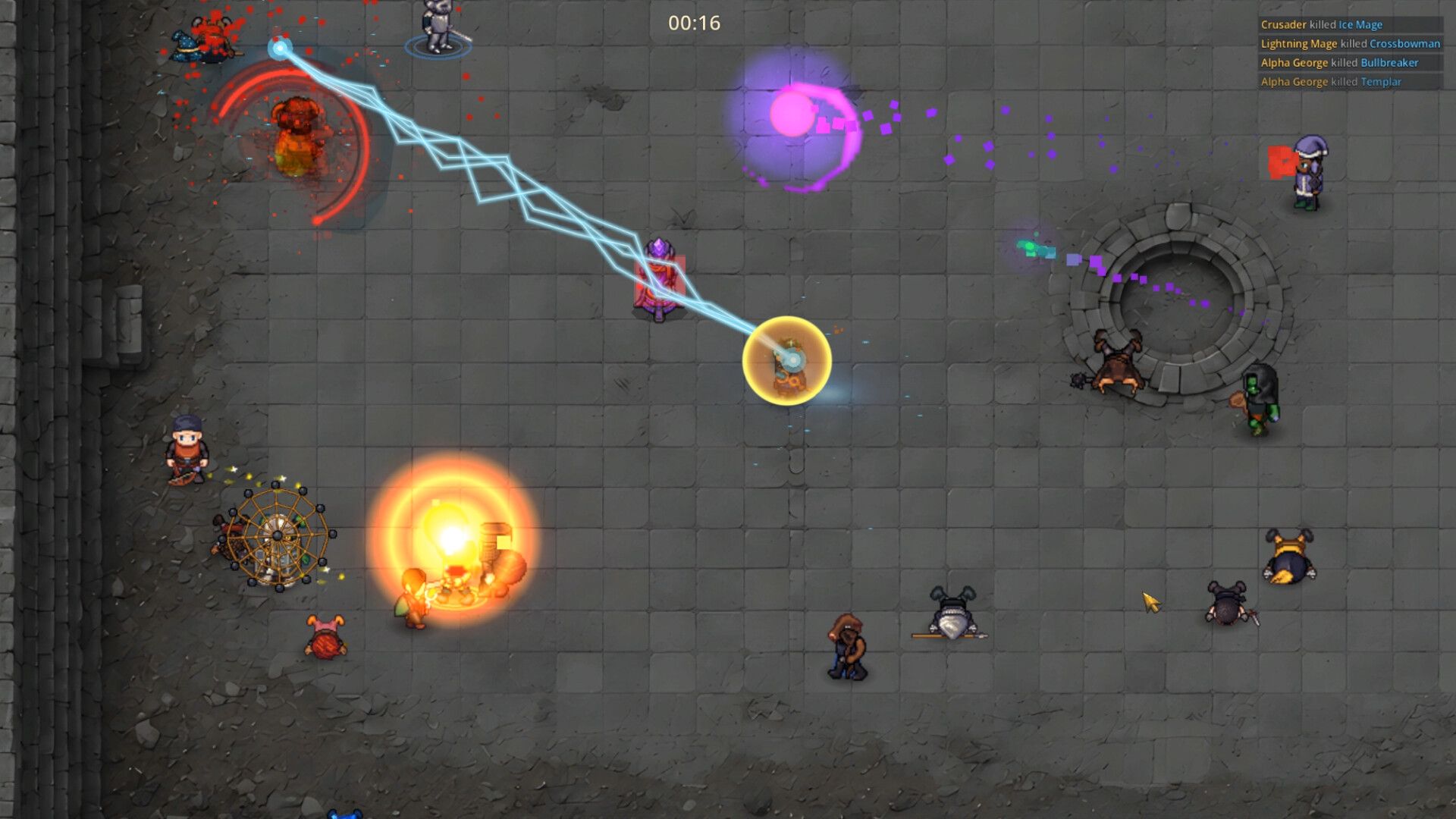
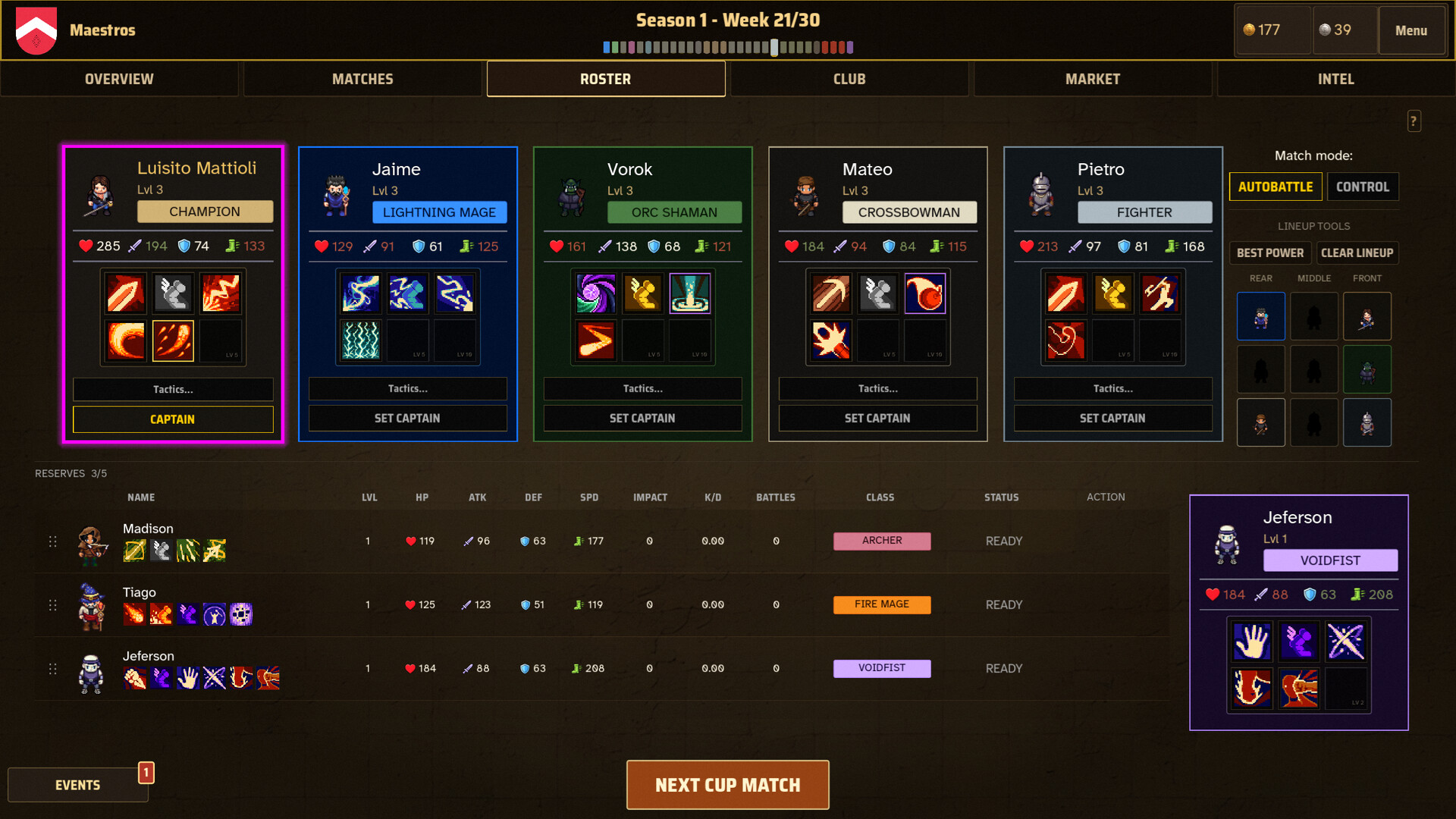
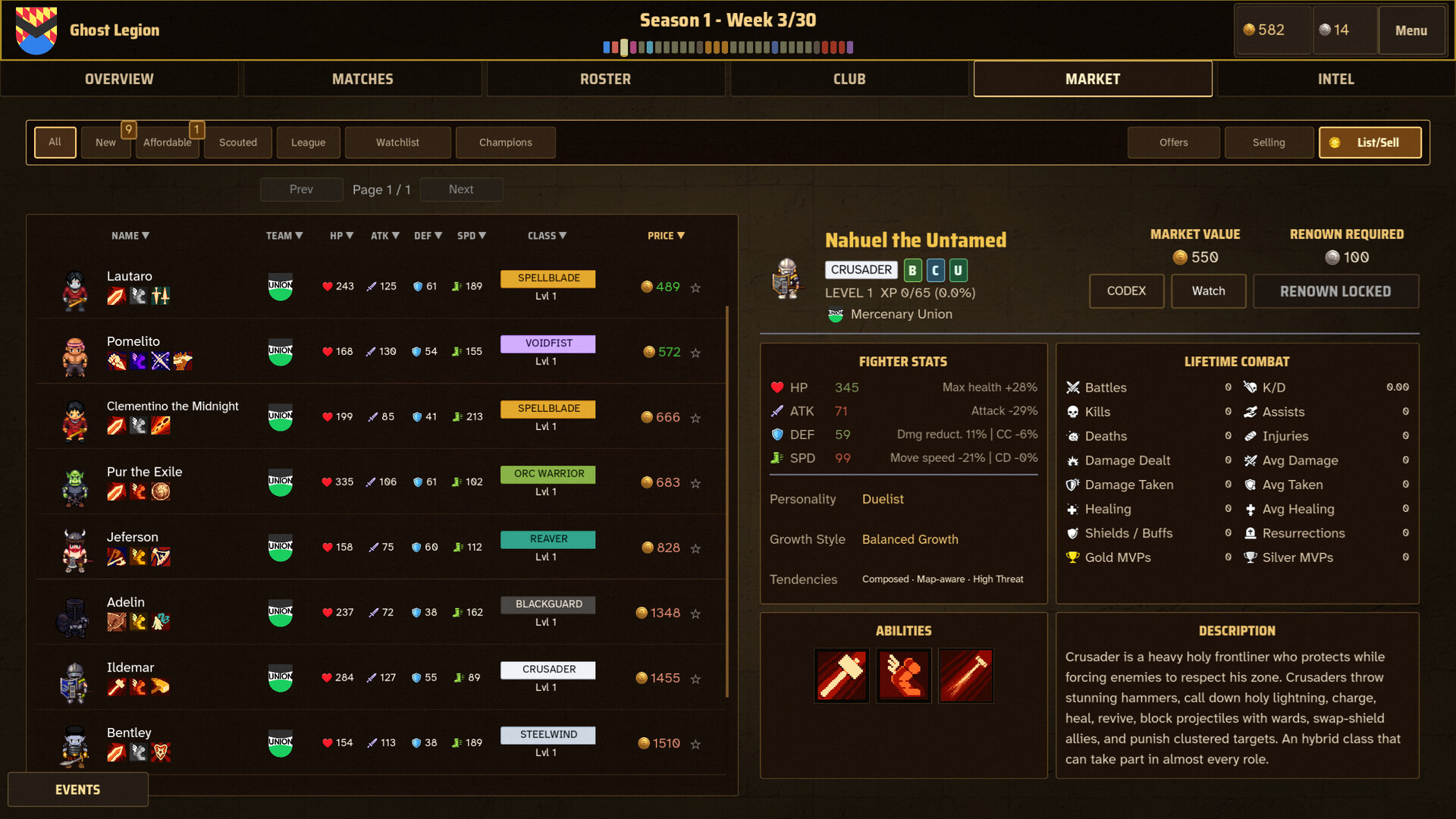
Eslabong is now live in Steam Early Access after launching on August 24, 2026. The official store framing is specific, which helps. This is not just another autobattler or another management game with a vague progression loop. Steam pitches it as arena combat plus mercenary-club management, with squad-building, recruiting, leagues, cups, and a long seasonal structure.
The launch post gives that pitch more substance. Official Steam news says the Early Access build adds new classes, more than 70 champions, 20 named bosses, the Tournament Center, Ranked Autobattle, expanded relic management, permanent class unlocks, and broader progression systems. That matters because it means this is not a paper-thin “out now” post trying to sell a concept without a game behind it.
The public Steam layer backs that up. A live player count near five hundred is not some platform-scale event, but for a systems-heavy indie in this lane it is enough to say the opening is real. The review split matters for the same reason. Very Positive in both English and all-language summaries gives the story more than novelty heat.
Why the positive read makes sense
The early English review sample keeps circling the same strengths. Players like the build variety, the roster-management hook, and the fact that Eslabong lets them slide between direct control and a more hands-off tactical read. Several reviews also frame the Early Access release as a meaningful step up from the demo instead of a token storefront flip.
That is the strongest buyer-facing reason to pay attention now.
There is a certain kind of small Steam release that can look smart on paper but collapse the moment the public actually touches it. This packet does not read that way. The positive side of the review layer is too consistent for that. People are not just saying the idea is neat. They are pointing to the amount of stuff to dig into: classes, team composition, club progression, combat options, and the way the management loop keeps feeding back into the fights.
That does not make Eslabong broad. It makes it readable. The game knows who it wants.

The caution line is still real, and it is not just boilerplate Early Access hedging
This is where the story stays useful or turns into empty cheerleading.
The captured negative sample is small, but it is not meaningless. The repeated complaints hit tactics reliability, targeting, healer behavior, economy pacing, and balance. That lines up with the shape of the game. When a release leans this hard on layered systems, small AI or balance issues can feel much larger than they would in a simpler action game.
There is another brake worth keeping in view: this review layer is still early and partly demo-influenced. Some players are explicitly coming from the demo or beta. That does not make the positive reaction fake. It does mean the current reception is closer to “the right crowd likes what it sees so far” than to any final verdict on the full Early Access run.
So the safe claim is not that Eslabong has already nailed its long-term balance. The safe claim is that it opened with a better-than-random public signal, while still carrying the exact kind of tactical roughness that can define an Early Access game’s next few weeks.
The honest buyer snapshot
If you already like dense management games, squad-builders, and indie systems sandboxes, Eslabong looks worth putting on your radar right now. The launch price is reasonable, the public Steam reaction is clearly positive, and the official feature list gives the game enough substance to stand on more than one gimmick.
If you need a cleaner all-clear, the same packet tells you to slow down. We do not have a critic layer. We do not have any safe peak-history claim. We do not have GameGuideDog hands-on authority. We do have a small but real set of complaints around tactics, AI behavior, and balance, which are exactly the categories that matter most for a game built like this.
That is why the sharpest framing is also the simplest one. Eslabong has opened with enough Steam heat to matter for the niche it wants, but it still reads like an Early Access buyer watch, not a finished verdict.
For more GameGuideDog coverage, browse our indie games section, compare another fresh launch-week piece in our 1666: Amsterdam Early Access analysis, revisit a smaller Steam buyer snapshot in our Combolands review snapshot, or open the latest English stories.