


End of Abyss has an exploration hook worth examining, but its launch bug reports need dates attached. Section 9’s adventure launched October 1 on PS5, Xbox Series X|S and Windows PC through Epic Games Store. The official notes now extend beyond the October 2 and 4 fixes to October 17. That changes how to read the launch coverage; it does not establish that every problem has disappeared.
GameGuideDog has not played End of Abyss. This snapshot combines official information with named reviewers’ experiences, without a score or a tested purchase recommendation. Its useful question is narrower: what makes the game worth investigating, and which technical warnings still need a current-build check?
Exploration is the reason to look closer
In his Game Informer PS5 review, Charles Harte praises the interconnected setting and scanner. He also describes glitches during his play and acknowledges that patches resolved some issues. Push Square’s Aaron Bayne similarly values discovery, while reporting problems from prerelease play. Neither account is our experience or a current-build audit.
The editorial attraction is the relationship between discovery and reliable navigation. In a game built around returning to earlier spaces, understanding where you can go is part of the challenge. A faulty map can interfere with that challenge rather than simply sit beside it. This is our interpretation of why the reported problems matter, not an additional bug finding.
That distinction also keeps the positive case honest. Two selected reviewers finding exploration compelling is a useful lead for someone who enjoys that structure. It is not broad player consensus, and it does not prove the game will suit everyone who likes horror. A strong setting and a satisfying route through it are related questions, not interchangeable promises.
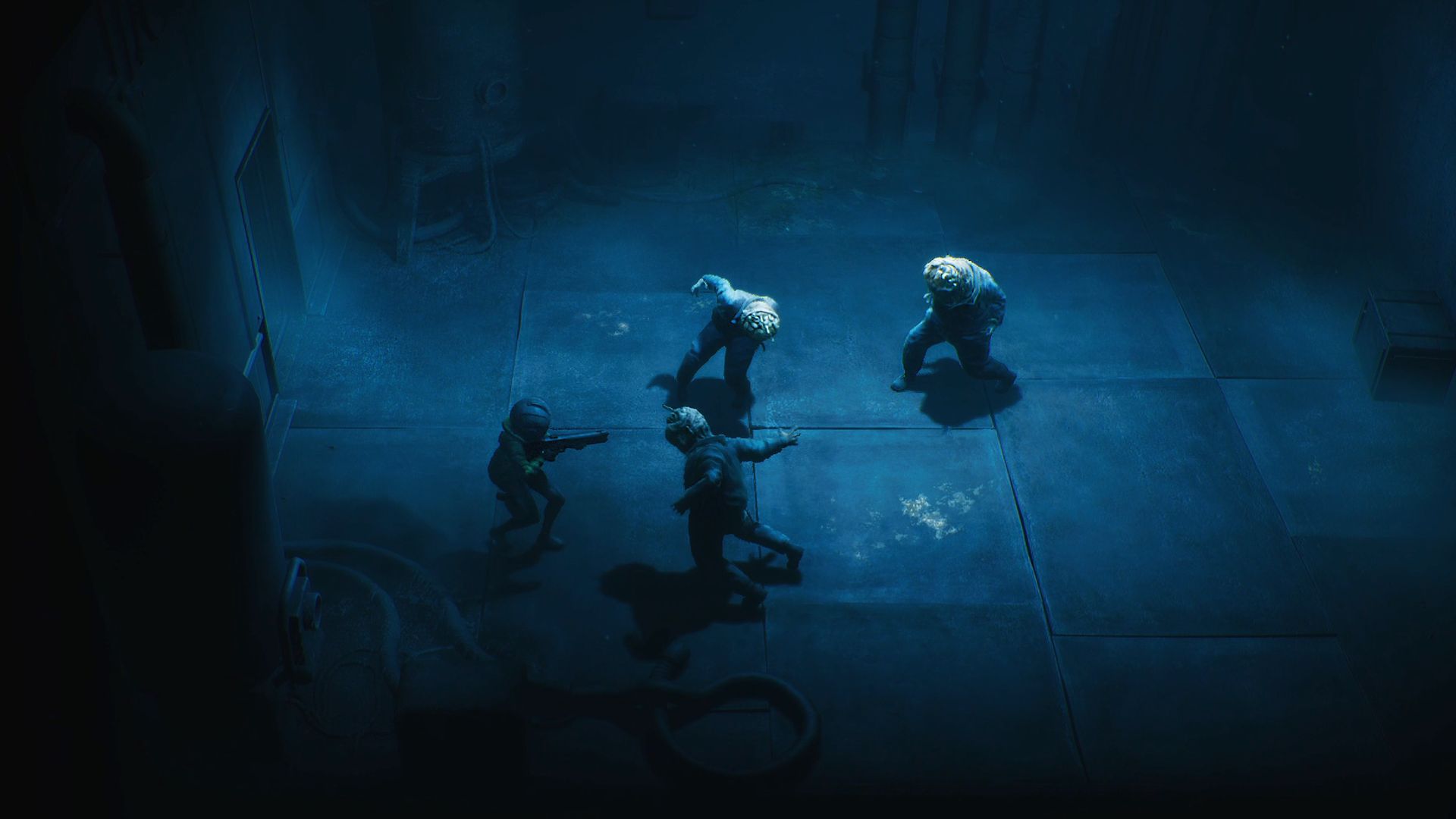
Official gameplay image: Section 9 Interactive / Epic Games Publishing, via Xbox Wire. It does not show a patch test.
What the developer says changed
The October 2 notes identify PS5 version 01.012.000 and Xbox Series/PC version 1.0.1.2. They report a fix for a revival freeze under continuing damage, an energy-node door progression blocker, and specified map issues. These are developer-reported changes; we have not installed or tested those builds.
The October 2 map entry covers a missing room and some doors appearing reset after a restart. The notes do not amount to a complete inventory of every complaint in launch coverage. Matching a general complaint about doors to a general patch entry is not enough to establish that the exact situation a reviewer encountered is resolved.
The October 4 notes list PS5 version 01.013.000 and Xbox Series/PC version 1.0.1.3. Section 9 says this update addresses a progression blocker when a player dies while extending a bridge, performance problems during room or level transitions, and hitches that caused audio issues and loud static. We rechecked the full notes on October 5 at 20:41 UTC. Those are developer-reported changes, not our measured performance results or a guarantee that every audio or progression complaint is resolved.
The developer page reopened on October 20 at 02:41 UTC also includes October 7, 10 and 17 updates. October 10’s PS5 01.016.000 / Xbox-PC 1.0.1.6 notes claim a demo-origin save-map repair, but say rooms may need revisiting and scanned items may need scanning again. That is a specific migration caveat, not proof that every demo save works without interruption.
October 17 lists PS5 01.017.000 / Xbox-PC 1.0.1.7. It reports further map-label and progression fixes, changes to low-resource fragment drops, and repairs to equipment and overlapping acid damage. These are published developer claims, not installed-build or performance checks. No note licenses a universal all-clear.
This later chronology matters when reading the older reviews. Their warnings can identify what to check without describing the current build. The useful question is whether a specific reported problem has been reproduced or retested since the relevant update, not whether the game has received a patch at all.
A publication date cannot fill that gap either. A review published after a patch may describe earlier play. Without the installed version and a retest of the relevant case, it is safer to preserve the chronology than silently relabel old experience as today’s condition. That works in both directions: do not repeat an old failure as confirmed current, and do not erase it with an untested all-clear.
For a buyer, the practical checkpoint is therefore a current report about the specific concern, on the intended platform. The patch notes are a starting point for that check, not a replacement for it. They narrow the warning; they do not settle the whole technical assessment.
Try the feel before treating this as a verdict
A browser recheck on October 5 around 20:42 UTC showed a Windows demo with a Get button on Epic Games Store. Its current availability was not rechecked in this repair. If still offered, it gives PC players a more direct way to assess the game’s feel than reading a score. Demo duration, tested save-transfer behavior and console trial terms have not been established here. The later map-repair notes do not replace a transfer test. A demo also cannot establish how a complete playthrough behaves.
Use that opportunity to answer personal questions: whether the viewpoint is comfortable, whether exploration holds your attention, and whether the combat feels worth pursuing. Those are suggested checks, not claims that this desk has completed them. A positive answer would still leave the full game’s progression and technical consistency to assess.
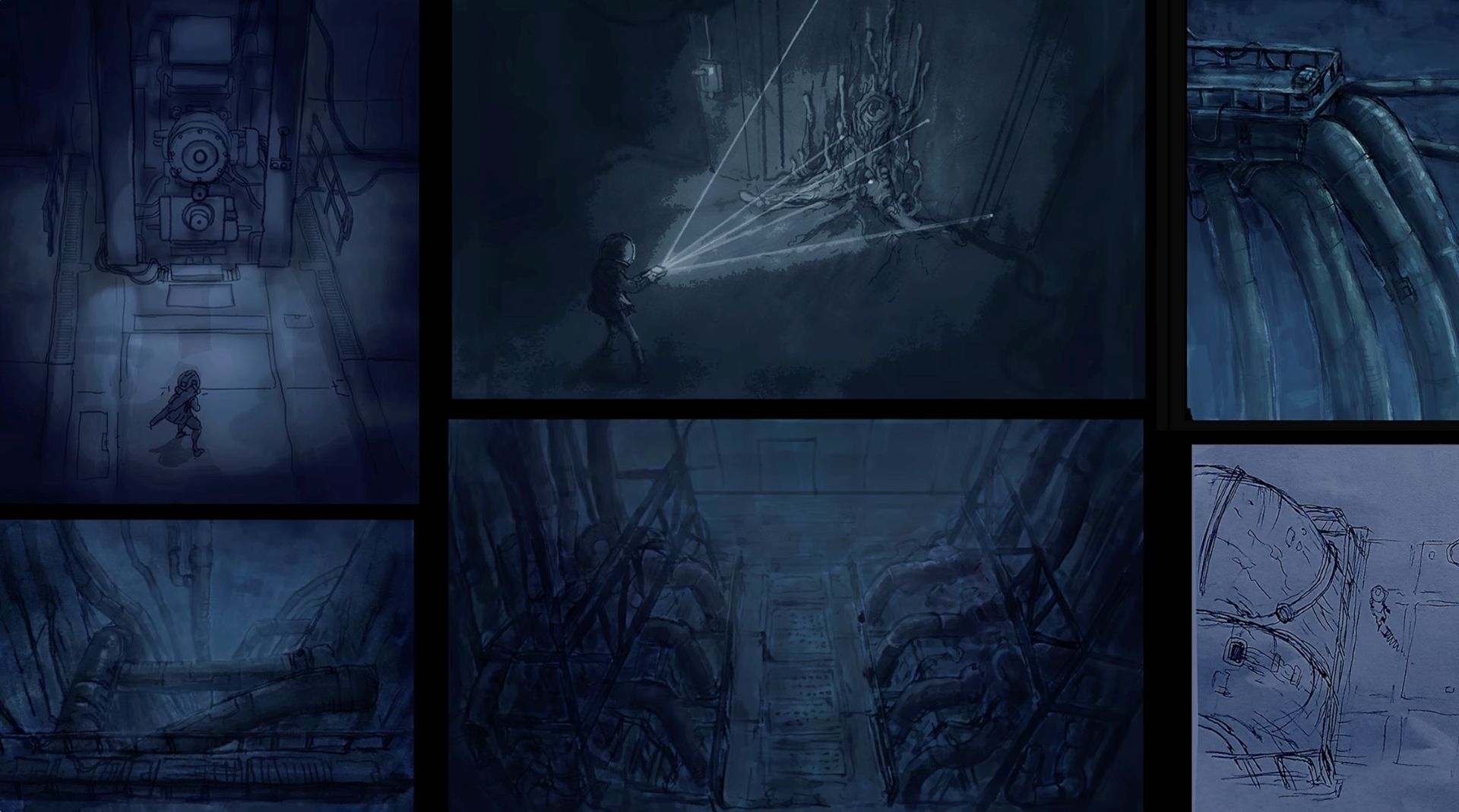
Official concept art, not six gameplay screenshots. Section 9 Interactive / Epic Games Publishing, via Xbox Wire.
The strongest case for following End of Abyss is its exploration; the next checkpoint is current-build evidence. Keep the appealing design reports and the technical caveats together. Turning either into a blanket verdict would lose the useful part of this launch snapshot.
For more coverage, browse our gaming section or the earlier Cthulhu: The Cosmic Abyss announcement, a separate horror title rather than a comparison review.