


Dicevaders’ post-launch changes address a tension in its pitch: powerful combinations lose their appeal when the hardest fights restrict them. The October 2 first patch was only the start. Later notes describe lower Chapter 6 targets and new sandbox options, alongside an acknowledged run-progress problem. These changes deserve a place in the buying decision; a promised endgame redesign should not be counted as delivered from these notes alone.
The Playstack-published roguelike launched September 29. GameGuideDog has not played it. This is reported analysis of official rules, the developer’s acknowledgment and attributed player accounts, without a site score or a tested recommendation.
Why the restrictions matter
The official store describes manipulating dice, arranging units on a grid and combining commander abilities. It places the game in the StarVaders universe, but this is a separate game rather than an update to StarVaders. The interesting buyer question is how much room the difficulty structure leaves for experimenting with those tools.
In the October 2 patch post, developer Axolotl acknowledges feedback that Chapter 6 restricts things people enjoy about Dicevaders. The intended structure was a one-time final-style fight. The developer now wants a different hardest difficulty that keeps earlier chapters’ variability and supports repeat play.
That distinction explains more than a generic claim that the game needs balancing. A demanding final encounter and a difficulty intended for repeated experiments serve different purposes. Our interpretation is that players drawn to building new combinations should check which kind of challenge they are buying into. It is not a finding from our own runs.
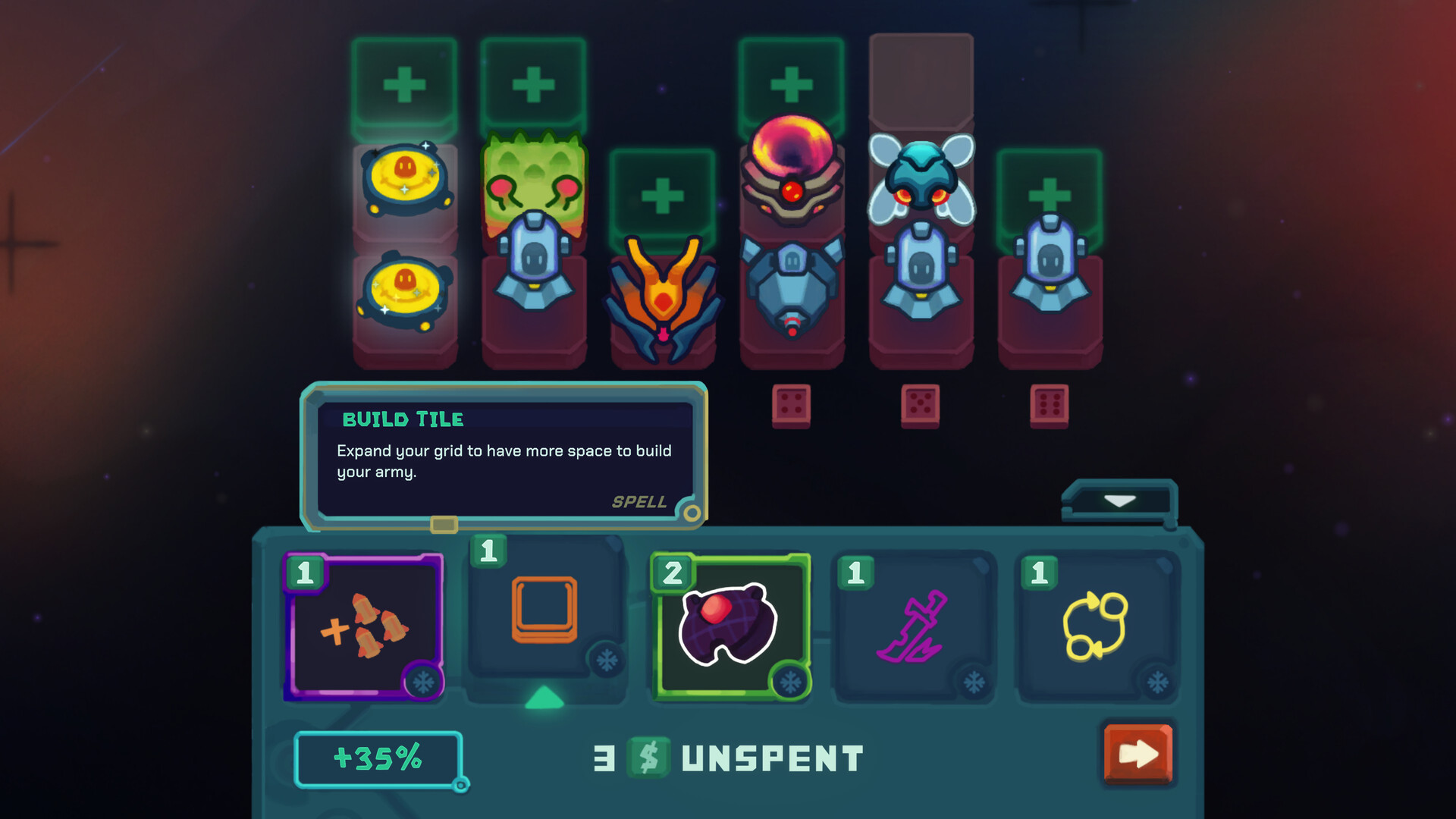
Official Steam screenshot: Pengonauts / Playstack. Marketing imagery, not evidence of an installed version.
What 1.0a changes, and what it does not
The developer lists three concrete mitigations. Bud now locks two perk slots, leaving the first guaranteed. Tippy follows a predictable blocking order, with an arrow indicating what comes next. The STAR gives an extra turn at each threshold, for three additional turns during the fight.
Those changes address different pressures: keeping part of a build accessible, making disruption easier to plan around, and allowing more time to meet a target. They are developer-reported rules, not changes this desk has verified by installing the patch. Console patch parity has not been established here.
The October 2 post left the larger redesign for a future major update, mentioning 1.1 or 1.2 as possibilities rather than a release commitment. Later notes add meaningful changes without establishing delivery of that entire redesign.
Later balance changes and the run-progress caveat
In the October 6 version 1.0b notes, Pengonauts lowers Chapter 6 targets for Tippy and The Star, explicitly excluding Ultimate Earth from those reductions. An added warning says that patch accidentally deleted in-progress runs. That is an acknowledged update problem, not evidence that every save was lost.
The October 15 version 1.0c notes add sandbox settings to replace Tippy with Garu and allow continued perk rerolls at higher difficulties. The developer also says it has corrected the patching problem affecting active runs. We have not tested that claim; it does not establish restoration of lost progress or a universal save guarantee.
That October 15 post says Switch patches 1–3 will be combined into a forthcoming update. It is a dated plan, not proof of today’s console delivery. The complete latest-three official posts checked on October 19 still put larger content updates ahead. Their scope does not establish every channel’s current build or an exhaustive absence of other announcements.
Early praise does not settle late-game fit
At 15:16 UTC on October 4, Steam’s all-language, all-purchase review API returned 324 positive and 19 negative reviews, 343 total, with a Very Positive summary. The count belongs to that query and time. It is not interchangeable with the storefront’s filtered total, and it does not measure sales or continued play.
The earlier saved player sample adds some texture. Mizuni praises growing combinations and different commanders, while describing a tension between extending a run and trying another build. The account discloses earlier playtest participation. DrLemonsnout values the accessible presentation and character variety. Neither account is a professional critic review or a representative poll.
There is no contradiction between a positive aggregate and a specific design concern. Different players can value different stages of a game. The developer’s own acknowledgment is stronger evidence for the Chapter 6 issue than an invented claim that every player feels the same way. It also gives the caveat a defined scope instead of turning it into a blanket verdict against the game.
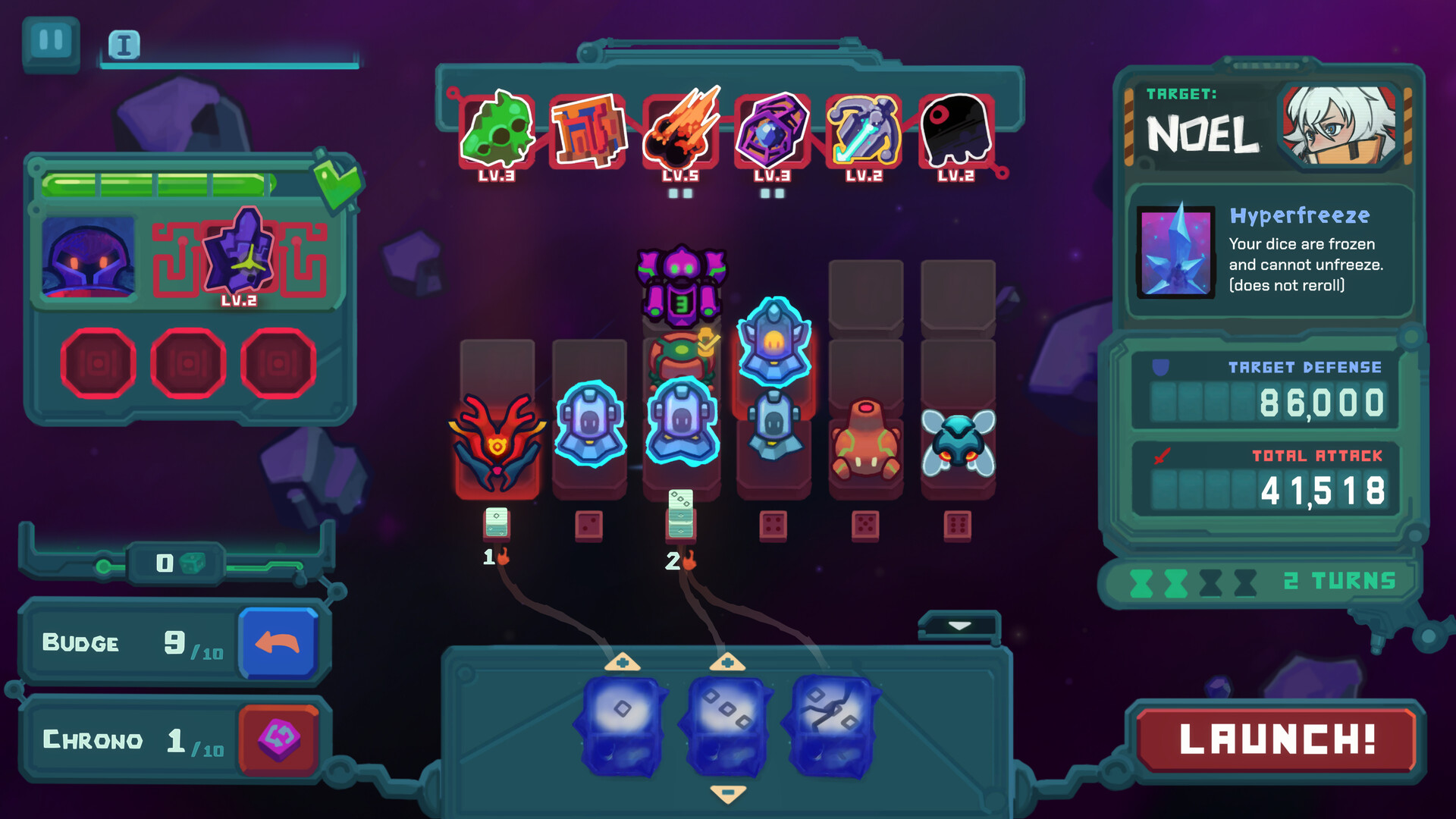
Official Steam screenshot: Pengonauts / Playstack. The visible boss rule illustrates interference; this is not a 1.0a before-and-after comparison.
The buying decision is about the present rules
The U.S. Steam API price was $14.99 with no discount at 20:41 UTC on October 19. The old $13.49 launch offer is historical, not a current buying incentive. The October 4 store inspection listed Deck Verified and full controller support; those dated labels are not a fresh compatibility check or a performance test by this site.
Dicevaders has a concrete experimentation hook; the later sandbox changes matter more than its expired launch discount. Separate documented balance options, the developer’s run-progress repair claim and the larger endgame plans. The October 4 player accounts above predate these later patches and cannot establish their quality. Buy for documented features, not an assumed future mode or untested reliability promise.
See our indie-games coverage and gaming section for other releases and source-led analysis.