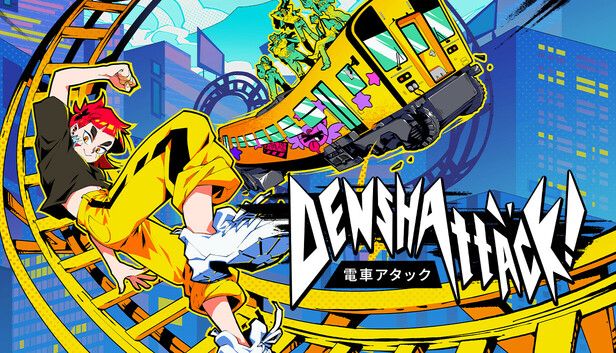

Denshattack! is finally a real launch story, not another date-card correction. EG7’s July 15 release says the Fireshine Games-published, Undercoders-developed arcade platformer is now available worldwide on PlayStation 5, Xbox Series X|S, Nintendo Switch 2, and PC. Steam also lists the game with a Jul 15, 2026 release date, Undercoders as developer, and Fireshine Games plus Boltray Games as publishers.
That clears the first gate. The stranger part is what kind of launch signal Denshattack has. EG7 says the game passed 250,000 Steam wishlists before release and that its pre-launch demo held a 97 percent user-review score. Those are useful numbers for a small, weird arcade game about grinding and flipping trains through a stylized Japan.
They are not a verdict. At our Wednesday, July 15 recheck, Steam still showed no user reviews for the full game, and Steam’s review endpoint returned zero total reviews. So the honest read is narrower: Denshattack has real pre-launch heat and a memorable premise, but buyers still do not have a mature public sample for the full release.
The pitch is weird in a useful way
Denshattack is easy to describe without sanding off the good part: it is a train-skating arcade game. Steam frames it around a custom gravity-defying train, tricks, races, rival gangs, boss fights, and a fight against the Miraido corporation. Undercoders’ official page hits the same shape: pull off tricks, build a reputation, battle oddball bosses, and travel through a transformed Japan from Kyushu through Osaka, Tokyo, Hokkaido, and beyond.
That matters because small indie launches often have a visibility problem before they have a quality problem. A clean hook does not make a game good, but it gives people a reason to remember it. Denshattack has that. You can see the premise in one image, understand the fantasy in one sentence, and decide quickly whether “Tony Hawk energy, but with Japanese trains” is your lane.
The EG7 numbers are useful in that context. A quarter-million wishlists would be meaningful for almost any indie platformer, and the 97 percent demo-review claim suggests the early playable slice did not just attract passive curiosity. Still, both figures come from EG7. They should be treated as official publisher-side claims, not independent proof of sales, retention, or full-game quality.
Steam confirms the launch, but not reception
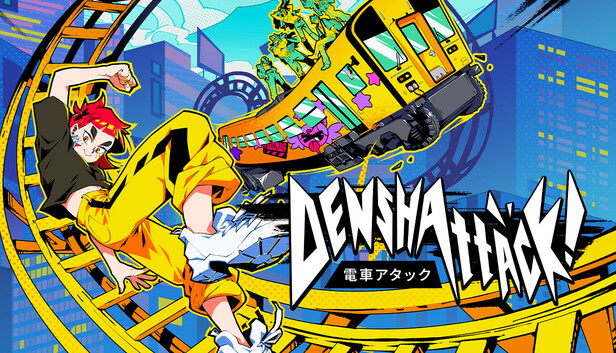
Steam is the cleanest public surface right now. The store page shows Denshattack! released on Jul 15, 2026, lists Action and Adventure, and tags the game around Arcade, 3D Platformer, Trains, Fast-Paced, Skating, and Score Attack. It also lists single-player support, Steam achievements, Steam Cloud, Family Sharing, and ten supported languages, including English full audio and Japanese full audio.
That is enough to talk about the launch as real. It is not enough to talk about player reception as settled.
The visible Steam review block still says No user reviews. The app reviews API says the same thing in harder numbers: zero total reviews, zero positive, zero negative. That may change quickly after launch, but at publish time it means one thing for buyers. Nobody should turn the demo score into a full-game score yet.
This is also why the article label matters. GameGuideDog has not played Denshattack. This is analysis, not a review, not a review snapshot, and not a score hidden inside nicer language. We can read the launch conditions. We cannot tell you whether the campaign holds together, whether the controls stay sharp across later levels, or whether the boss fights and score-chasing have legs after the novelty lands.
Why it still deserves the homepage
The case for covering Denshattack today is stronger than the case for pretending certainty. It has a same-day official launch, a broad platform spread, official demand metrics, and a concept that does not feel manufactured by a tag cloud. It also moves the story forward from the June delay. Last month, the useful information was simple: the game had slipped from June 17 to July 15. Today, the useful question is whether launch-day evidence gives players enough to act on.
For some players, it might. If the train-skating premise is already enough to sell you, the launch is no longer theoretical. The game is live, the Steam page is current, and the official materials describe a focused arcade structure rather than a vague genre mashup.
For cautious buyers, the answer is also clear: wait for the first real full-game reaction. A strong demo can point in the right direction, but demos do not always expose pacing problems, difficulty spikes, thin late-game design, or performance issues. EG7’s own earlier delay context made polish part of the story. That makes the absence of a full-game user sample more important, not less.
The clean launch-day call
Denshattack has enough signal to be interesting now. It does not have enough public proof to be treated like a confirmed indie breakout.
That distinction is the whole buyer read. The launch is real. The hook is strong. EG7’s wishlist and demo claims give the game more pre-release credibility than a lot of strange arcade indies get. Steam, however, still has no full-game user-review base at publish time, and GameGuideDog has no first-hand review basis.
So the smart position is split. Put Denshattack high on the watchlist if you like arcade score chasing, rail-grinding movement, and oddball Japanese-train spectacle. Buy early only if the premise alone is already enough for you. If you need evidence that the full game actually sustains that premise, let the first Steam reviews and longer player impressions arrive before turning curiosity into a recommendation.
For more GameGuideDog coverage, browse our indie games section, revisit the earlier Denshattack delay story, compare this launch read with our Moonlight Peaks launch-signal analysis, or open the latest English stories.