

Cult of the Lamb: The Board Game has the funding heat. The harder question is whether the finished tabletop game will deserve it. BackerKit’s live tracker showed Paper Fort Games’ Kickstarter at GBP1,739,127 pledged, 9,139 backers, and 9177% funded against a GBP18,950 goal when checked on August 7, 2026.
That is comfortably beyond “fans noticed it.” BackerKit also listed 7 days to go, a GBP190.30 average pledge, and a campaign window running from July 21 to August 14. The tracker projects more than GBP2.37 million if the current pace holds, though projections are not promises.
For a same-day board-games story, the signal is obvious. For a buyer, it is more complicated.
Why the campaign is hot
Paper Fort’s official announcement gives the game a clean adaptation thesis. Cult of the Lamb: The Board Game is built for 1-4 players, with players taking the roles of prophets such as the Lamb, the Goat, the Owl, or the Snake. The design combines dungeon-crawling crusades with cult-building worker placement, which is at least pointed at the actual rhythm of the video game rather than just borrowing its art.
That matters because the license has teeth. The original Cult of the Lamb comes from Massive Monster and Devolver Digital, and the board game keeps the same mix of cute, grim, and ritual-heavy. BackerKit’s campaign summary frames it bluntly: crusade and build your cult in a worker-placement game.
The best argument for the project is not “popular video game, therefore good board game.” It is that the tabletop pitch is trying to translate a recognizable loop: go out, fight, bring things back, assign followers, build pressure, and cash that pressure into upgrades, faith, sermons, doctrines, and rituals.
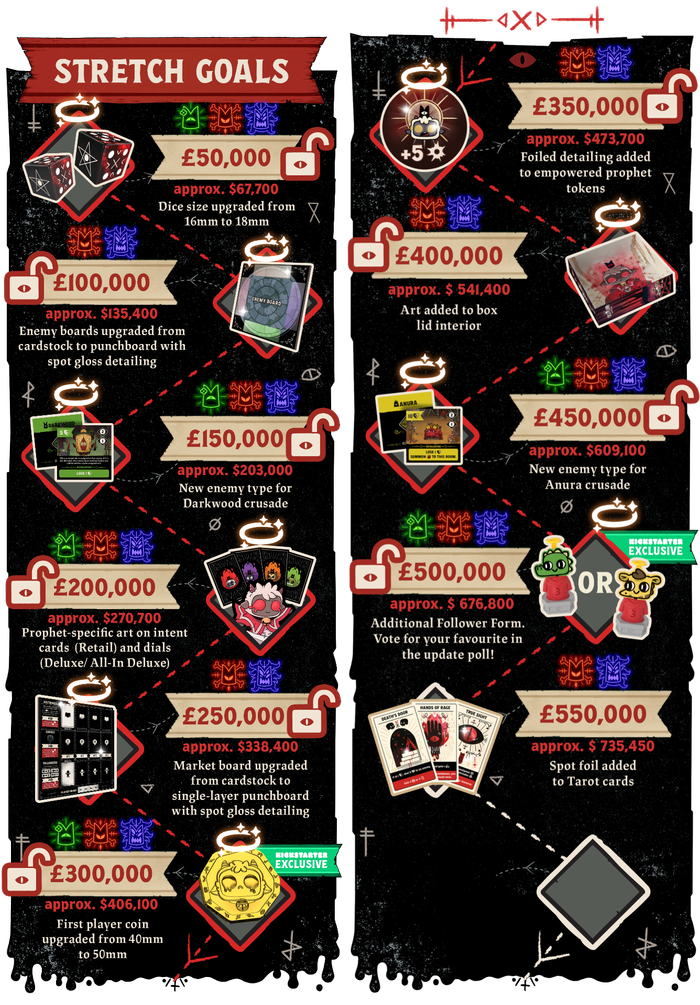
The funding makes that pitch impossible to ignore. More than 9,100 backers with a week left puts this among the live tabletop campaigns people are actually deciding on now, not a quiet prelaunch page hoping the logo does all the work.
The skepticism is the story too
The useful read is not pure hype. A current r/boardgames thread about the Kickstarter shows the shape of the doubt: players are asking whether this is a good first crowdfunding pledge, whether shipping and tax make the real price harder to swallow, whether the design is too long, and whether a video-game adaptation can avoid becoming a table full of administration that the computer used to handle.
That skepticism is fair. Board-game crowdfunding is full of projects that look exciting in renders and feel slower when the rulebook, setup, and downtime arrive. Video-game adaptations have an extra risk because fidelity can become a trap. If the design tries to simulate everything, the board game can inherit the chores without the digital speed.
The Paper Fort pitch gives buyers something concrete to inspect. Crusades cover enemies, weapons, upgrades, and bishops of the Old Faith. The base phase assigns followers to work, worship, or wander, generating resources and faith. That split could work because it mirrors the digital loop. It could also drag if the dungeon half and worker-placement half feel like two systems taking turns being the main game.

What to check before backing
The first thing to check is not the total raised. The money says there is demand. It does not answer whether your group wants a 180-240 minute competitive cult-building game with a large campaign footprint.
Look for full gameplay footage, not just trailer energy. Watch how often players make meaningful choices during someone else’s crusade. Check whether saving between major phases is actually supported or just something owners will improvise with photos and a left-up table. Read the shipping and tax flow before deciding that a pledge tier is really the price.
Also decide whether you are backing a game or a love letter. There is nothing wrong with wanting the art, standees, upgrades, and weird little cult objects because you adore the video game. The cleaner buyer decision is knowing that up front.
The campaign has earned attention. GBP1.73 million-plus, 9,100-plus backers, an official Devolver/Massive Monster adaptation, and a real mechanics pitch make Cult of the Lamb one of the week’s obvious tabletop crowdfunding stories. Just do not mistake the size of the flock for a finished review.
For more tabletop coverage, visit the board-games lane, read our Cyberpunk: Edgerunners board-game watch, revisit the Final Fantasy VII board-game reveal, or catch the Defenders of Hogwarts Kickstarter surge.