


County of Fortune entered Steam Early Access on November 5 with an unusual proposition: build a network of settlements across a medieval region, rather than keep extending one city. Logistics is the draw. The buying question gets harder once the first network works: is there enough variety to build another?
This is reported buyer analysis, not a hands-on review. We have not played County of Fortune, tested its save transfer or measured performance. Developer explanations and named early player accounts support a narrower conclusion: try the available demo for its supply-chain puzzle, and treat the wider political promise separately.
Rivers make location a practical decision
Nepos Games’ game and demo FAQ makes geography central to planning. It tells players to inspect resources and river direction before founding settlements. In the demo, heavy goods travel between regions by river, with rafts restricted to downstream journeys. The paid Early Access version adds ports and sailboats described as carrying products in both directions.
That distinction matters. A downstream-only demo can teach the importance of placement without showing every transport option available after purchase. It would be misleading to turn that restriction into a blanket claim about the paid game.
The interesting part is making a region whose settlements need each other. A good production site is not necessarily a good destination for its goods. Deciding where to establish the next settlement, and how it will supply the others, gives expansion a purpose beyond filling empty ground.
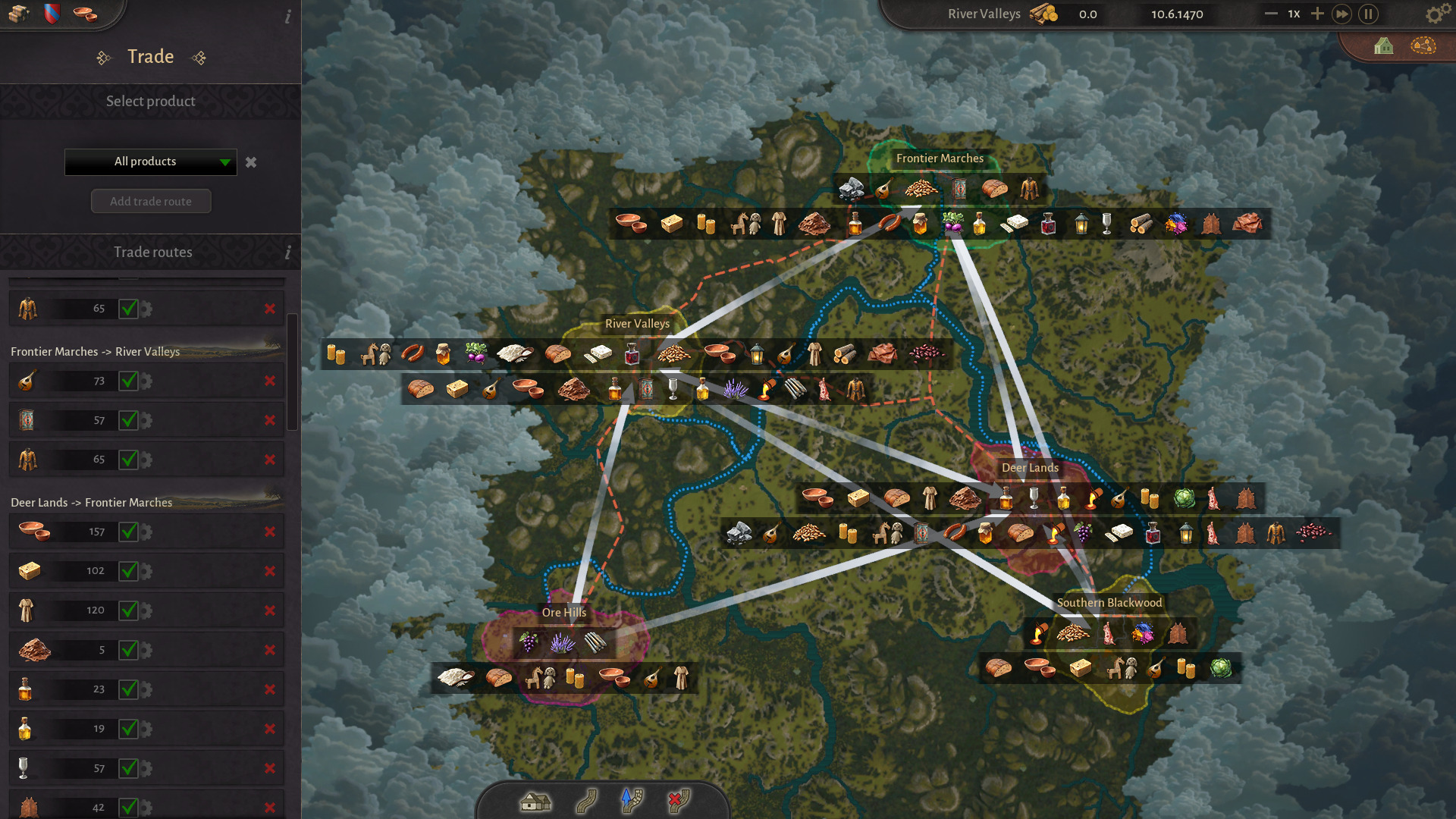
Nepos Games / Aquila Interactive, official prerelease press screenshot distributed in April 2026. Build unspecified; not evidence of the current interface or patch fixes.
Enjoying the network does not settle replay value
Several November 7–8 English Steam accounts make that buying distinction concrete. Groovy recommends the game as a trade-network puzzle. Tomaua describes putting raw-resource settlements upstream and consumers downstream. Those are individual experiences, not our verification of the simulation.
Kamchatka also recommends it, but asks for clearer resource and river overlays, better explanations and less awkward road and menu controls. Their account says the noble-house layer had not felt important during their early play. A positive recommendation does not erase those reservations.
The negative account from eckerboys reaches a different buying conclusion: optimization was enjoyable, but repeated maps did not provide enough variety or content for the price. The player also wanted political and cultural relationships to matter more. Their recorded hours are not a completion-time estimate for everyone else.
These accounts come from a small, nonrandom selection of English Steam reviews, checked again on November 9. They help frame the buying decision; they do not establish a consensus. If making a supply chain efficient is its own reward for you, repetition may carry a different cost than it does for someone seeking fresh scenarios or a strong political simulation.
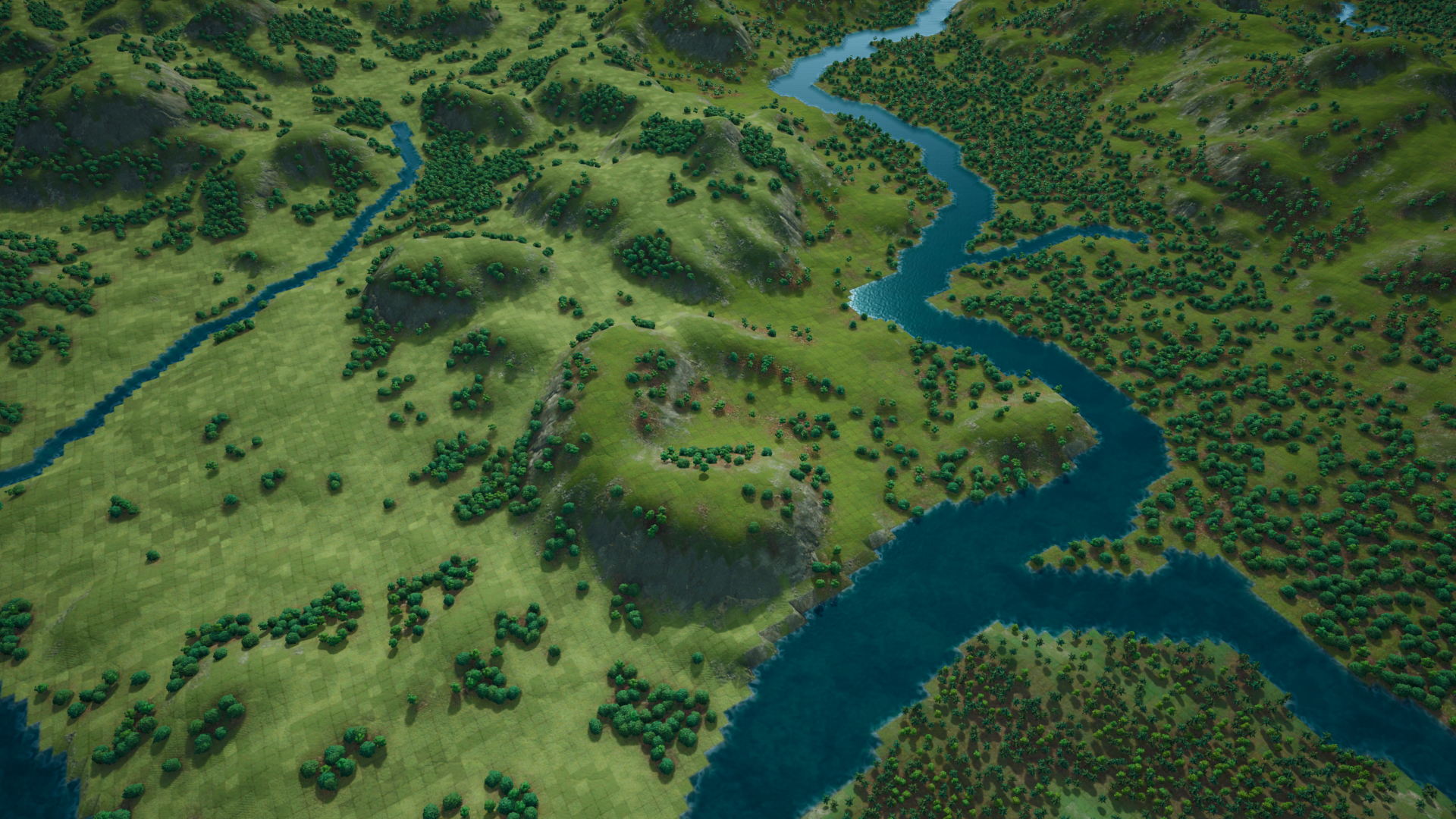
Nepos Games / Aquila Interactive, official prerelease press screenshot. Illustrates the landscape, not our gameplay or the current build.
Political systems exist; their depth is another question
The developer’s Assembly explanation describes noble houses proposing privileges, stewards voting and the player assigning the winning benefit to an eligible region. A house that becomes too powerful can force an Assembly and impose damaging corruption privileges.
That is more specific than an empty promise of politics. It still does not establish how demanding or varied those decisions feel over a long campaign. Nor does one player’s limited engagement prove the systems are absent. Buyers interested mainly in political maneuvering need evidence about that experience, not just a feature list.
Try the current demo, not an assumed future game
The FAQ limits the demo to one map and settlement level 2; paid Early Access reaches level 4 and adds Artisans and Patricians. Nepos promises that progress from the current demo carries into the paid game. It explicitly excludes old Steam Next Fest demo saves. We have not tested either import path.
The November 7 0.1.20 notes, still the newest official feed item at our November 9 check, claim windowed-mode and final-level XP fixes. They are not a general stability verdict. The developer expects roughly six to nine months in Early Access, not a guaranteed full-release date.
Around 04:16 UTC on November 9, the U.S. store showed $22.49 instead of $24.99, with the introductory offer ending November 15. Regional prices differ. The useful next step is the demo: see whether regional logistics is the game you want to repeat before paying for promised expansion. Our indie games archive and Lightyear Frontier save-and-automation guide cover other releases where progression details change the buying decision.