

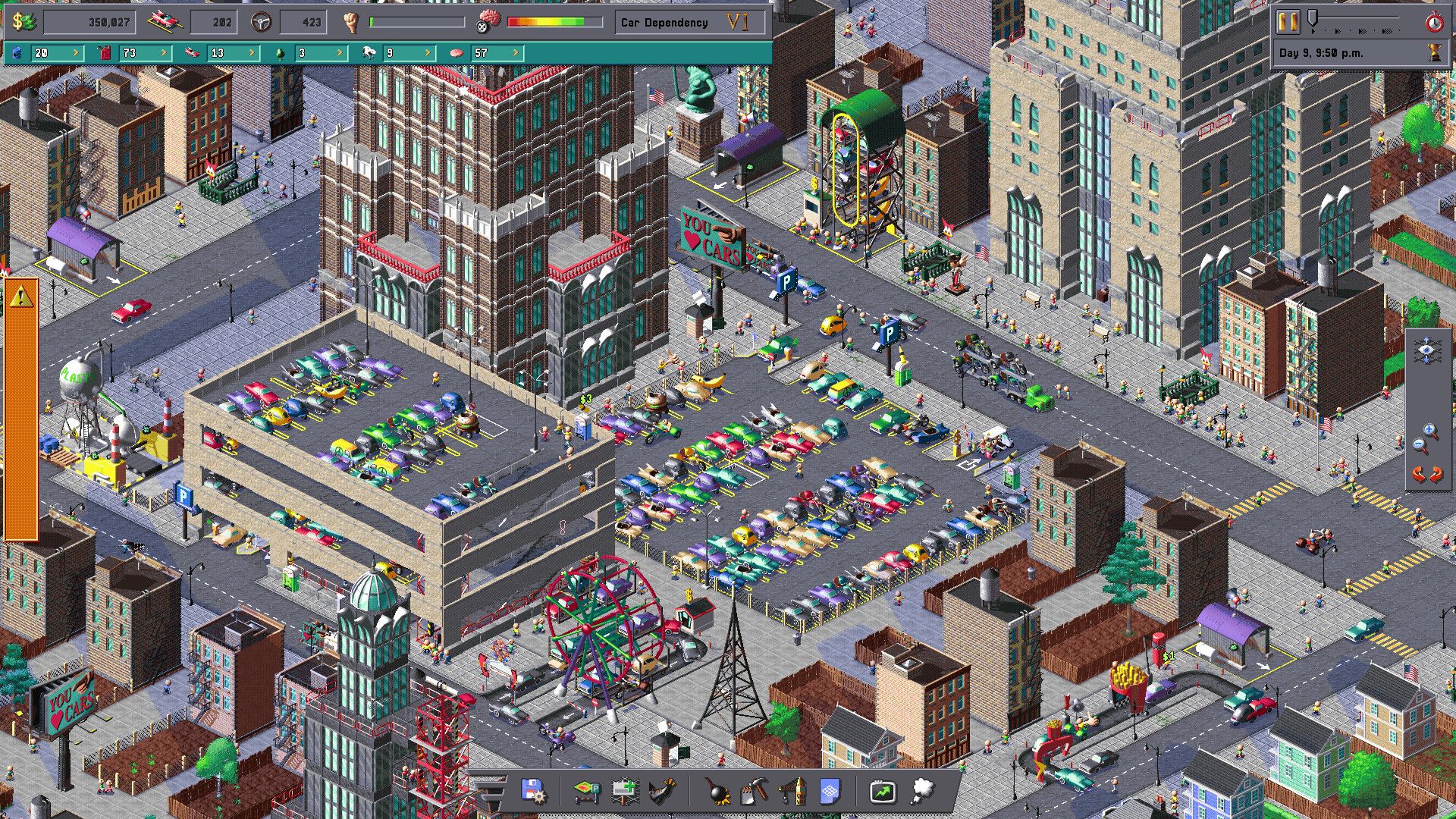
Car Park Capital entered Steam Early Access on October 9 with three advertised scenarios and a US launch price of $15.29. Hilkojj Interactive’s tycoon, published by MicroProse, asks you to manufacture demand for cars, then charge people to park them. Its October 16 update adds a roadmap and developer-reported fixes, but the buying question still turns on the content available without that promised expansion.
This is a reported buyer analysis, not a hands-on review. We have not played the build, tested its tutorial or measured its performance. The official scope and a few substantial early-player accounts still give buyers something more useful than a launch slogan.
You are selling the traffic problem
The release announcement describes persuading people to buy cars, moving them into suburbia and replacing neighborhoods with paid parking. Pro-car propaganda, oil drilling and policing protests belong to the pitch. That makes this an awkward choice for someone simply looking for a conventional city builder about making transport work better.
The satire is the product’s distinguishing idea: profit depends on encouraging the dependency you then service. Whether the systems sustain that joke over a long save remains untested here. A funny premise and readable screenshots cannot settle the balance question.
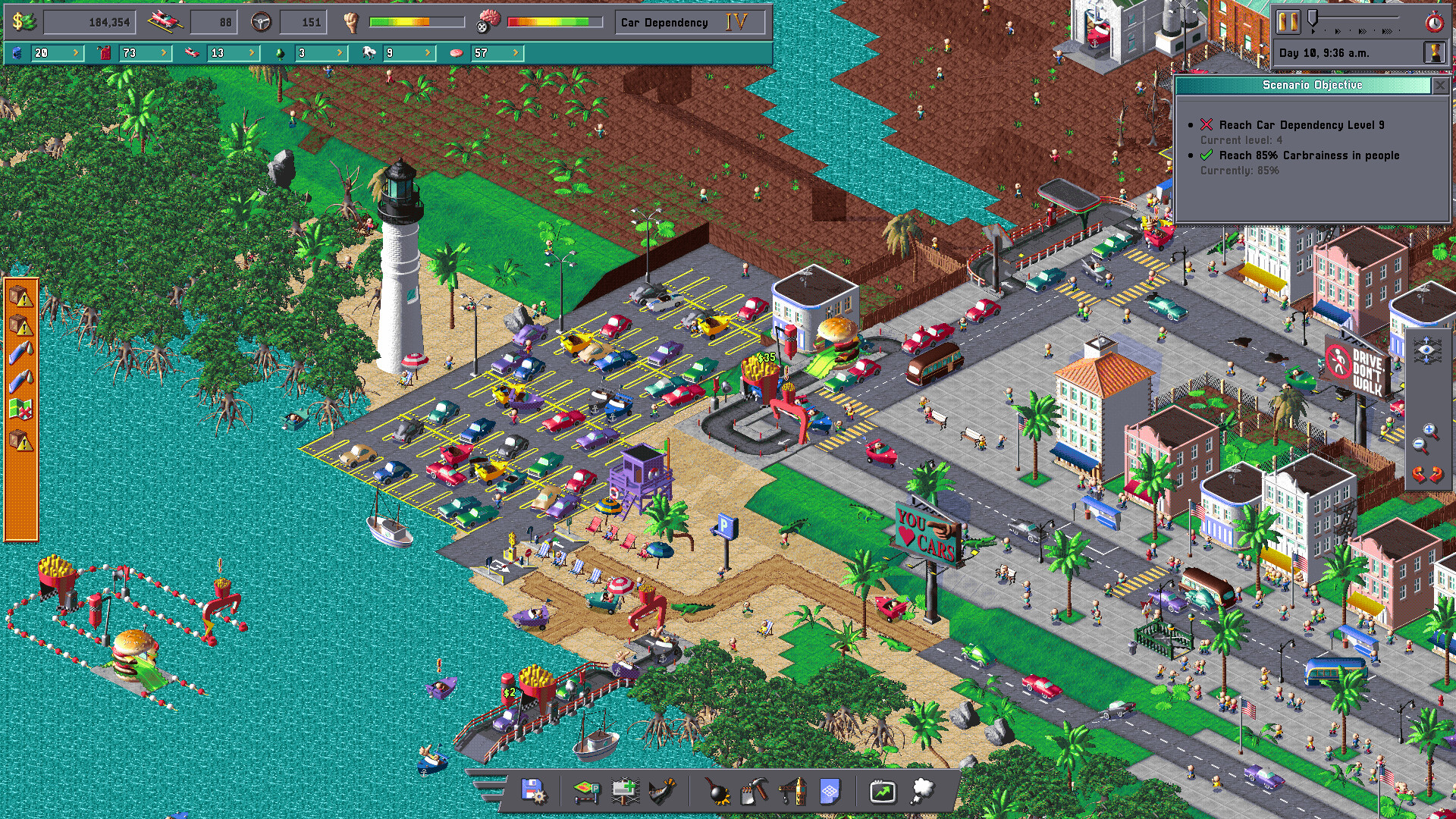
Official coastal scene supplied through Steam. Hilkojj Interactive / MicroProse; not our capture.
Three scenarios now; more depth is a plan
The developer’s Steam FAQ, checked again on October 21, lists American City, the Pyramids of Giza and Florida with boat-cars. The release post calls the city Baldtown. The FAQ says progression unlocks cars, building options, drive-throughs and production chains. These are advertised current features, not findings from our own save.
The FAQ still makes Workshop conditional on demand. The newer October 16 roadmap gives scenario and blueprint sharing a short-term slot, with more tutorials and strategic depth in the medium term. More scenarios, sandbox, achievements, events and disasters sit further out. That is a more concrete plan, not proof those features have shipped. The developer warns that feedback and design decisions will likely change it.
The estimate is roughly ten months in Early Access, with a planned move to 1.0 in summer 2027. Neither wording guarantees a finish date. The developer explicitly says feedback can change the direction. If your purchase depends on the additional strategic depth or Workshop, waiting is the cleaner decision.
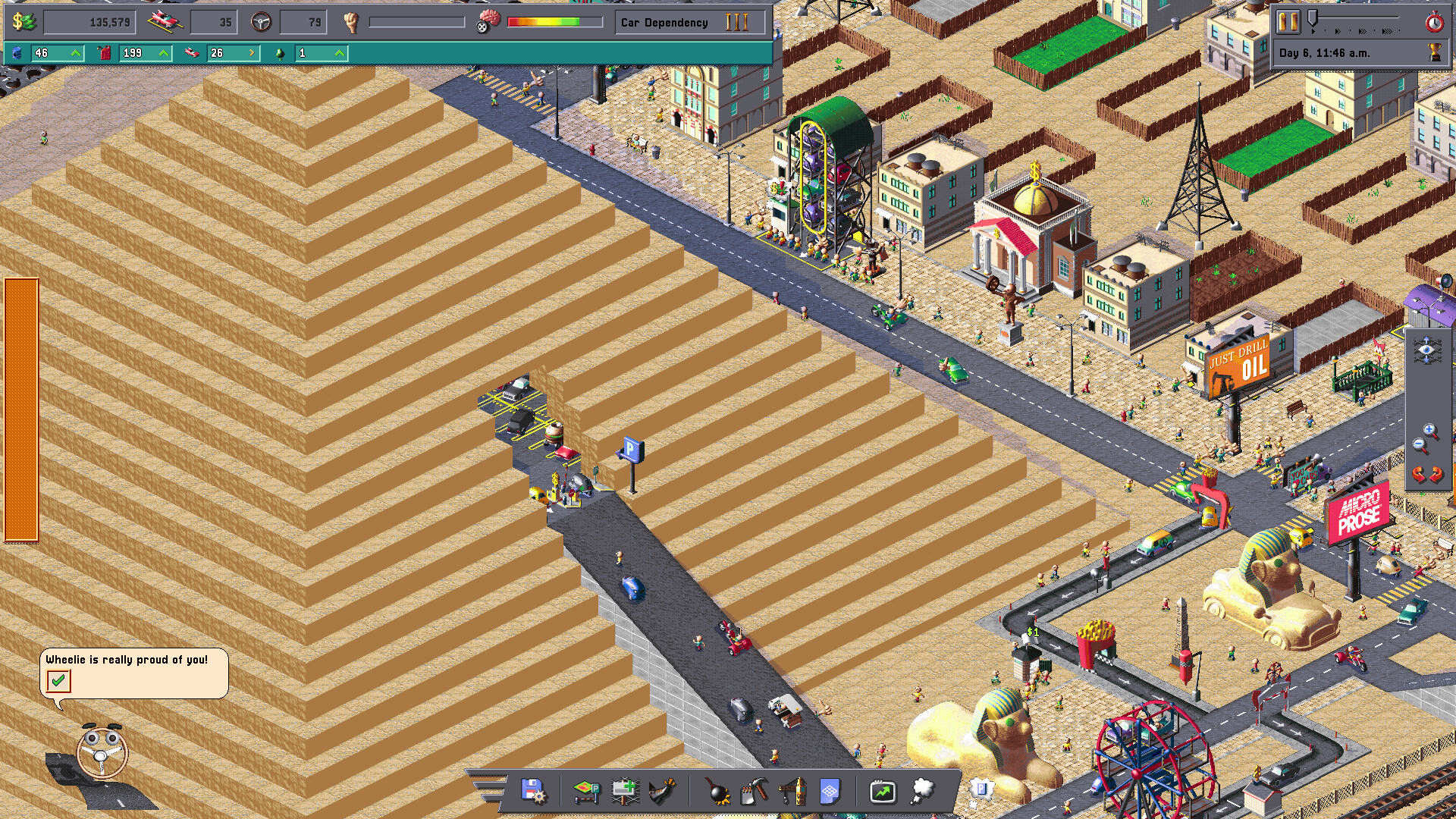
Official supplied Giza image. Hilkojj Interactive / MicroProse; not a tested walkthrough.
What the first patch does and does not settle
The October 16 EA 1.0.1 notes say the update adds locate buttons for emergency vehicles and addresses specific pathfinding slowdowns, GPU menu problems and save-filename crashes. Those are developer-reported fixes, not results from our own test. More tutorials and deeper mid- and late-game strategy remain roadmap items. The patch therefore does not establish that the onboarding and depth concerns below are resolved.
Positive recommendations still carry warnings
At 01:16 UTC on October 10, Steam’s all-language, all-purchase review API returned a Very Positive summary: 271 positive and six negative reviews, 277 total. This is a dated selection, not sales evidence or proof of long-term depth. It should not be blended with the storefront’s differently selected review count.
SYPIAC recommended the game after 254 minutes recorded at review, but described balance and content as unfinished and suggested some buyers wait until after Early Access. The account positions it as lighthearted play rather than demanding strategy. Its RollerCoaster Tycoon comparison is a taste comparison, not evidence that the games share an engine.
Another positive purchaser, after 274 minutes, praised the art and satire while finding the tutorial lacking, saying the first scenario allowed room for trial and error. Belue Eriwyr gave a negative recommendation after 55 minutes, reporting repeated first-level restarts because the tutorial was unclear.
All three accounts were marked as purchased, not received free, and written during Early Access. They are a small, selected launch-week sample predating EA 1.0.1, not a report on the updated build. The useful distinction is that tutorial friction appears in both an endorsement and a rejection; that does not establish how common the problem is or make it an independently verified defect.
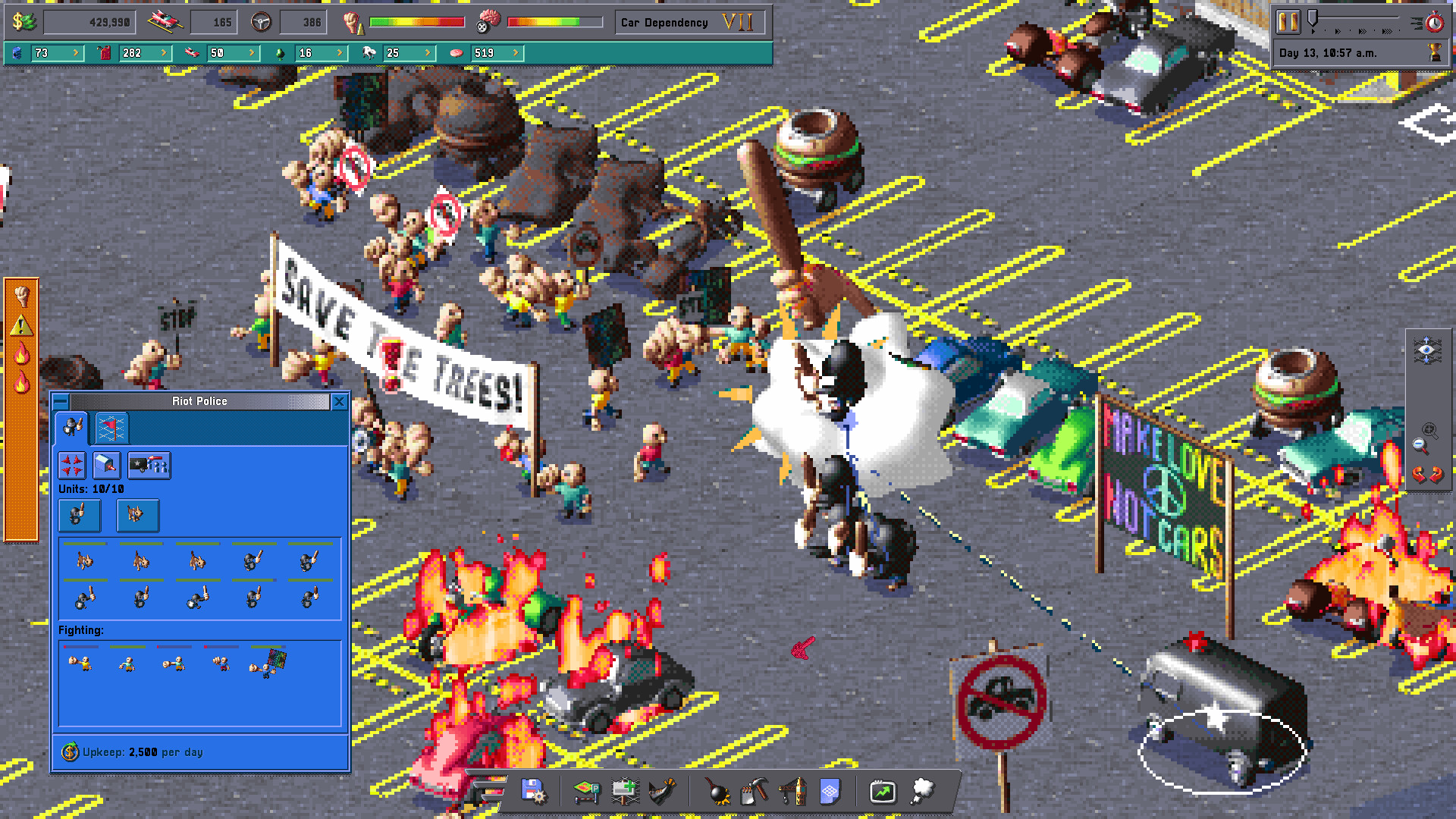
Official supplied protest scene. Hilkojj Interactive / MicroProse; it illustrates the satire, not tested system effectiveness.
Buy the current scope, or wait for the missing part
The US metadata refresh on October 21 at 16:41 UTC confirmed $15.29 against $16.99, a 10% discount. An October 10 storefront check displayed October 23 as the offer end, without an exact hour; the current FAQ extraction did not renew that end-date observation. These are US base-game terms, not Polish pricing or a completed checkout. The developer plans gradual price increases as content arrives; no future amount is established.
Windows and Linux are listed. That does not establish Steam Deck performance or certification. Our Breathedge 2 Early Access analysis offers another release-stage check; the indie games archive collects further coverage.
For buyers drawn to car-dependency satire and willing to accept the onboarding caveats those reviewers describe, the advertised three-scenario package is the relevant offer. For buyers who need deeper strategy, a clearer tutorial or community sharing, the next checkpoint is delivered updates that address those priorities. A launch discount cannot deliver them early.